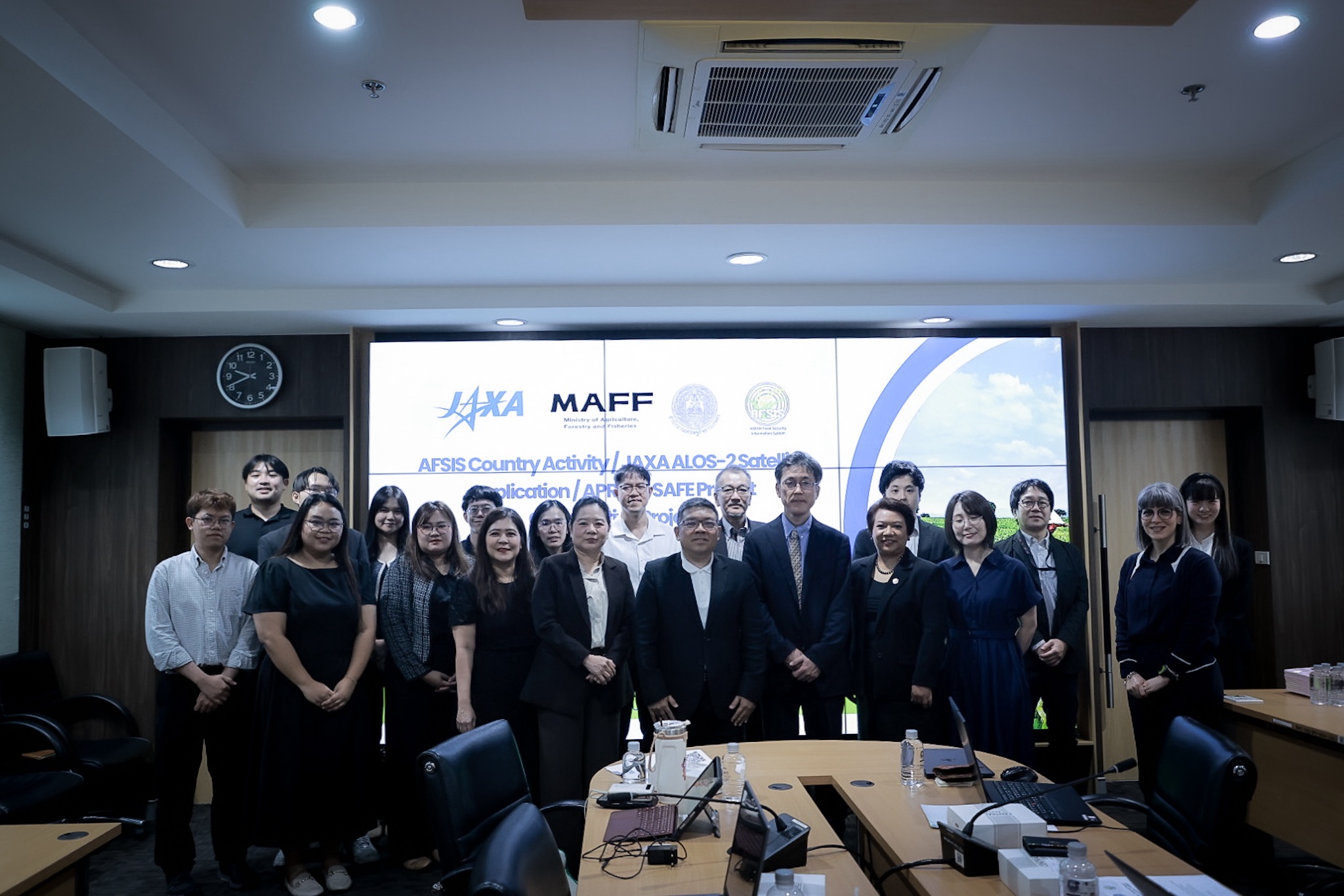
On 12-13 February 2026, the AFSIS Secretariat, in collaboration with the Japan Aerospace Exploration Agency (JAXA), the Remote Sensing Technology Center of Japan (RESTEC), Ministry of Agriculture, Forestry and Fisheries (MAFF) Japan and the Office of Agricultural Economics (OAE), Ministry of Agriculture Cooperatives (MOAC), conducted a workshop conducted a workshop The Promoting Rice Planted Area and Production Estimation Using INAHOR and Space-based Technologies in Thailand at the Meeting Room 2, Innovation Building, 3rd FL, Office of Agricultural Economics (OAE)
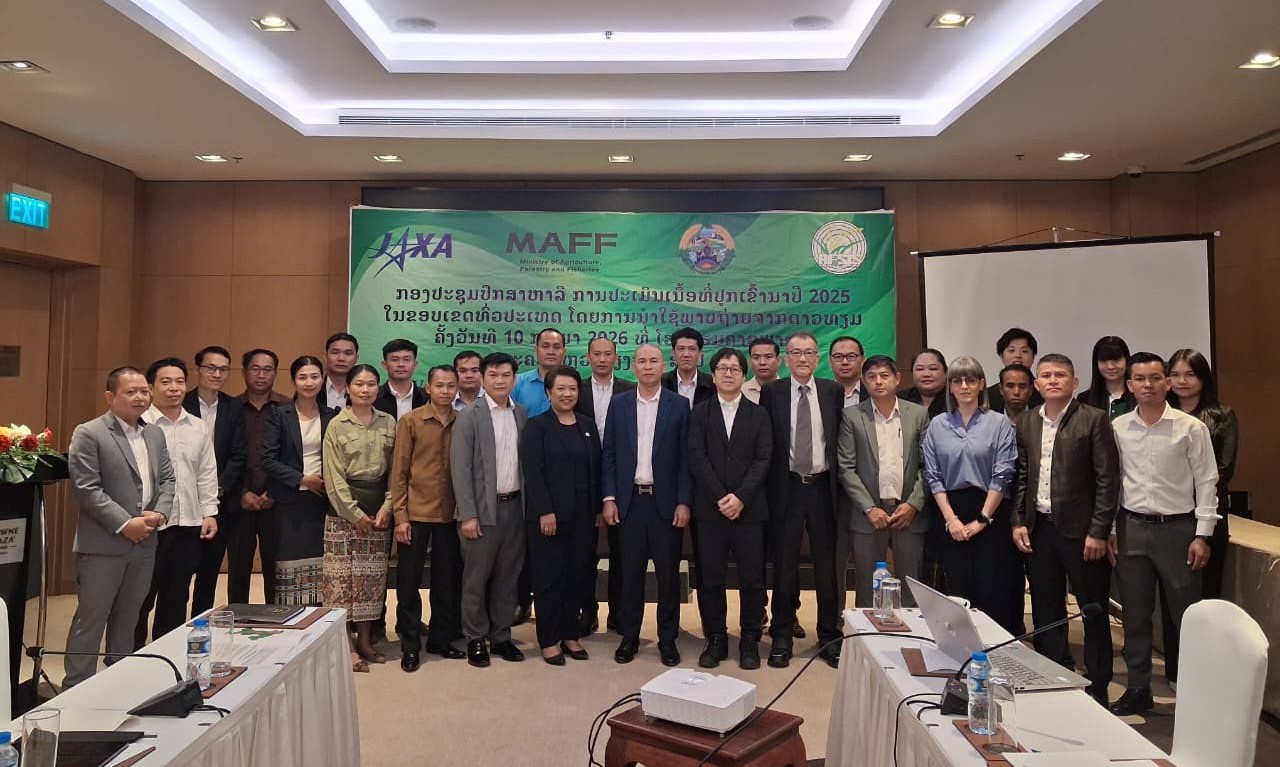
The In-Country Workshop on Promoting Rice Planted Area and Production Estimation Using Space-based Technologies in Lao PDR was jointly organized by AFSIS Secretariat, JAXA, MAFF Japan, and MAE Lao PDR under the AFSIS-GIS and SAFE projects. The event was held in Vientiane with hands-on training on 9 February 2026 and a workshop on 10 February 2026.
.jpg)
On 13–15 January 2026, the Office of Agricultural Economics (OAE), Thailand, in collaboration with the Ministry of Agriculture, Forestry and Fisheries (MAFF), Japan, and the AFSIS Secretariat, conducted the 1st Meeting of Japan–Thailand Expert Dialogue on Agricultural Statistics. The meeting was held at the Office of Agricultural Economics and field survey activities in Chonburi Province.

On 3–4 December 2025, the ASEAN Food Security Information System (AFSIS) Secretariat participated in the ASEAN Plus Three Emergency Rice Reserve (APTERR) Table Top Exercise (TTX) held in Bandar Seri Begawan, Brunei Darussalam.
/LINE_ALBUM_KRC_Cambodia_251204_13.jpg)
AFSIS and Development of Human Resources" in Cambodia On 27 November 2025, Mr. Charapon Chantorn, Deputy AFSIS Manager, participated in the Completion and Handover Ceremony of the project “Establishing the Real-Time ASEAN Food Security Information System (AFSIS) and Development of Human Resources, Phase 3 – Pilot Project on Strategic Crop Forecasting System for Food Security in Cambodia.” The ceremony was held in Phnom Penh, Cambodia, and jointly hosted by the Ministry of Agriculture, Food and Rural Affairs (MAFRA) of the Republic of Korea, the Ministry of Agriculture, Forestry and Fisheries (MAFF) of Cambodia, and the Korea Rural Community Corporation (KRC).

AFSIS Participated in APRSAF-31 to Strengthen Space Technology Cooperation for Regional Food Security On 18–19 November 2025, in Cebu City, the Republic of the Philippines, the ASEAN Food Security Information System (AFSIS) Secretariat, represented by Mr. Charapon Chantorn, Deputy AFSIS Manager, participated in the 31st Asia-Pacific Regional Space Agency Forum (APRSAF-31). The Forum, a key platform for promoting regional cooperation in space technology across the Asia-Pacific region, was co-organized by the Philippines Space Agency (PhilSA), the Ministry of Education, Culture, Sports, Science and Technology (MEXT) of Japan, and the Japan Aerospace Exploration Agency (JAXA).
.png)
In October 2025, tropical cyclones Matmo and Fengshen caused widespread devastation across the Philippines, Vietnam, Lao PDR, Cambodia, and parts of Thailand. In response, the Vietnamese government allocated finances in aid, while the Philippines evacuated thousands of residents and received EU humanitarian assistance, with both countries reinforcing disaster preparedness and recovery efforts.

On 22–23 October 2025, the ASEAN Food Security Information System (AFSIS) Secretariat, in collaboration with the Ministry of Agriculture, Forestry and Fisheries (MAFF) of Japan, successfully convened The AFSIS Special Workshop in Tokyo, Japan.

Typhoon Bualoi struck Southeast Asia between September 25 and 30, 2025. The storm brings destructive winds, heavy rainfall, flooding, and landslides across the Philippines, Vietnam, Lao PDR, and Thailand. Governments across the region launched large-scale evacuations, rescue operations, and relief efforts.
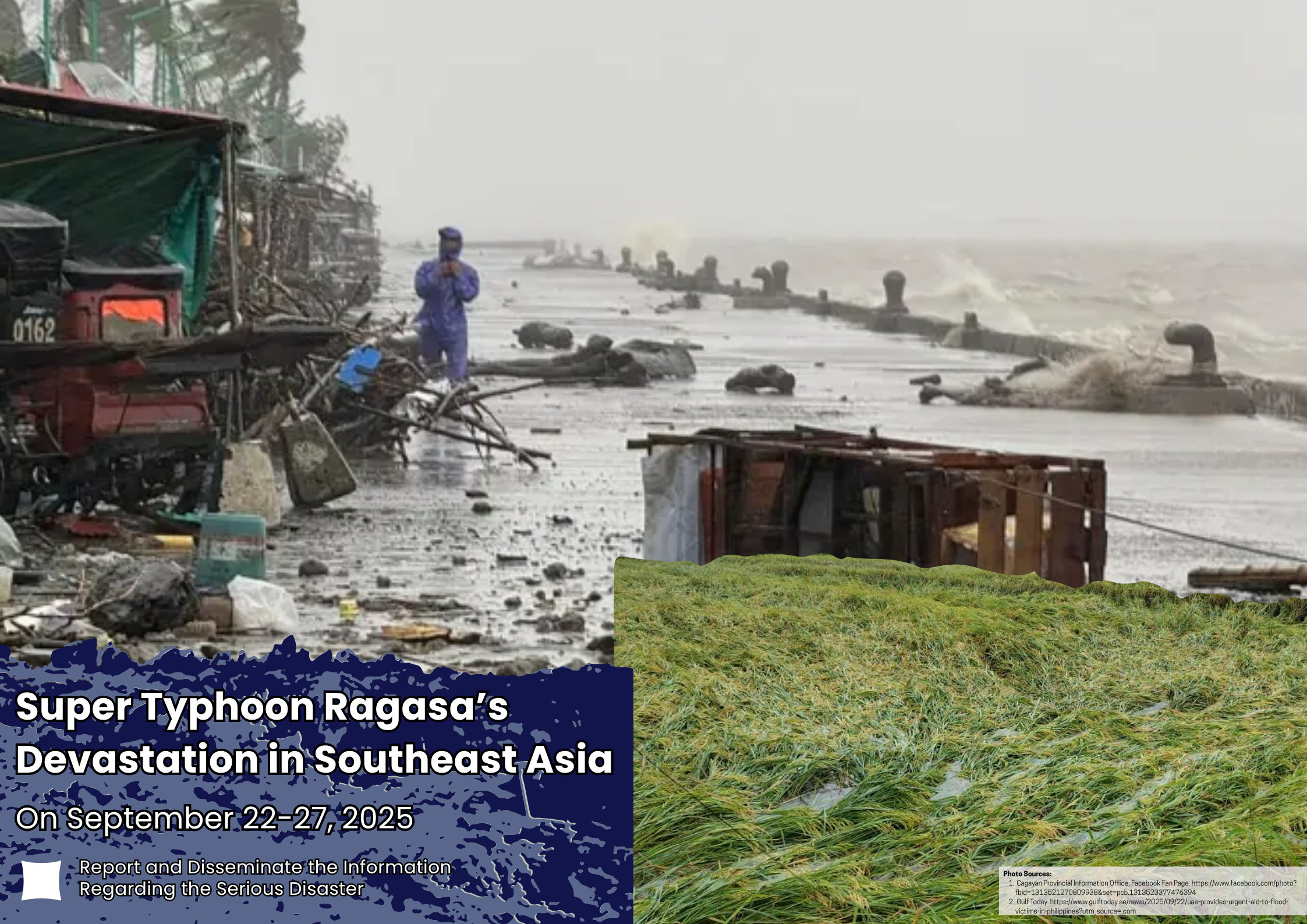
From September 22–27, 2025, super typhoon Ragasa struck Southeast Asia. The storm brings intensified winds, torrential rainfall, and severe flooding across the Philippines, Vietnam, Lao PDR, and Thailand. Governments implemented emergency evacuations, relief distribution, and crop protection measures, though several areas continued to face prolonged recovery challenges.

