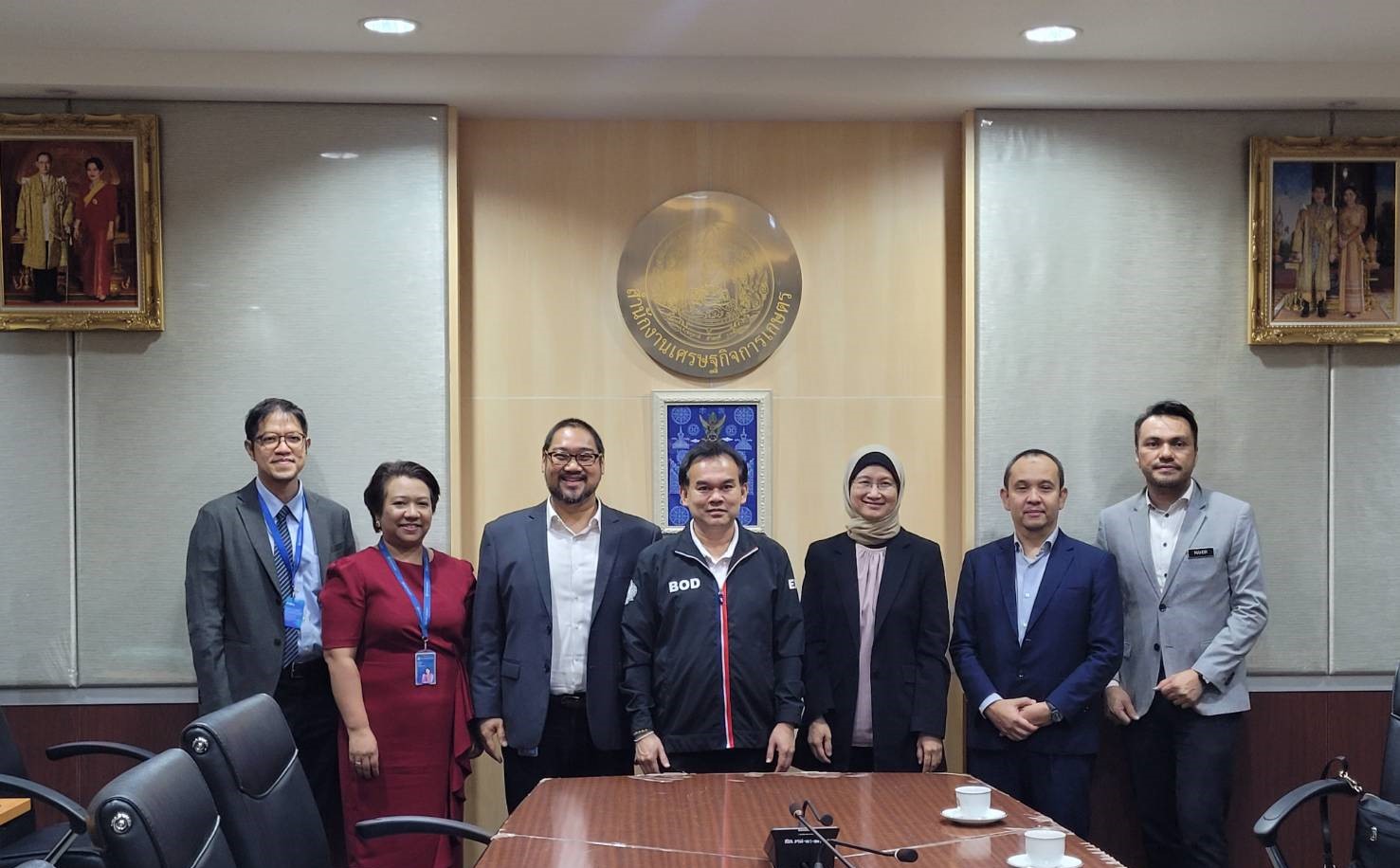
On 12 July 2024, the AFSIS Secretariat convened an online meeting to discuss the draft Joint Understanding of the 22nd AFSIS Focal Point Meeting, marking a significant step towards ensuring the sustainability of the Agricultural and Food Security Information System (AFSIS). They were chaired by Datuk Azah Hanim Ahmad, Deputy Secretary General (Policy) Ministry of Agriculture and Food Security of Malaysia. The meeting gathered AFSIS Focal Points from ASEAN plus Three countries along with representatives from the ASEAN secretariat and AFSIS secretariat.
This Meeting was a continuous session from the 22nd AFSIS Focal Point Meeting held in Putrajaya, Malaysia, on 11-12 June 2024, for deliberations on the draft of the Joint Understanding of the 22nd AFSIS Focal Point Meeting for the Sustainability of AFSIS, The Meeting aimed to discuss and consider the Joint Understanding document.
The meeting reached a consensus on the Joint Understanding document as a working principle of AFSIS.
The outcomes led ASEAN member states towards the next phase in establishing AFSIS as a sustainable organization, furthering our efforts to enhance food security in the ASEAN region in the near future.
AFSIS secretariat will present this outcome to the Senior Officials' Meeting of the 23rd Special ASEAN Ministers on Agriculture and Forestry (Special SOM-23rd AMAF Plus Three), scheduled for 6-8 August 2024. This presentation marks the critical role and functions of AFSIS, which are very valuable for moving AFSIS and its activities toward sustainability in the future.
The AFSIS Secretariat remains committed to fostering collaboration among member states and stakeholders, ensuring robust support for sustainable agricultural development across the ASEAN plus Three regions.


The AFSIS Secretariat participated in the 10th International Conference on Agricultural Statistics (ICAS X), held from 8 to 10 July 2026 at the ICE Krakow Congress Centre in Krakow, Poland. Jointly organized by Statistics Poland, Eurostat, the United States Department of Agriculture (USDA), the World Bank Group, and the Food and Agriculture Organization of the United Nations (FAO).
.JPG)
On 24–25 June 2026, AFSIS Secretariat participated in the 46th Meeting of the ASEAN Food Security Reserve Board (AFSRB) via a virtual conference. The Meeting was jointly organized by the AFSRB Secretariat and the Department of Agriculture (DOA), Ministry of Agriculture, Livestock and Irrigation (MOALI) of the Republic of the Union of Myanmar, and was hosted in Nay Pyi Taw, Myanmar.

On 17–18 June 2026, the 24th AFSIS Focal Point Meeting was successfully convened via video conference, hosted by the Philippine Statistics Authority (PSA) in collaboration with the ASEAN Food Security Information System (AFSIS) Secretariat.
.jpg)
The ASEAN Food Security Information System (AFSIS) Secretariat, in collaboration with the Ministry of Agriculture, Forestry and Fisheries (MAFF) Japan, Japan Aerospace Exploration Agency (JAXA), Remote Sensing Technology Center of Japan (RESTEC), and Geo-Informatics and Space Technology Development Agency (GISTDA), conducted the 2nd Hands-on Training Courses for Agricultural Statisticians, the Final Workshop, and the 2nd Seminar for Executive Officials under the JAIF Project entitled “Improvement of Rice Paddy Area Statistics and Damage Assessment using Earth Observation Satellites for ASEAN” in Sriracha, Chonburi Province, and Bangkok, Thailand.

