AFSIS Secretariat plays a crucial role in collecting and sharing food security information, both routinely and during crises. With this purpose, AFSIS Secretariat in collaboration with the Ministry of Agriculture, forestry and Fisheries (MAFF), Japan, established the Project for Strengthening ASEAN Food Security Information System Function for Emergency (SAFER project) for 2023 – 2025. The project aims to strengthen the ASEAN Food Security Information System functions on immediate sharing of food security information in the case of emergency. To achieve this objective, guidebooks were developed, and workshops were organized to enhance human resource capacity. This project contributes the ASEAN Integrated Food Security (AIFS) Framework and the Strategic Plan of Action on Food Security in the ASEAN Region (SPA-FS) 2021-2025. The SAFER Project seeks to improve food security information in the ASEAN region in terms of both quality and quantity, particularly under emergency conditions. The project delivers the following key outputs;
• Output 1: Develop emergency information sharing mechanism
• Output 2: Increase target commodities handled by AFSIS
• Output 3: Monitor crop growing condition
• Output 4: Develop crop area estimation method using satellite image (INAHOR system)
Since 2020, the AFSIS Secretariat has been sharing emergency information updates on agricultural damage caused by natural disasters in ASEAN member states through the "Report and Disseminate Information Regarding the Serious Disaster" project on the AFSIS website since 2020. The activity is to monitor the impact of serious disaster on food security of ASEAN member countries and to provide accurate and timely data regarding serious disasters situation to help inform response, policy-making and recovery efforts across ASEAN member countries. Under this project, AFSIS Secretariat developed the data collection guideline for AFSEAN Member States (AMS) for more systematic disaster reporting system and serves as a comprehensive resource for advancing food security through better disaster response mechanisms and supports timely policy-making across the region.

AFSIS Secretariat has been providing time series data by Database, as well as reports on supply and demand information and production forecasts for five main crops. These reports are known as the Agricultural Commodity Outlook (ACO) and Early Warning Information (EWI). Initially, the activities focused only rice-related data, but over time, the scope expanded to include all five major crops in alignment with the AFSIS database. Under the implementation of the SAFER project, the AFSIS Focal Points had discussed on the appropriate agricultural commodity to be added as a new target commodity apart from five main crops. Following deliberations, the meeting concluded that “Laying Hens” would be the new commodity added to the AFSIS Database, as well as the ACO and EWI reports. The AFSIS Secretariat developed a guidebook outlines the data collection process and provides clear definitions and descriptions of the necessary data items to support the integration of this new commodity into AFSIS’s reporting mechanisms.

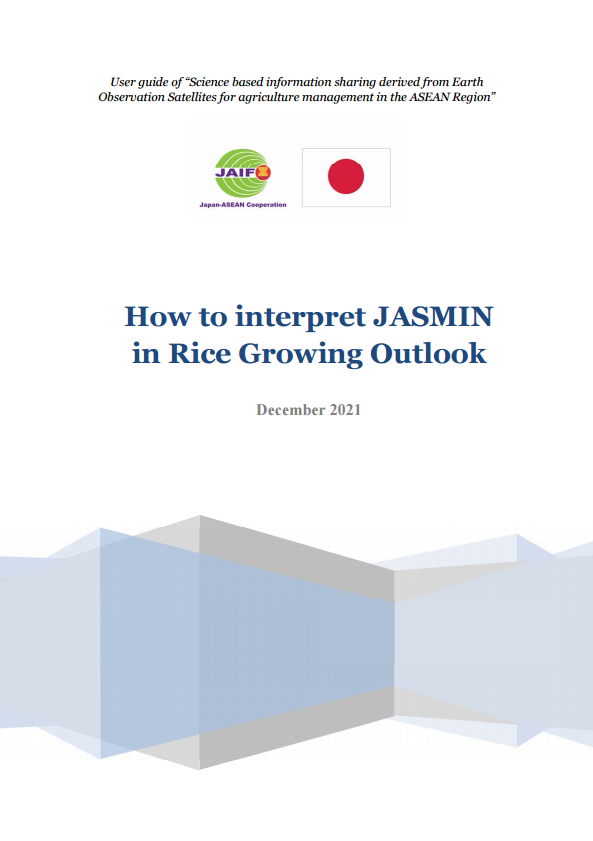
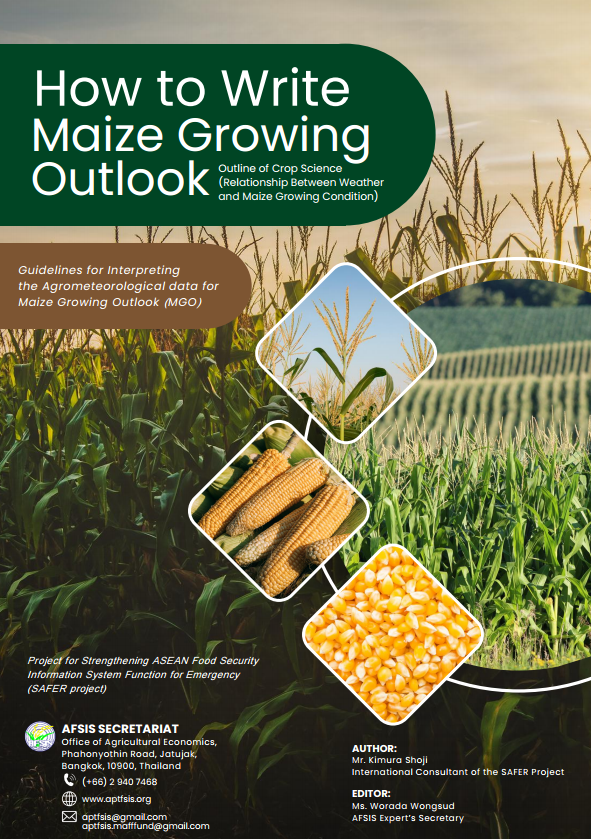
Since October 2013, AFSIS has collaborated with Japan Aerospace Exploration Agency (JAXA) and Remote Sensing Technology Center of Japan (RESTEC), with both financial and technical support, to monitor and report rice-growing conditions in four ASEAN Member States, Indonesia, the Philippines, Thailand, and Viet Nam. In 2016, the target countries were expanded to include Cambodia, Lao PDR, and Myanmar. The collected information has been contributed to the Asia-Rice component of GEOGLAM and disseminated through the AFSIS website to support agricultural monitoring and forecasting efforts. Under the SAFER Project, AFSIS has expanded its scope to include additional countries in the region and to monitor crop-growing conditions beyond rice. As a result, Brunei Darussalam and Malaysia joined the activity in 2023, and maize was proposed as a new commodity for reporting under the “Maize Growing Outlook (MGO)”.
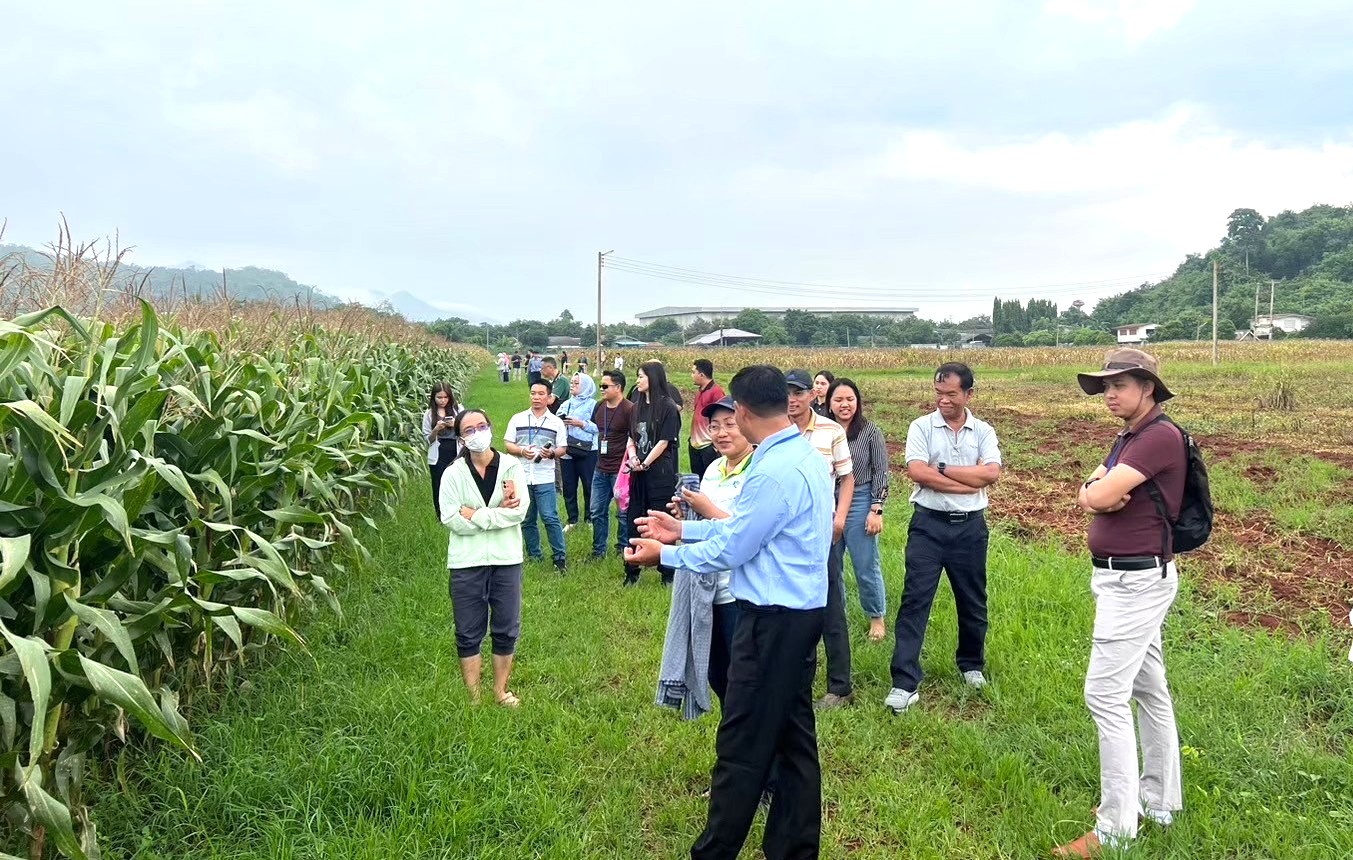
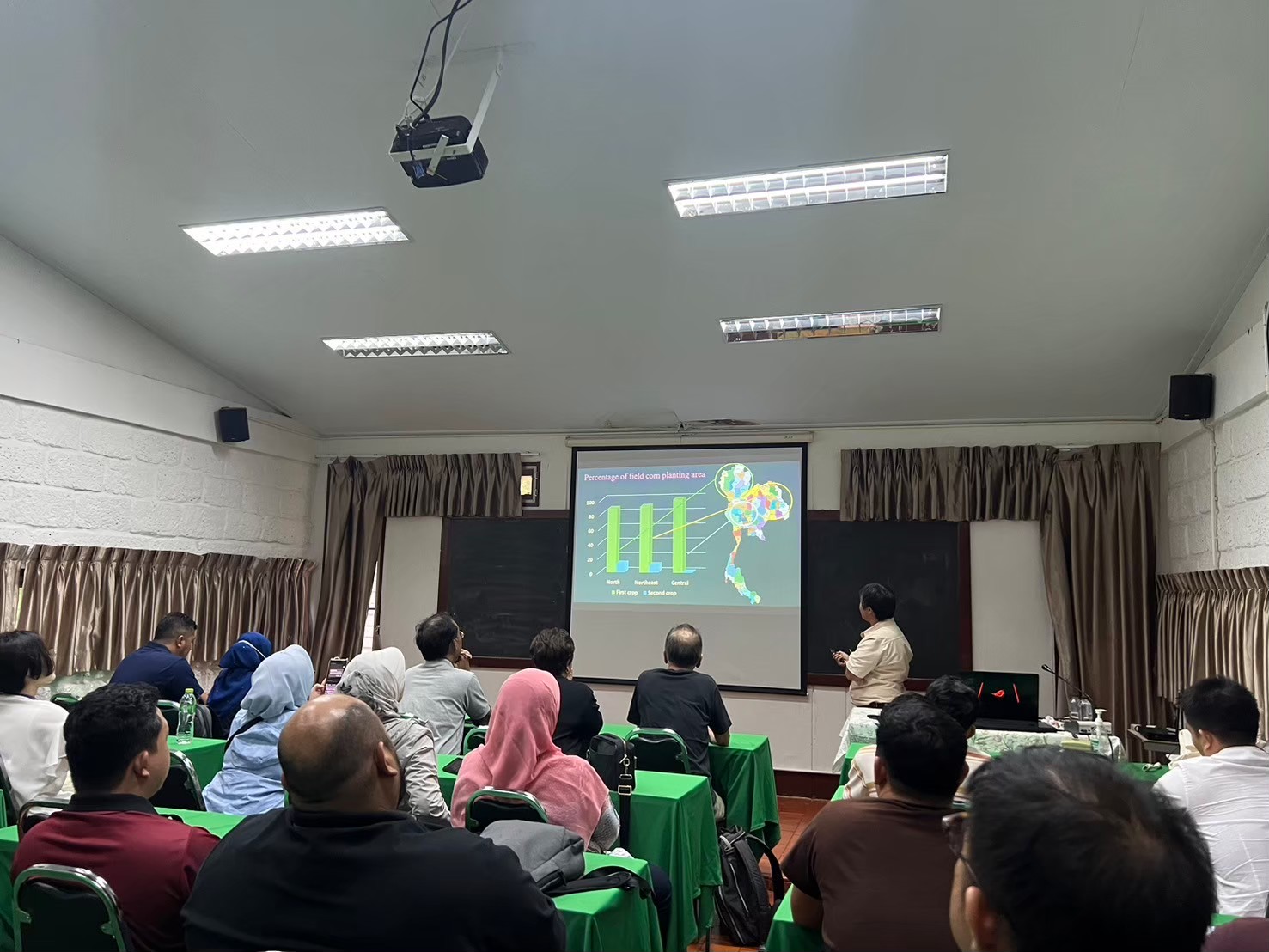
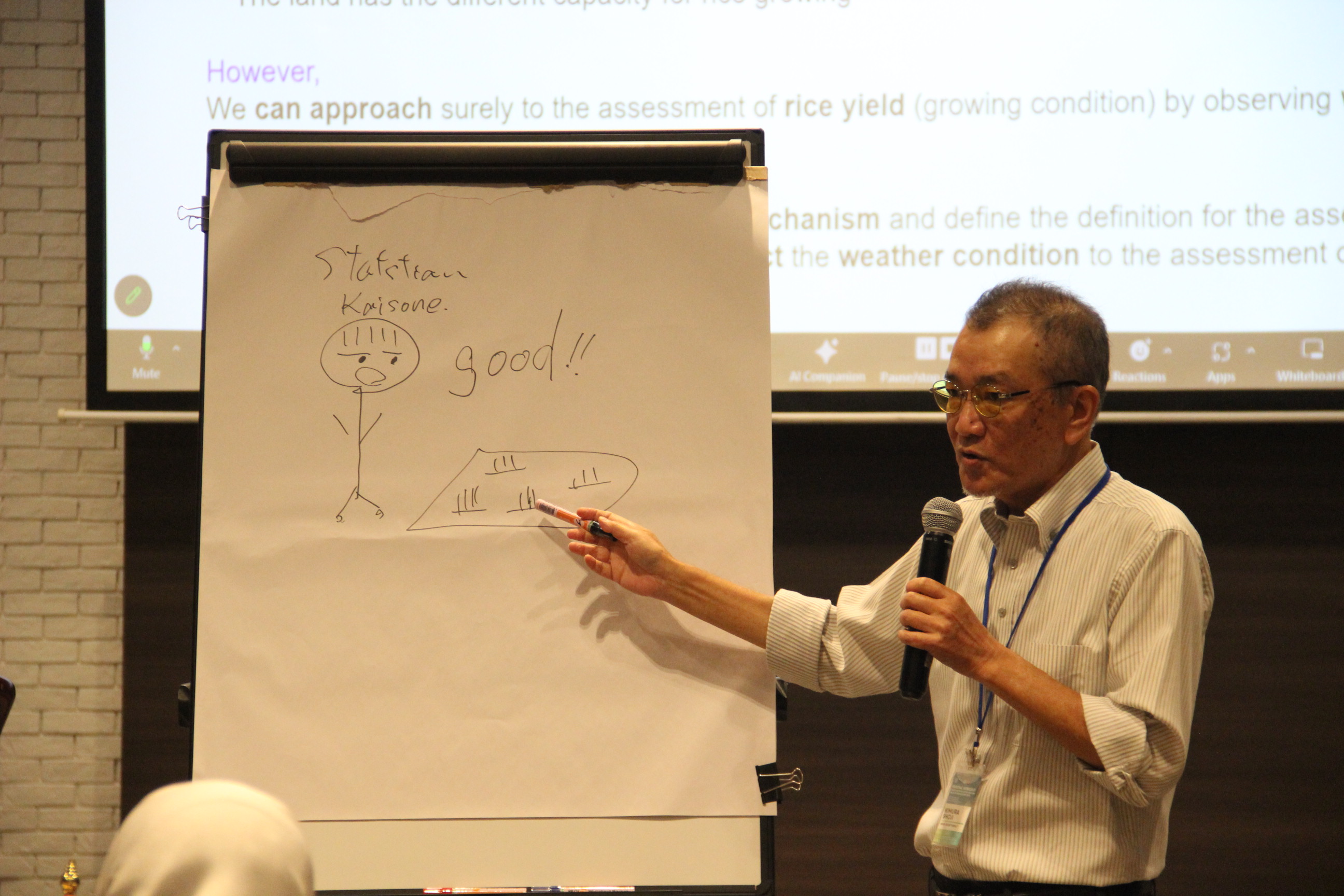
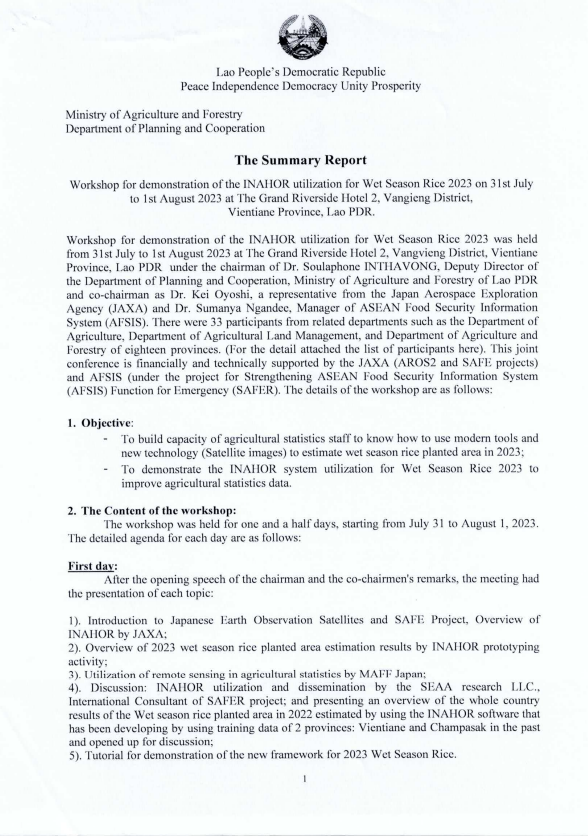
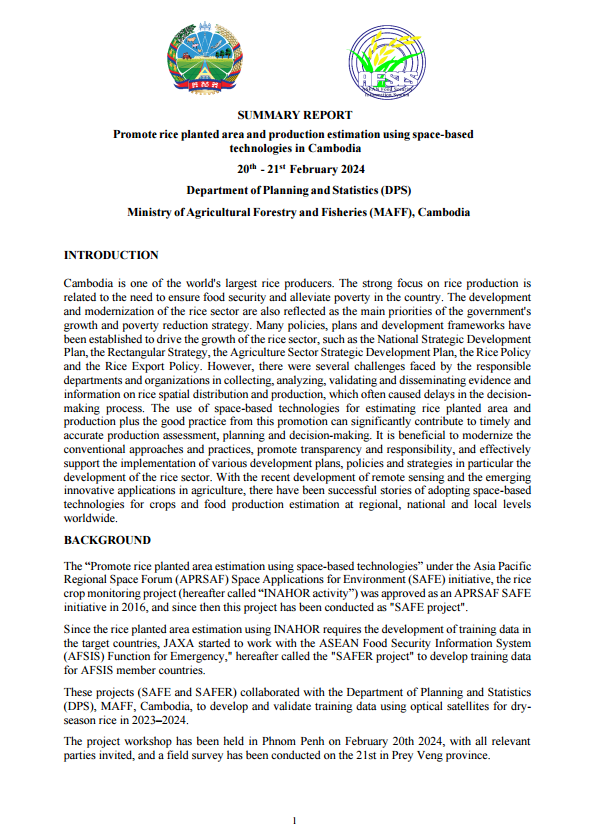
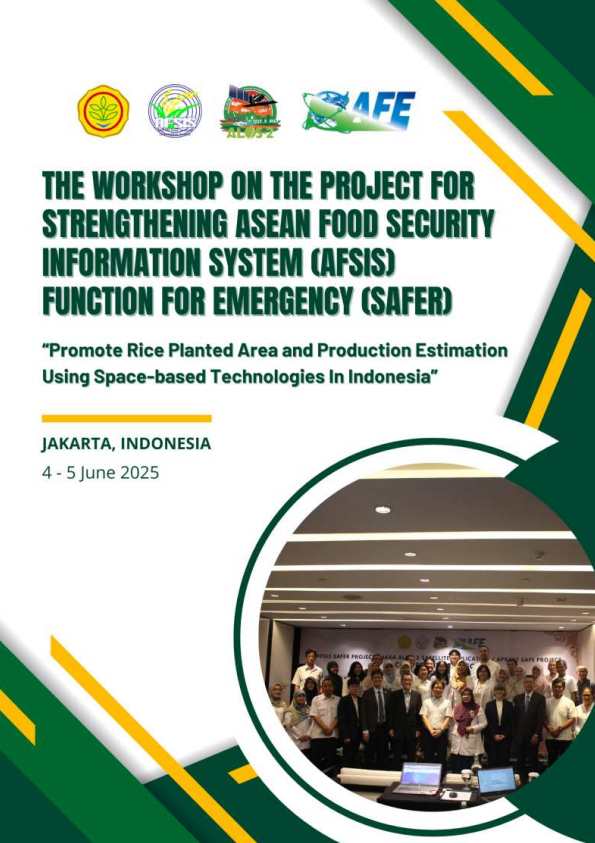
This output focuses on strengthening the capacity of officers from ASEAN Member Countries, in collaboration with JAXA and RESTEC, to develop the necessary skills to operate the INAHOR system using satellite imagery (ALOS-2 data) for estimating rice cultivation areas in target regions. Upon completion of the training, participants are expected to be able to prepare training data for INAHOR, estimate rice cultivation areas in their respective countries, and generate corresponding maps using the software. Furthermore, they will be equipped with the knowledge and capability to adopt and integrate satellite-based technologies into agricultural statistics within their national statistical systems. The AFSIS Secretariat conducted both regional workshops for member countries and in-countries activity in Lao PDR, Cambodia in 2023, Thailand and Vietnam in 2024, and Indonesia and Myanmar in 2025, respectively.



 Guideline for