
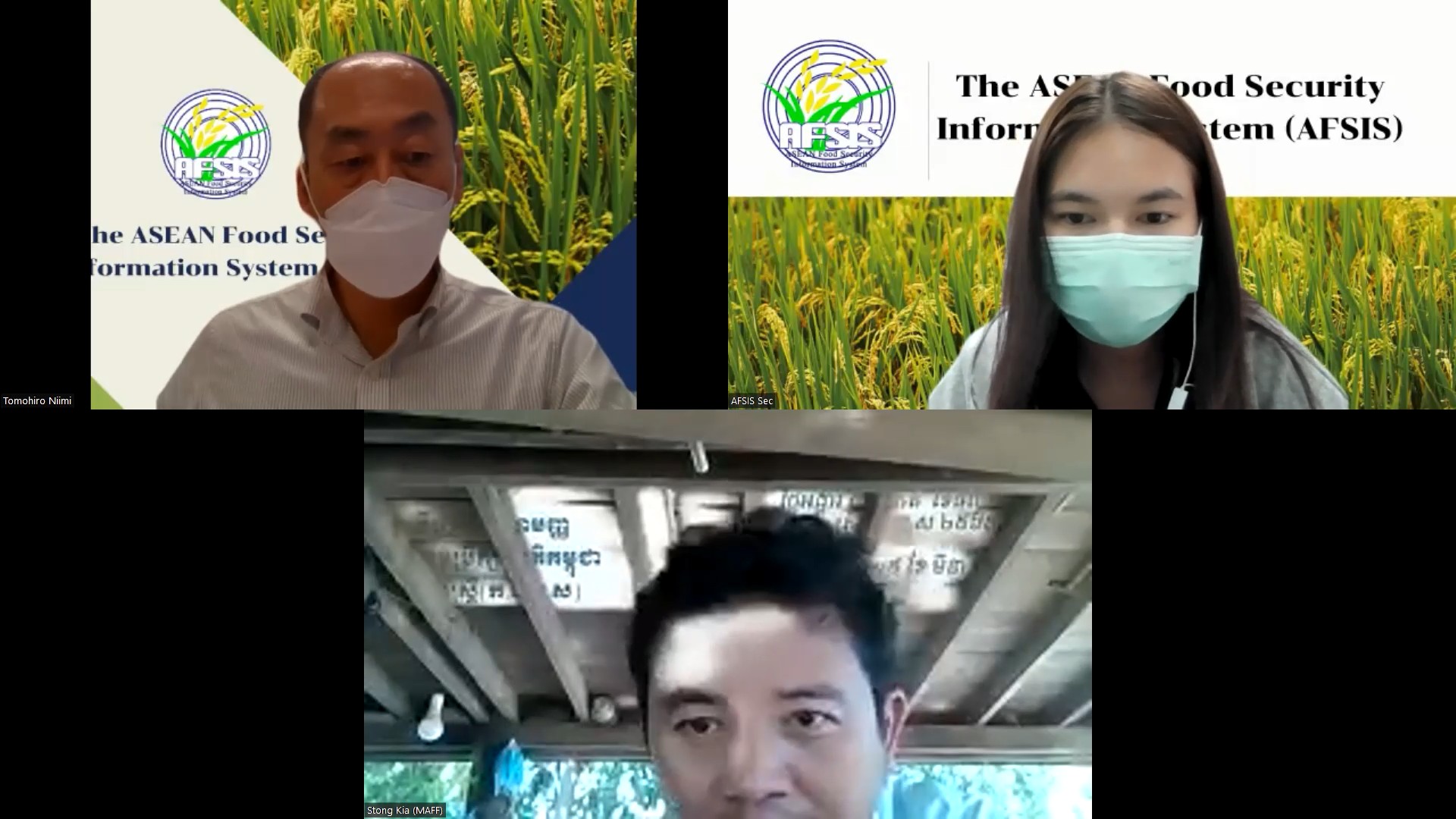
On 7-8 April 2022, the Department of Planning and Statistics (DPS) of Cambodia's Ministry of Agricultural and Fishery and Forestry (MAFF), in collaboration with the AFSIS Secretariat, held a virtual conference on Data Analysis Training as part of the Supporting Agricultural Survey on Promoting Sustainable Agriculture in ASEAN Region project (SAS-PSA).
Mr. NIIMI Tomohiro, the Japanese expert, has trained Mr. Stong Kia, the National Consultant of the SAS-PSA project in Cambodia, so that he could pass on his knowledge to other DPS staff in the soon future.
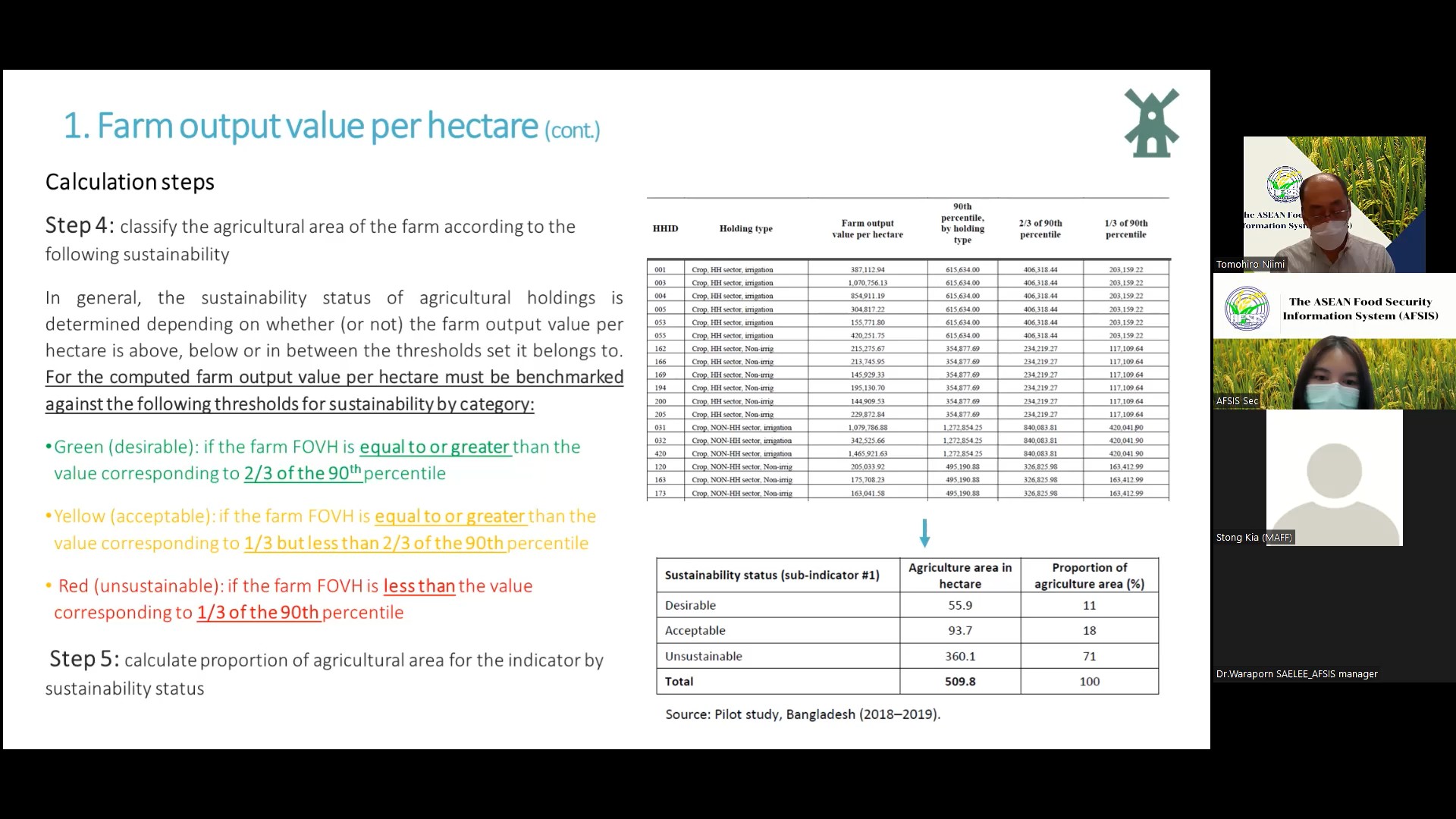
The objective of the Data Analysis Training is to enhance DPS staff's ability to evaluate data and gain a better grasp of the formula, themes, and sub-indicators of SDG indicator 2.4.1, which is used to compute the proportion of agricultural land under productive and sustainable agriculture of 220 samples in Battambang Province, Cambodia.
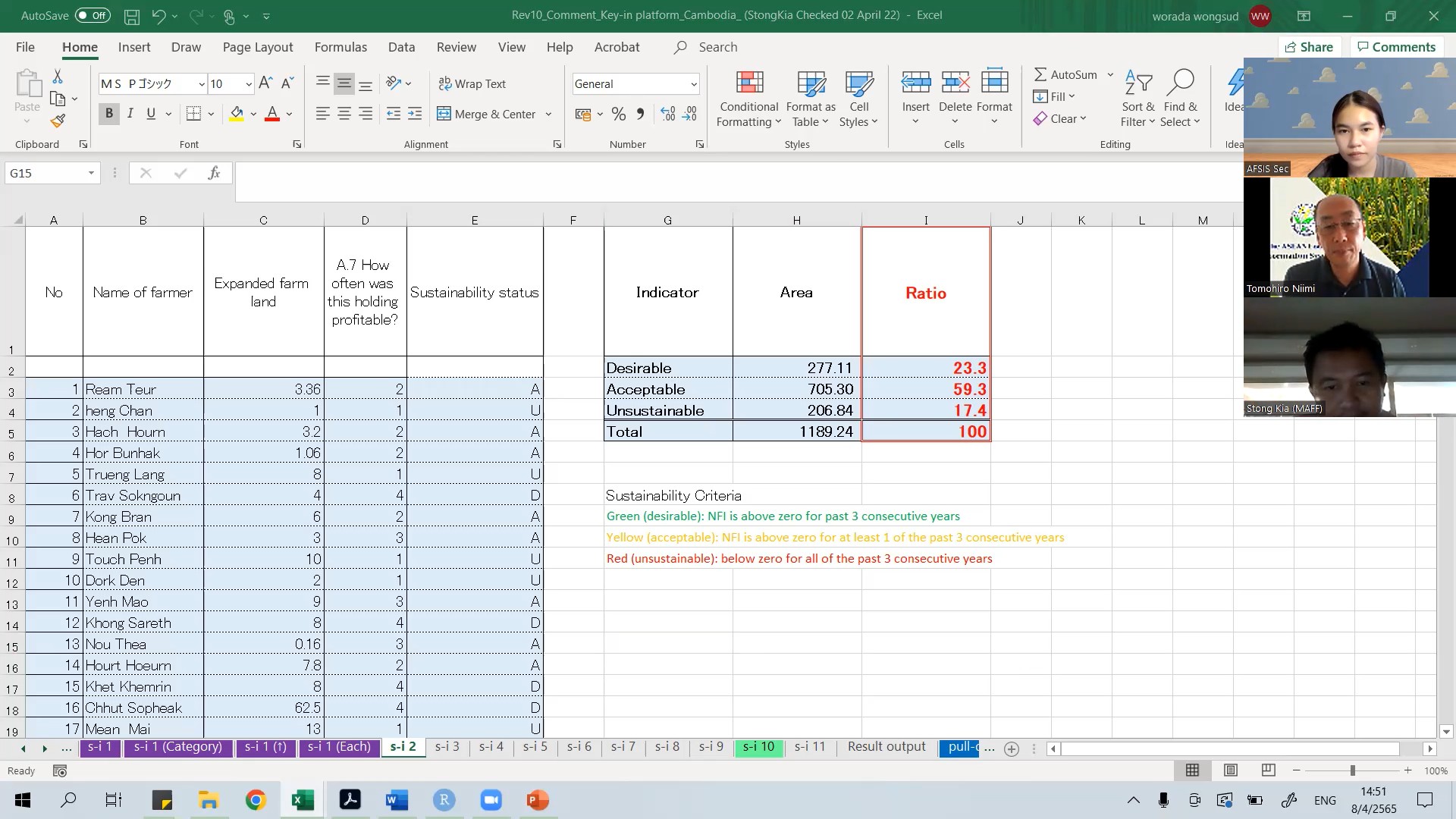
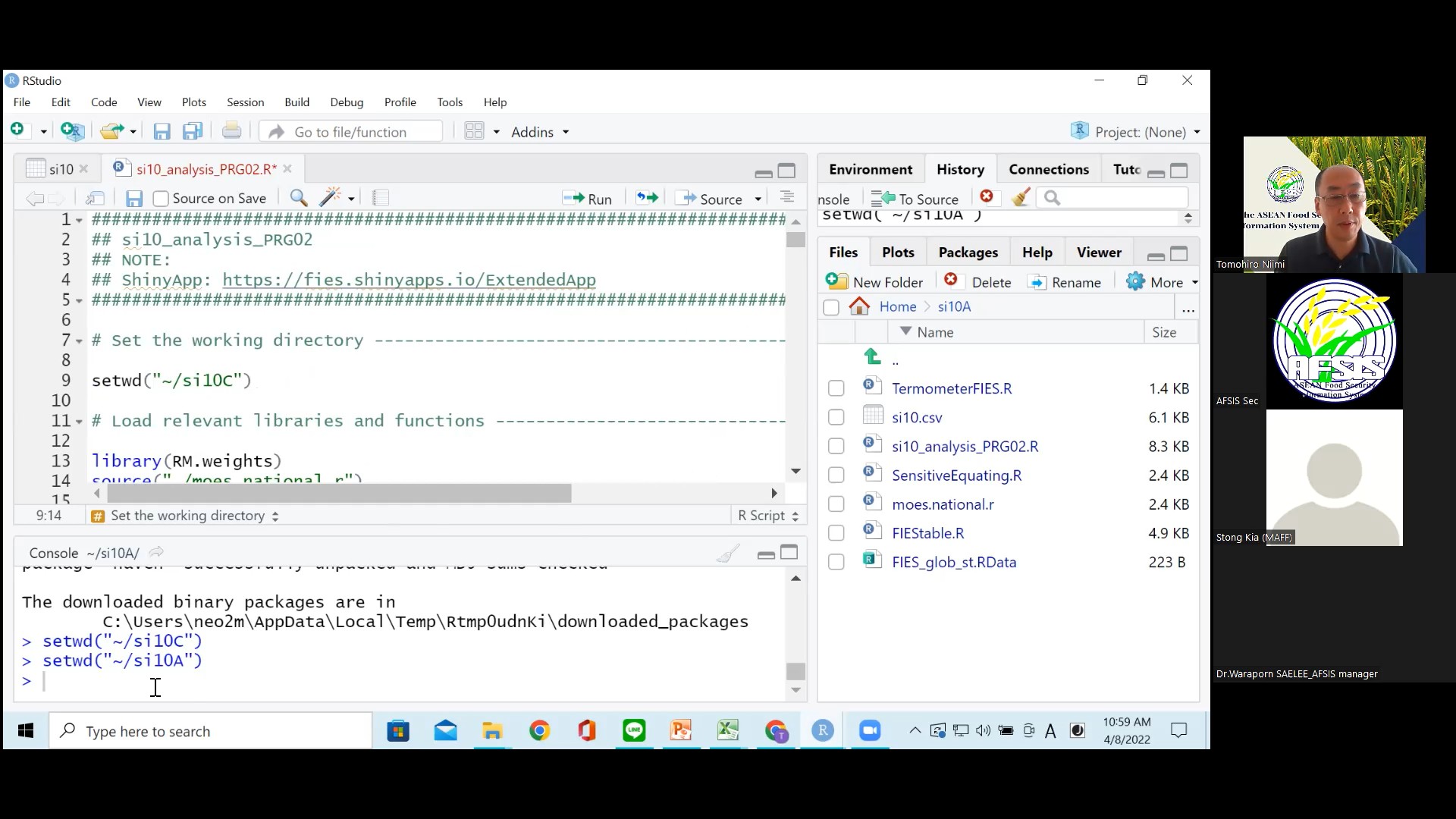
Mr. Stong Kia has learned how to calculate data using Microsoft Excel for SDG 2.4.1 Sub-indicator 1-9 and 11, as well as the "R" application for SDG 2.4.1 Sub-indicator 10.
The training ended with the great collaboration from both sides.

On 29 July 2026, the APEC Policy Partnership on Food Security (PPFS) successfully convened the APEC PPFS Webinar on Strategic Cooperation for Strengthening Food System Resilience via a virtual platform. The webinar was organized by the Ministry of Agriculture, Food and Rural Affairs (MAFRA) of the Republic of Korea as a self-funded PPFS project to promote strategic cooperation and knowledge exchange on strengthening food system resilience across APEC member economies.

The AFSIS Secretariat participated in the 10th International Conference on Agricultural Statistics (ICAS X), held from 8 to 10 July 2026 at the ICE Krakow Congress Centre in Krakow, Poland. Jointly organized by Statistics Poland, Eurostat, the United States Department of Agriculture (USDA), the World Bank Group, and the Food and Agriculture Organization of the United Nations (FAO).
.JPG)
On 24–25 June 2026, AFSIS Secretariat participated in the 46th Meeting of the ASEAN Food Security Reserve Board (AFSRB) via a virtual conference. The Meeting was jointly organized by the AFSRB Secretariat and the Department of Agriculture (DOA), Ministry of Agriculture, Livestock and Irrigation (MOALI) of the Republic of the Union of Myanmar, and was hosted in Nay Pyi Taw, Myanmar.

On 17–18 June 2026, the 24th AFSIS Focal Point Meeting was successfully convened via video conference, hosted by the Philippine Statistics Authority (PSA) in collaboration with the ASEAN Food Security Information System (AFSIS) Secretariat.

