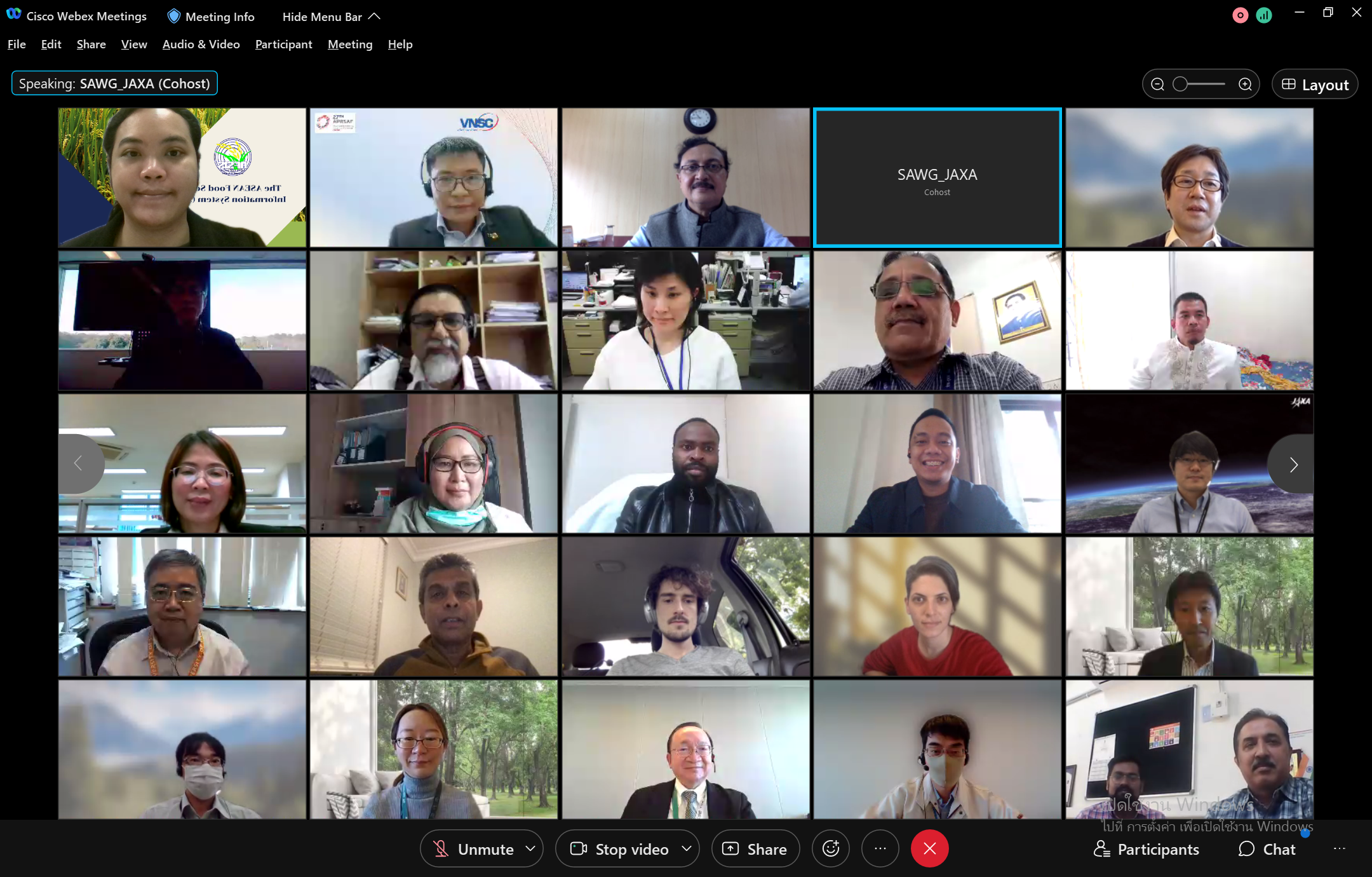
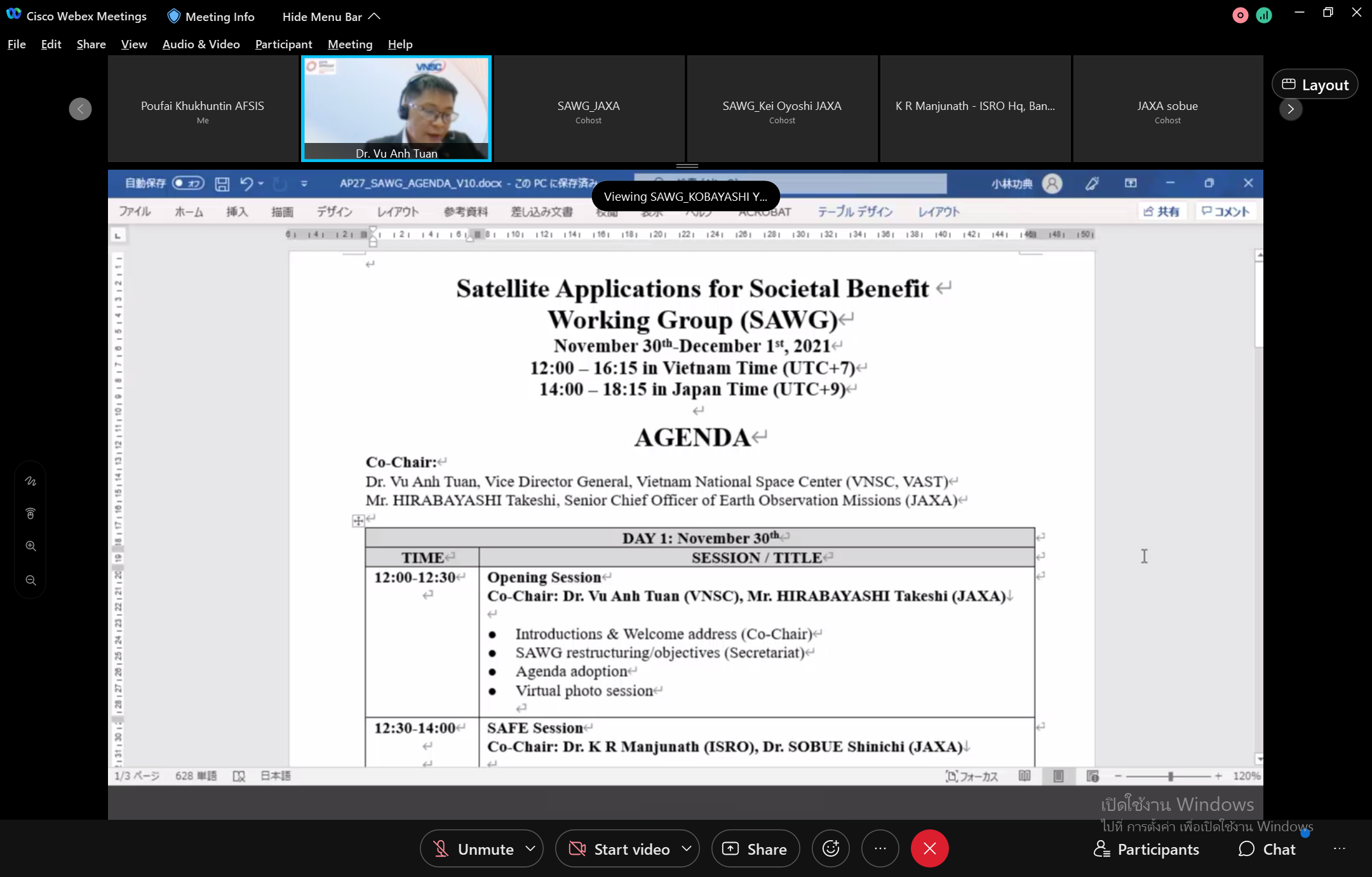
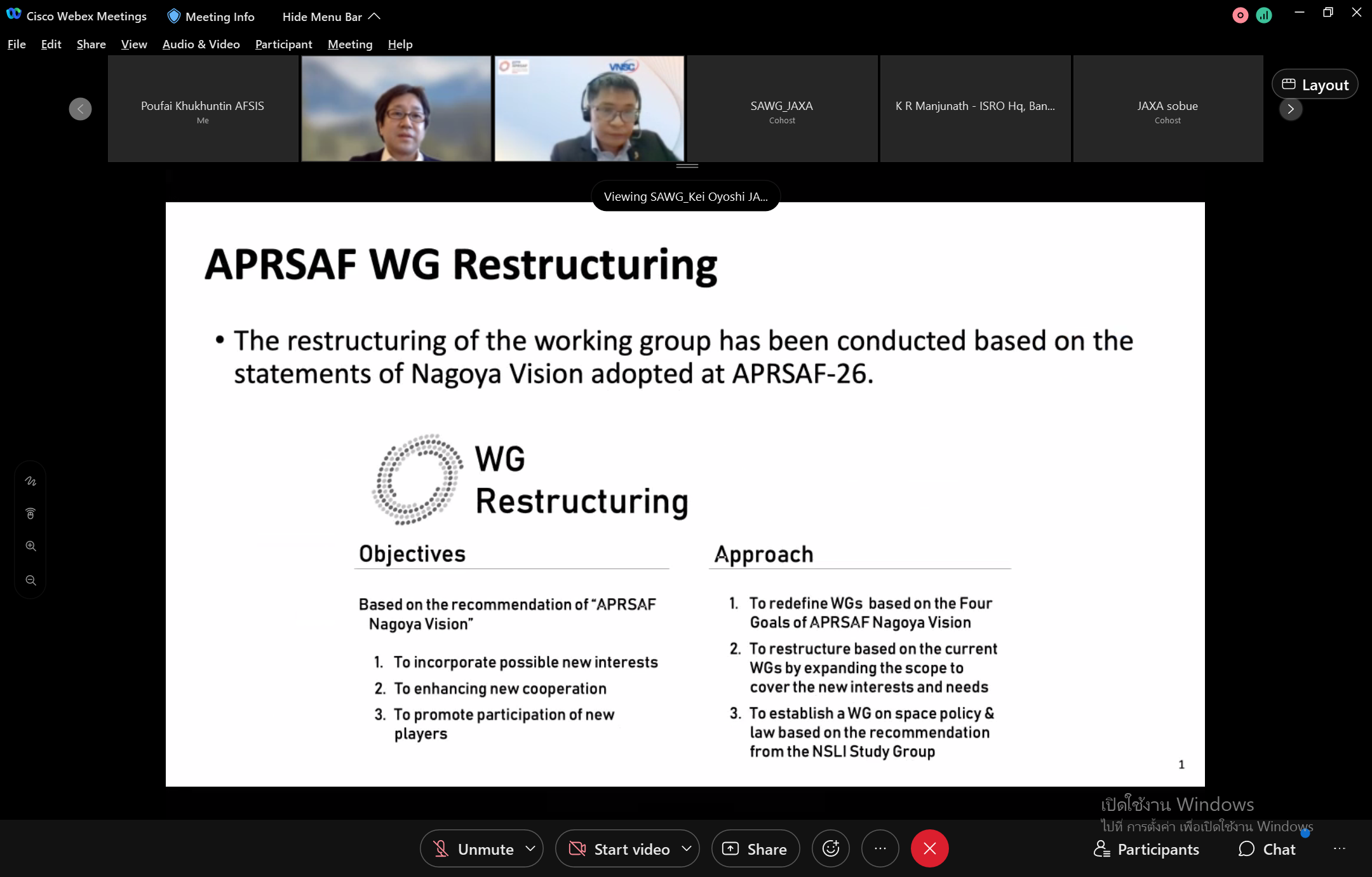
On 30 November 2021, AFSIS Secretariat had attended the 27th session of the Asia-Pacific Regional Space Agency Forum (APRSAF-27) which was co-organized by Vietnam Academy of Science and Technology (VAST) with Ministry of Education, Culture, Sports, Science and Technology (MEXT) of Japan, and Japan Aerospace Exploration Agency (JAXA).
Prior to the plenary sessions which will be held on 2 and 3 December, there are the 5 working group sessions holding in parallel on 30 November and 1 December. The working group session including 1) Satellite Applications for Societal Benefit Working Group (SAWG) 2) Enhancement of Space Capability Working Group (SCWG) 3) Space Frontier Working Group (SFWG) 4) Kibo-ABC Workshop 5) Space Education for All Working Group (SE4AWG).
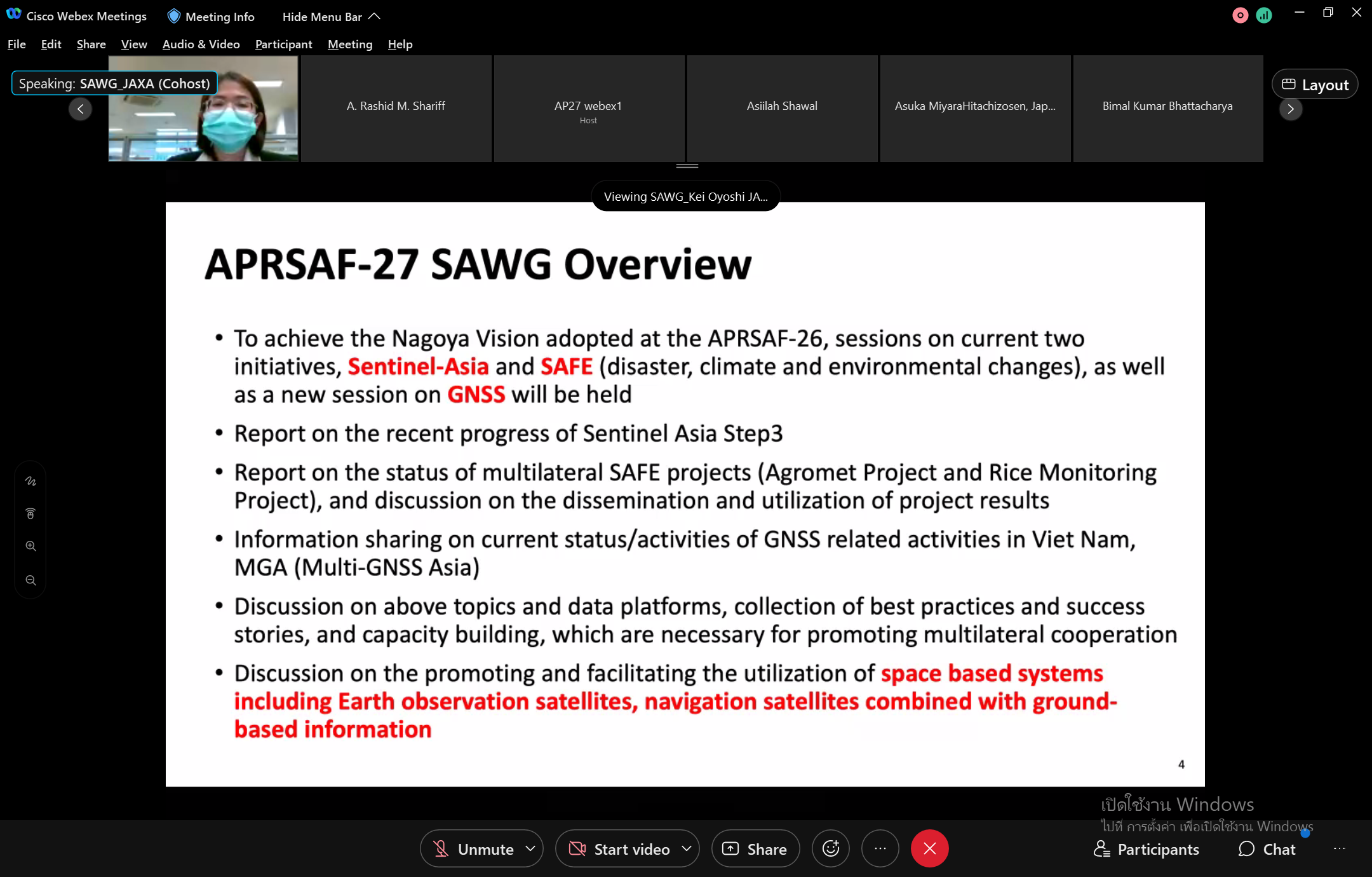
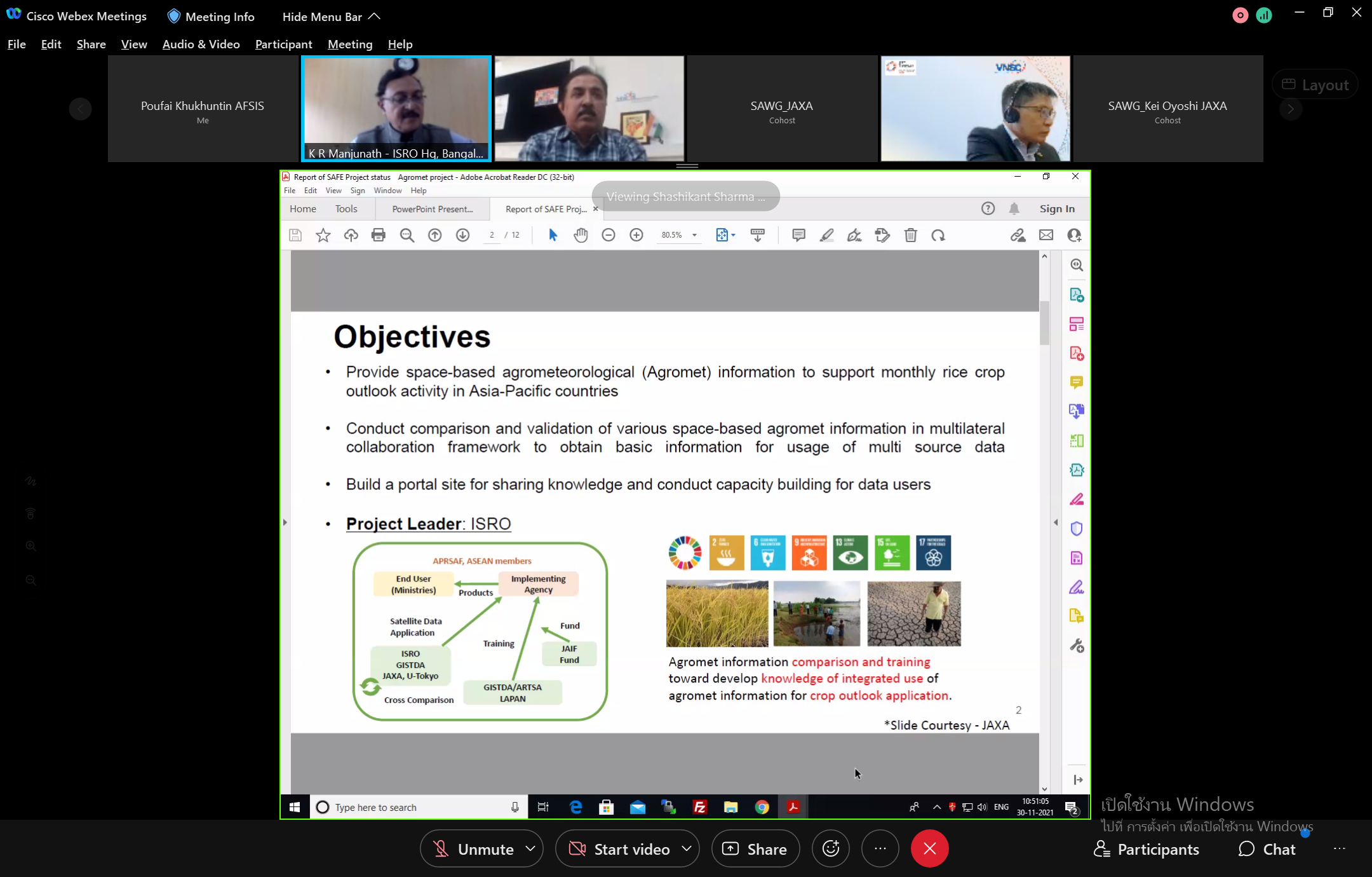
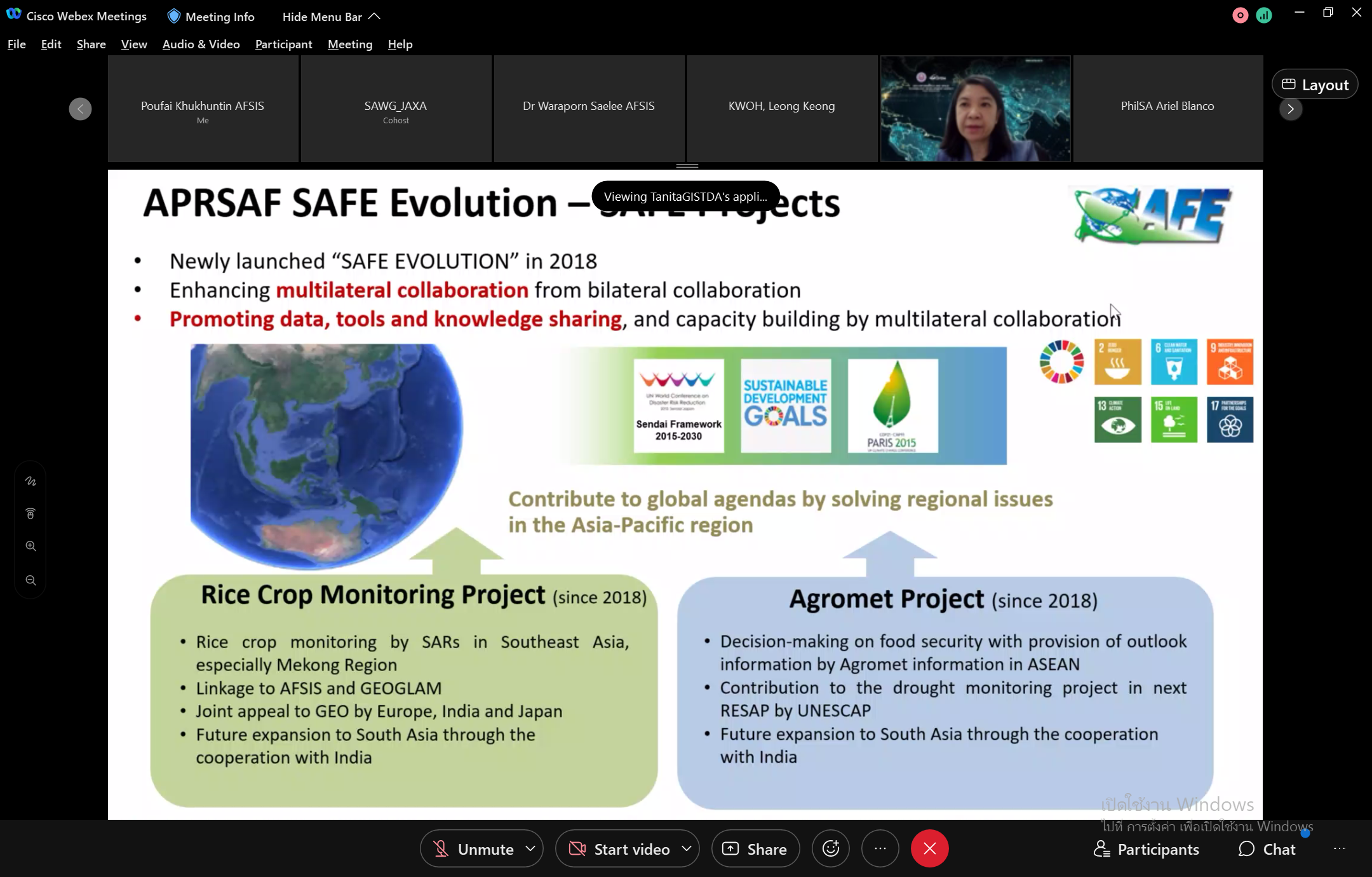
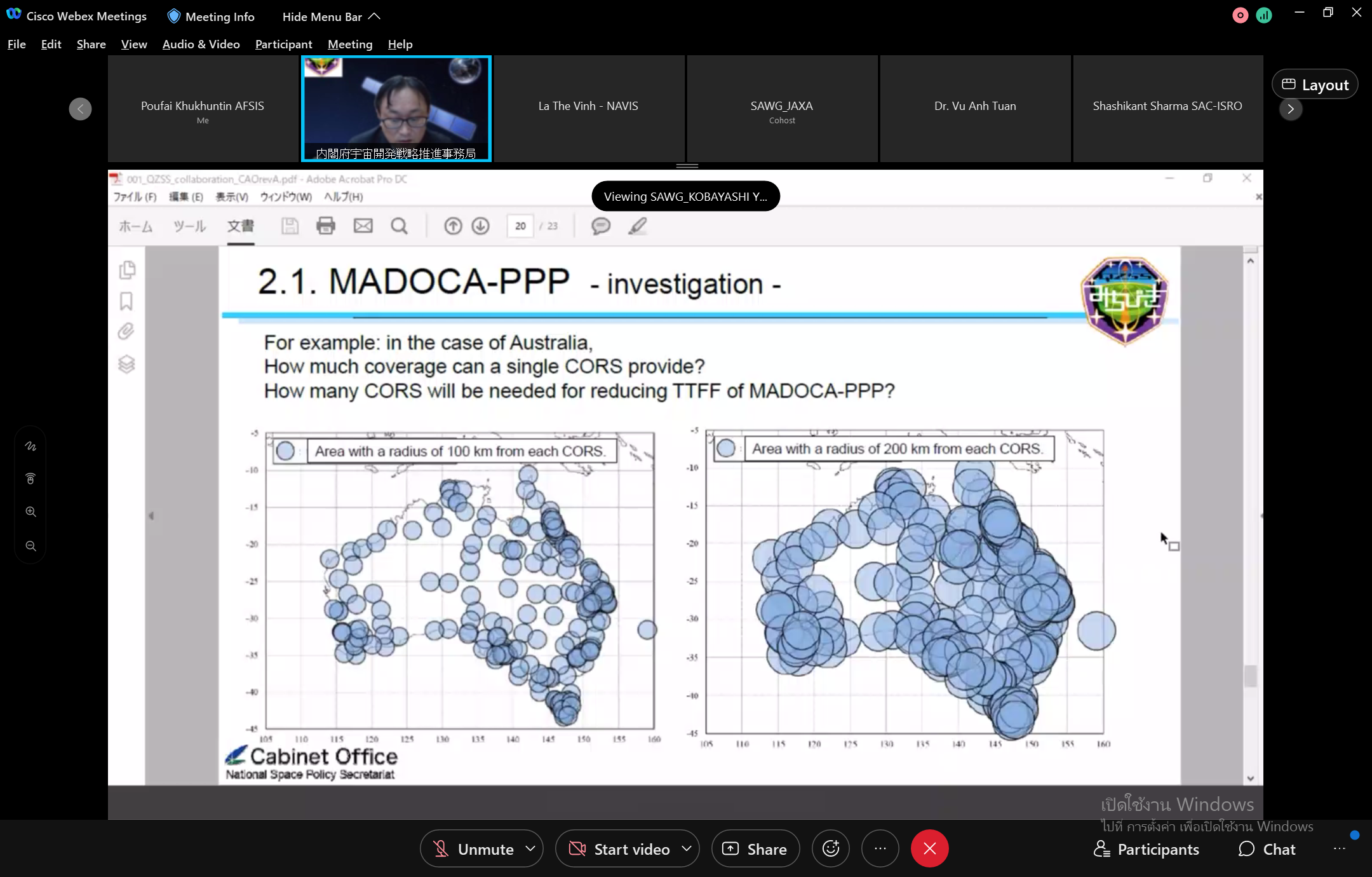
During Satellite Applications for Societal Benefit Working Group (SAWG), Dr. Waraporn Saelee, AFSIS Manager, had delivered the presentation regarding AFSIS Rice Growing Outlook (RGO) activities and collaboration related to remote sensing technologies with RESTEC, JAXA, and ISRO. The Meeting acknowledged the agreement to have the hands-on training for rice mapping using (cloud-based) platform in collaboration with AFSIS and ISRO in the future. Also, Dr. Waraporn had stated to the Working Group of the importance and possibility to use the satellite data as it can be applied together with the survey data by the ASEAN Member States to create more accurate and precise data for the AFSIS Early Warning Information Report in the future.
The objectives of this SAWG session is to contribute to common regional issues in the Asia-Pacific Region using space technology, in particular, Earth Observation Satellites and to establish and strengthen the cooperative framework between space agencies and stakeholders, including end-users such as AFSIS and development aid agencies, in a sustainable way.

The AFSIS Secretariat participated in the 10th International Conference on Agricultural Statistics (ICAS X), held from 8 to 10 July 2026 at the ICE Krakow Congress Centre in Krakow, Poland. Jointly organized by Statistics Poland, Eurostat, the United States Department of Agriculture (USDA), the World Bank Group, and the Food and Agriculture Organization of the United Nations (FAO).
.JPG)
On 24–25 June 2026, AFSIS Secretariat participated in the 46th Meeting of the ASEAN Food Security Reserve Board (AFSRB) via a virtual conference. The Meeting was jointly organized by the AFSRB Secretariat and the Department of Agriculture (DOA), Ministry of Agriculture, Livestock and Irrigation (MOALI) of the Republic of the Union of Myanmar, and was hosted in Nay Pyi Taw, Myanmar.

On 17–18 June 2026, the 24th AFSIS Focal Point Meeting was successfully convened via video conference, hosted by the Philippine Statistics Authority (PSA) in collaboration with the ASEAN Food Security Information System (AFSIS) Secretariat.
.jpg)
The ASEAN Food Security Information System (AFSIS) Secretariat, in collaboration with the Ministry of Agriculture, Forestry and Fisheries (MAFF) Japan, Japan Aerospace Exploration Agency (JAXA), Remote Sensing Technology Center of Japan (RESTEC), and Geo-Informatics and Space Technology Development Agency (GISTDA), conducted the 2nd Hands-on Training Courses for Agricultural Statisticians, the Final Workshop, and the 2nd Seminar for Executive Officials under the JAIF Project entitled “Improvement of Rice Paddy Area Statistics and Damage Assessment using Earth Observation Satellites for ASEAN” in Sriracha, Chonburi Province, and Bangkok, Thailand.

