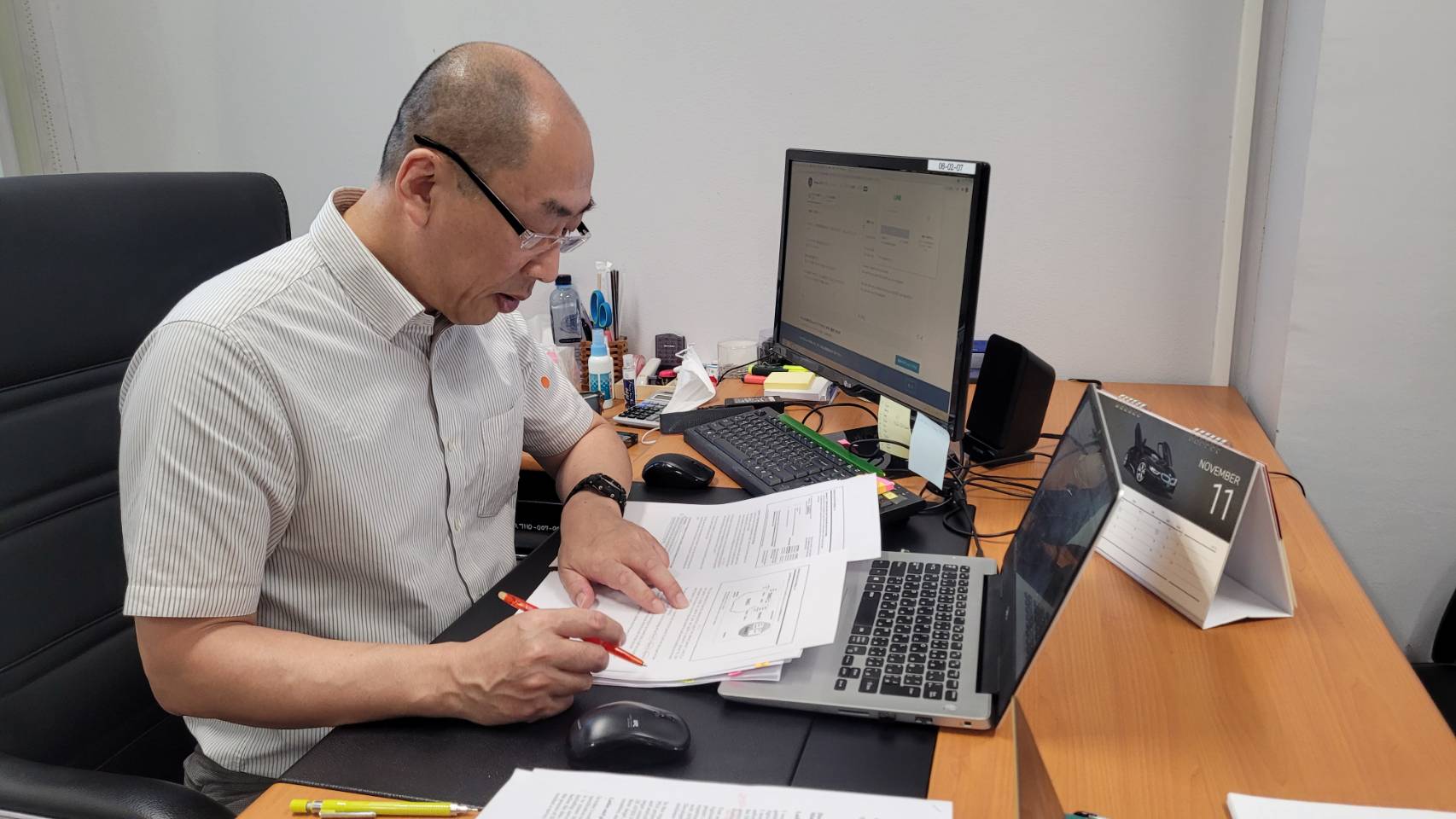
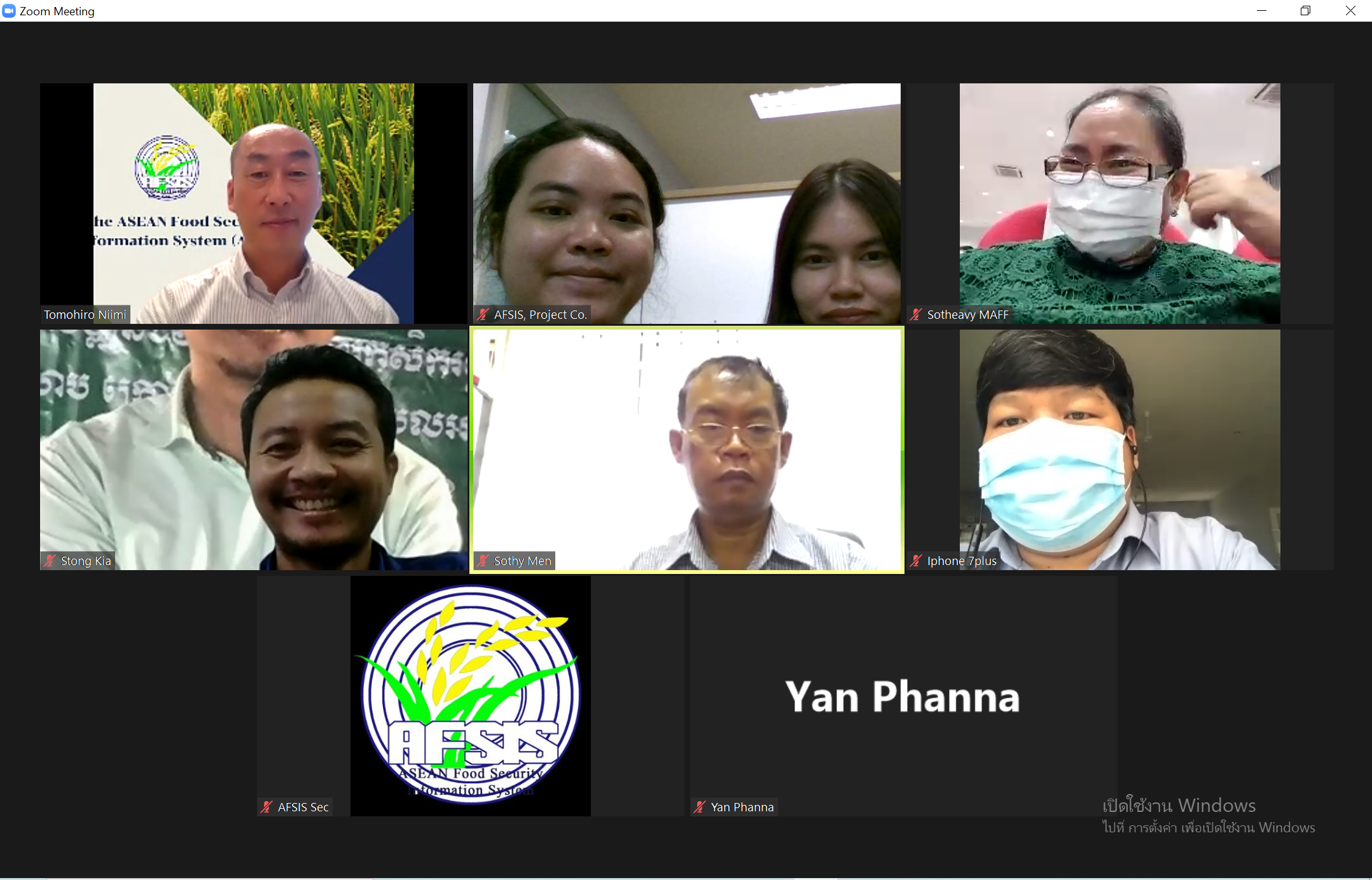
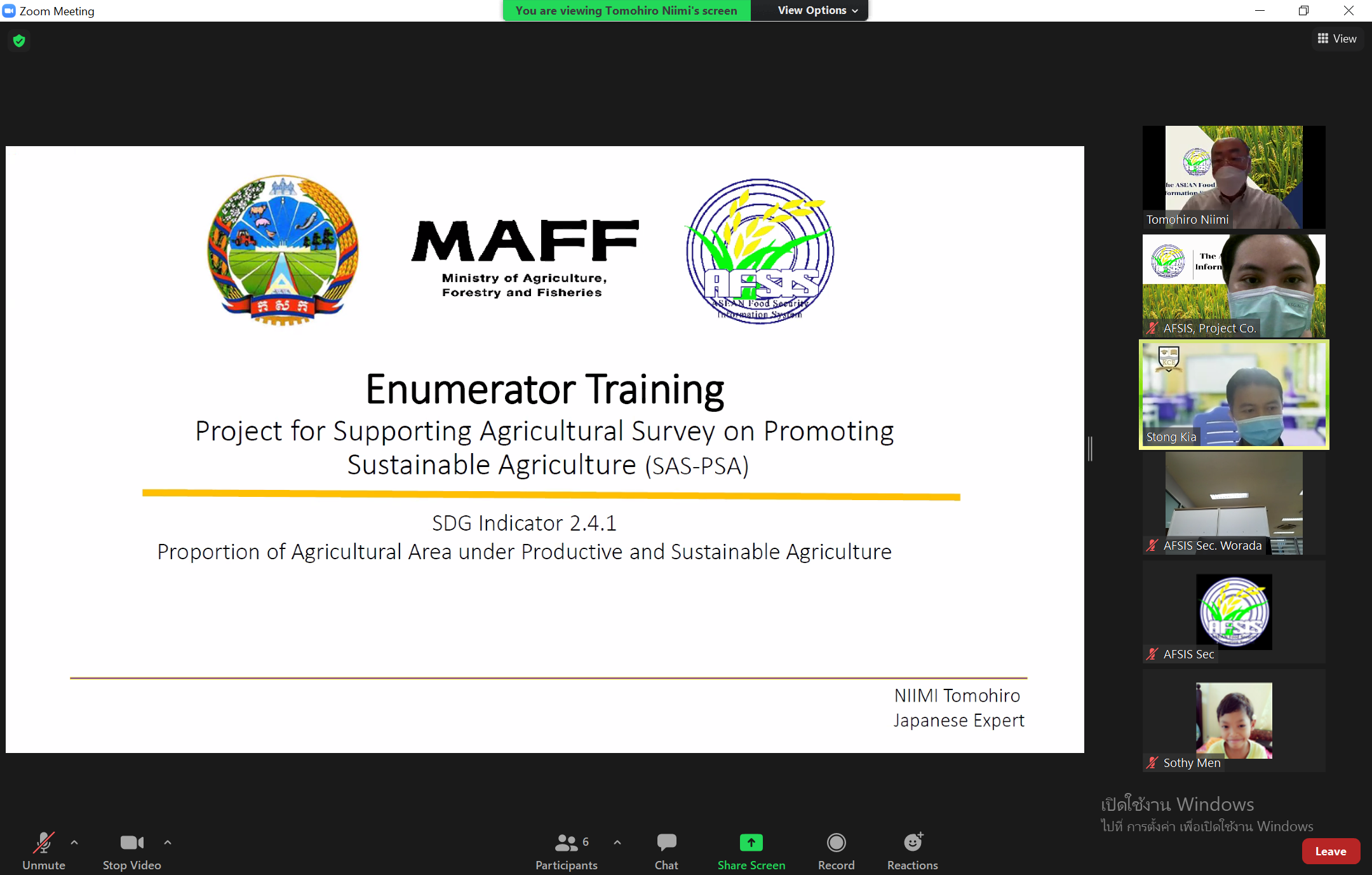
On 11 November 2021, AFSIS Secretariat and Department of Planning and Statistics (DPS), Ministry of Agriculture Forestry and Fisheries (MAFF), the Kingdom of Cambodia had hold an online Enumerator Training as a part of project for Supporting Agricultural Survey on Promoting Sustainable Agriculture in ASEAN Region (SAS-PSA project) in Cambodia.
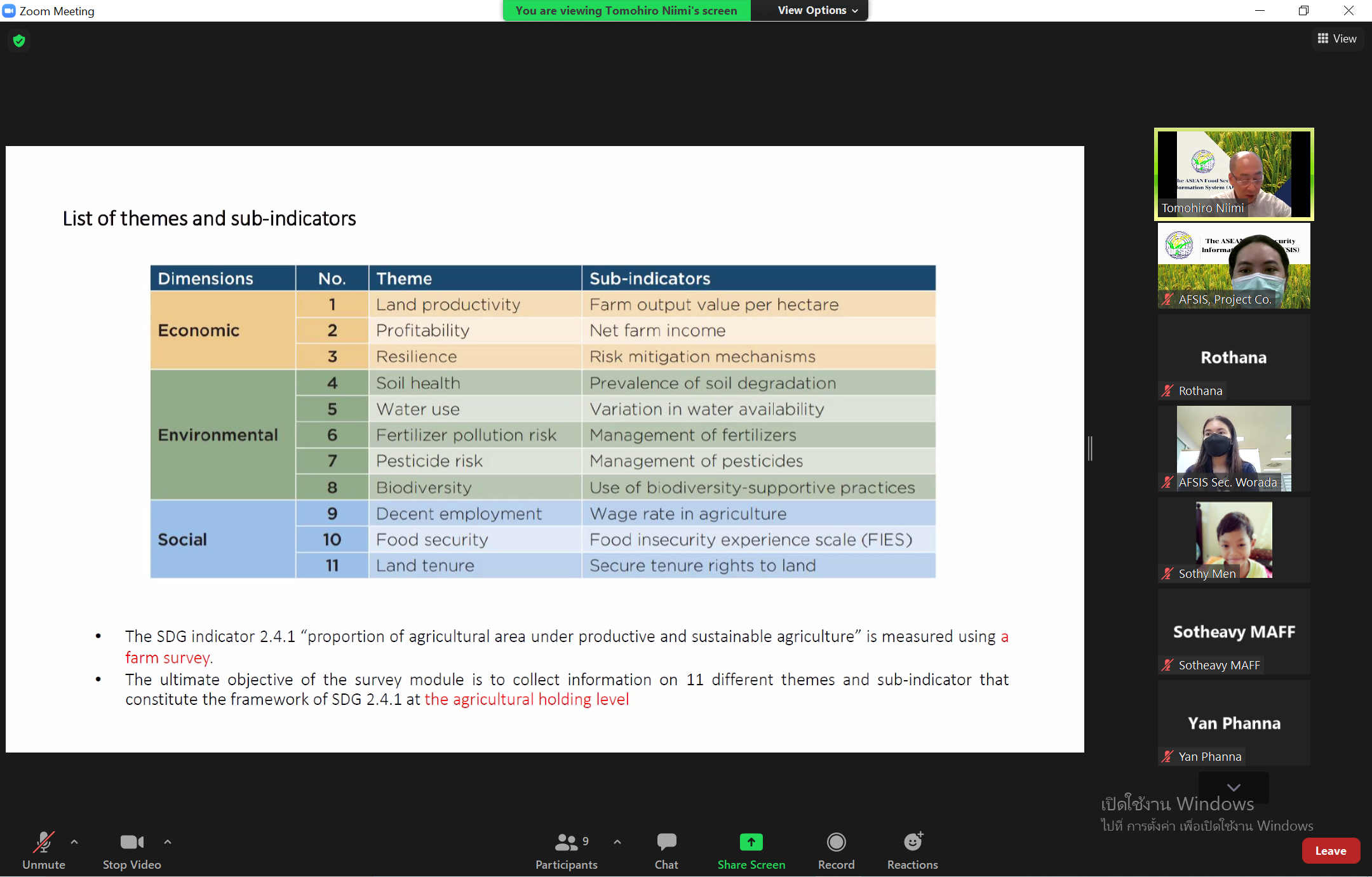
The main objectives of the Enumerator Training aim to develop capacity, strengthen knowledge and experience of the DPS officials as well as enumerators on the SDG indicator 2.4.1. in data collection, to train DPS officials to get familiar with these elements: 1) the overview of Enumerator Manual 2) structure of questionnaire related to the SDG indicator 2.4.1 designed by the Food and Agriculture Organization (FAO) 3) list of themes and sub-indicators 4) specifications 5) survey preparation
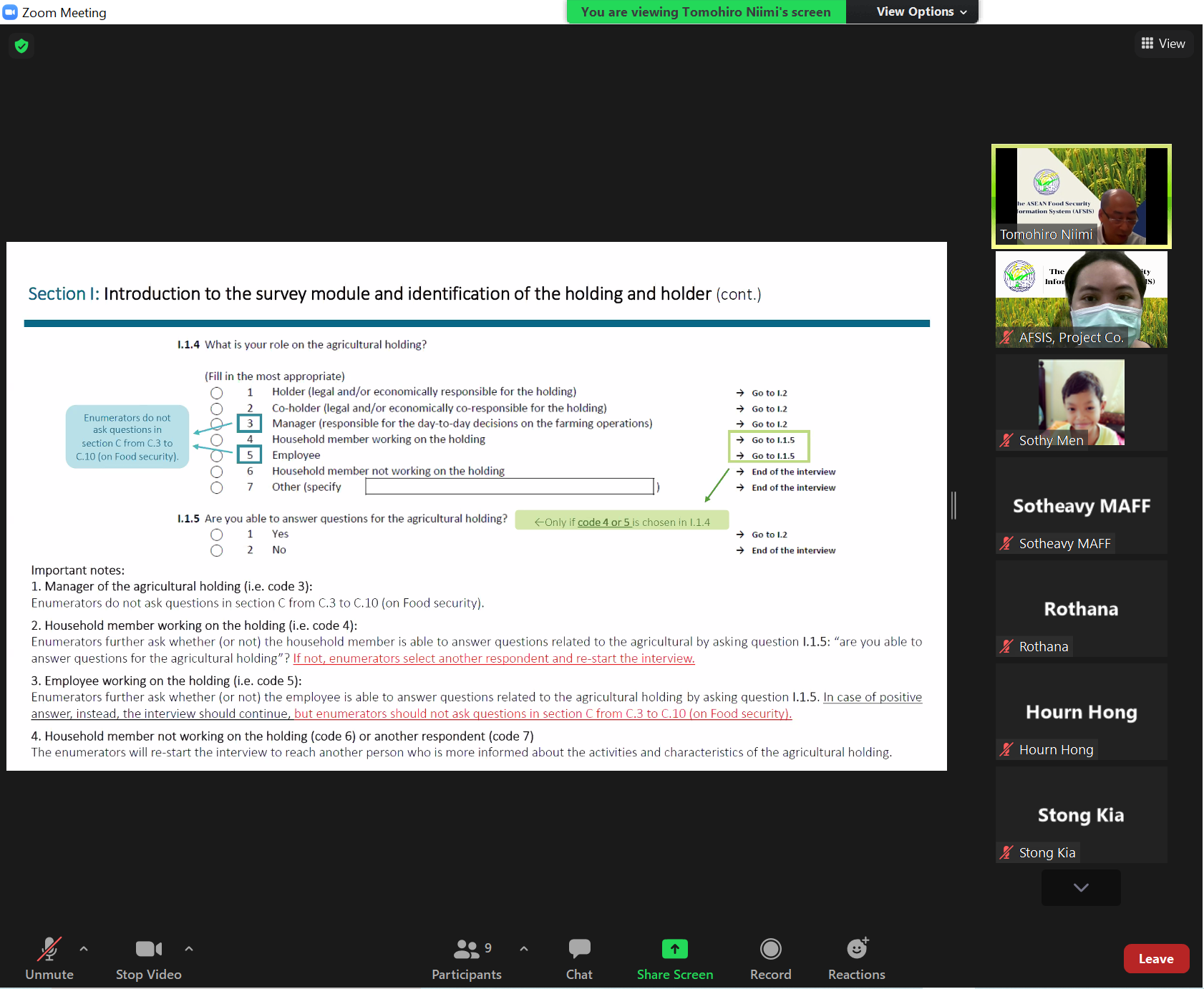
On this enumerator training, Mr. NIIMI Tomohiro, the Japanese Expert had trained Mr. Stong Kia, the National Consultant of Cambodia along with DPS officials regarding the details of SDG indicator 2.4.1 questionnaire and data collection process. This training was to ensure that all enumerators have a clear understanding on questions, response code, and including survey protocols which are based on the FAO Survey module.
Later in this month during 25-27 November 2021, the DPS officials will perform as lecturers and train the enumerators in Khmer language.

The AFSIS Secretariat participated in the 10th International Conference on Agricultural Statistics (ICAS X), held from 8 to 10 July 2026 at the ICE Krakow Congress Centre in Krakow, Poland. Jointly organized by Statistics Poland, Eurostat, the United States Department of Agriculture (USDA), the World Bank Group, and the Food and Agriculture Organization of the United Nations (FAO).
.JPG)
On 24–25 June 2026, AFSIS Secretariat participated in the 46th Meeting of the ASEAN Food Security Reserve Board (AFSRB) via a virtual conference. The Meeting was jointly organized by the AFSRB Secretariat and the Department of Agriculture (DOA), Ministry of Agriculture, Livestock and Irrigation (MOALI) of the Republic of the Union of Myanmar, and was hosted in Nay Pyi Taw, Myanmar.

On 17–18 June 2026, the 24th AFSIS Focal Point Meeting was successfully convened via video conference, hosted by the Philippine Statistics Authority (PSA) in collaboration with the ASEAN Food Security Information System (AFSIS) Secretariat.
.jpg)
The ASEAN Food Security Information System (AFSIS) Secretariat, in collaboration with the Ministry of Agriculture, Forestry and Fisheries (MAFF) Japan, Japan Aerospace Exploration Agency (JAXA), Remote Sensing Technology Center of Japan (RESTEC), and Geo-Informatics and Space Technology Development Agency (GISTDA), conducted the 2nd Hands-on Training Courses for Agricultural Statisticians, the Final Workshop, and the 2nd Seminar for Executive Officials under the JAIF Project entitled “Improvement of Rice Paddy Area Statistics and Damage Assessment using Earth Observation Satellites for ASEAN” in Sriracha, Chonburi Province, and Bangkok, Thailand.

