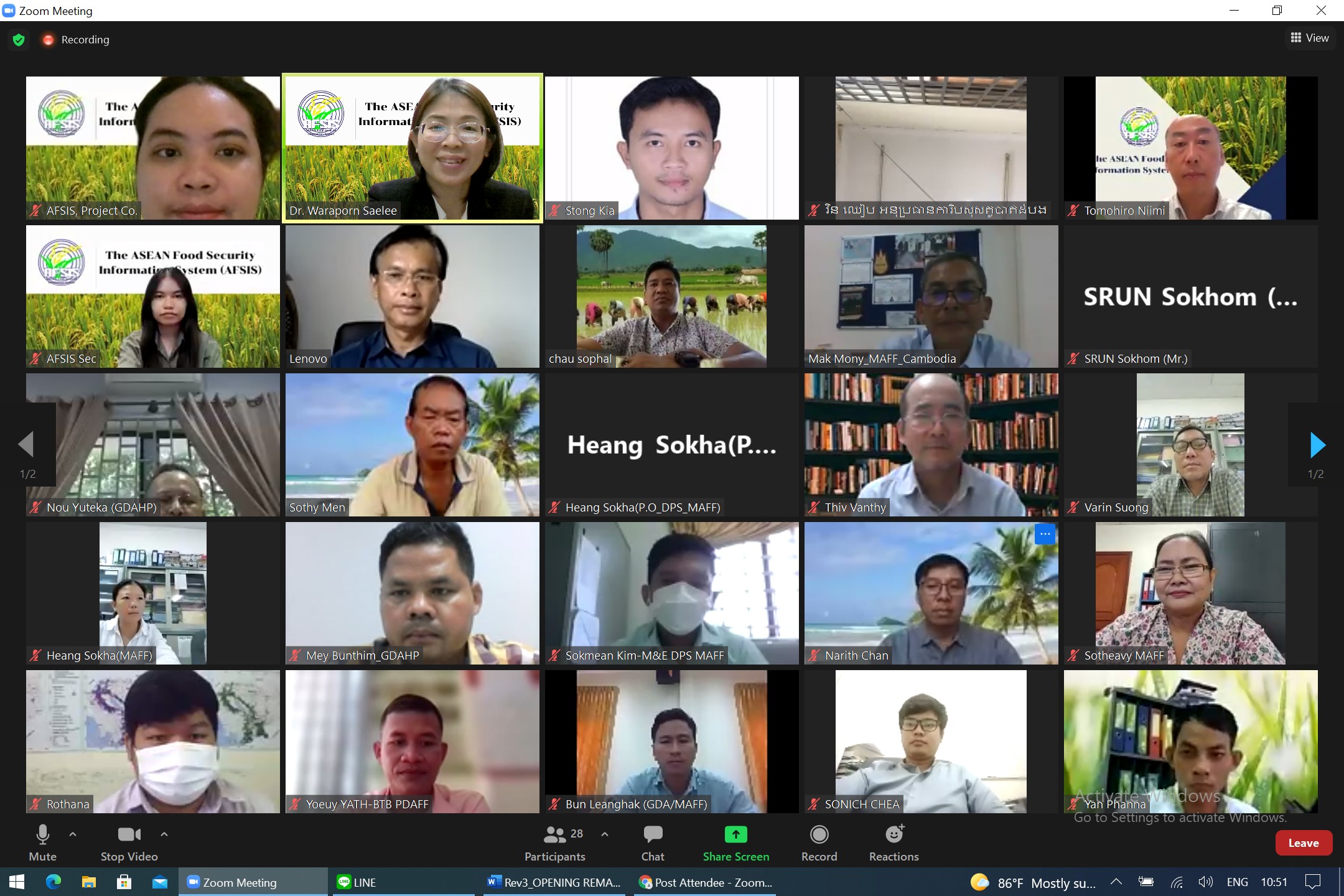
On 27 October 2021, the Stakeholders Meeting was conducted out of the collaboration between AFSIS Secretariat and Department of Planning and Statistics (DPS), Ministry of Agriculture Forestry and Fisheries (MAFF),
the Kingdom of Cambodia as a Video Conference for Project for Supporting Agricultural Survey on Promoting Sustainable Agriculture (SAS-PSA) in Cambodia.
Main objectives of the Stakeholders Meeting are to inform all the stakeholders in the MAFF of Cambodia regarding the core objectives, activities details, and the future work plan of the SAS-PSA project. This also includes discussing the on-going implementations of the SAS-PSA project in Cambodia and receiving any comments or suggestions from the stakeholders.
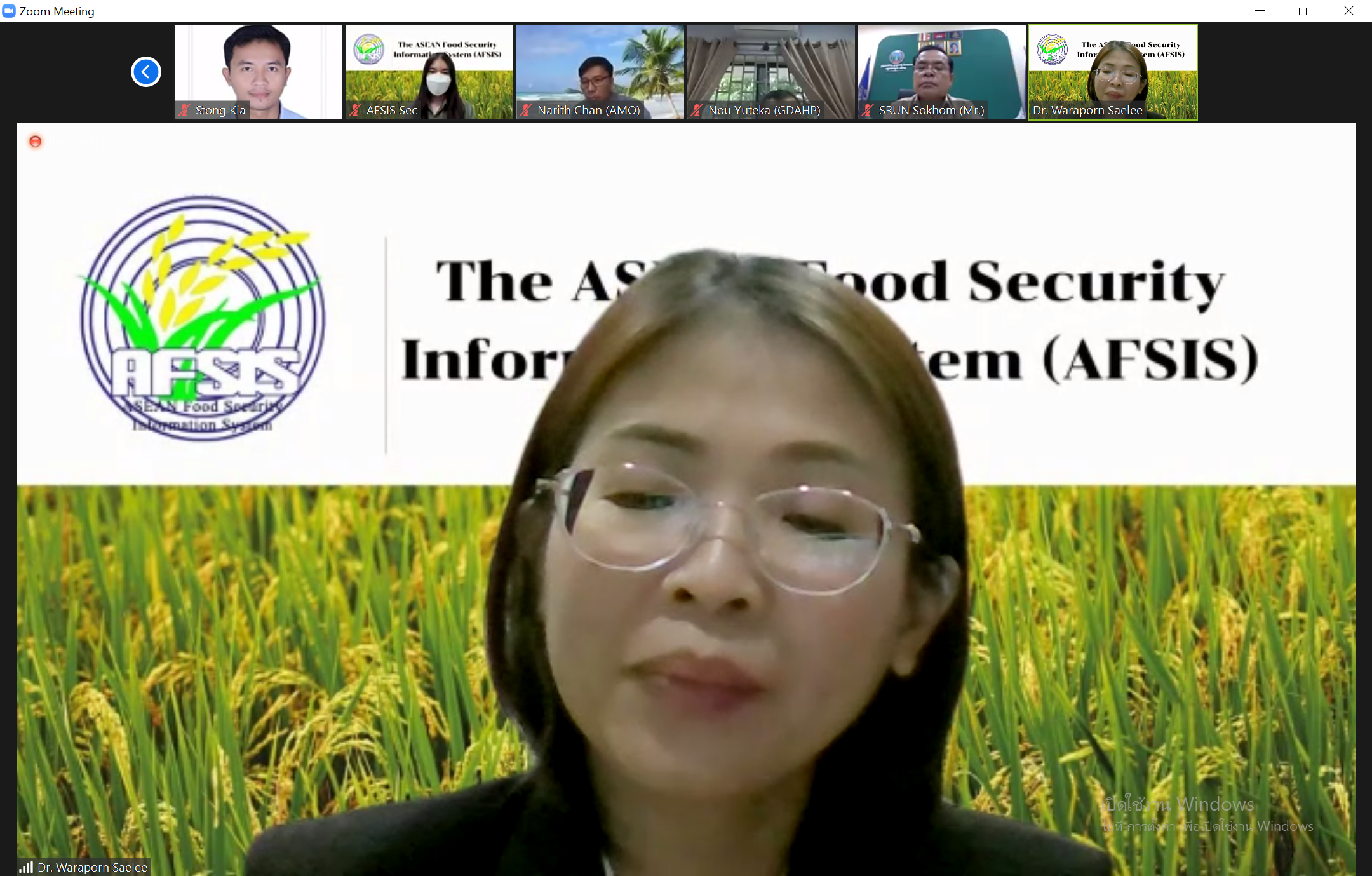
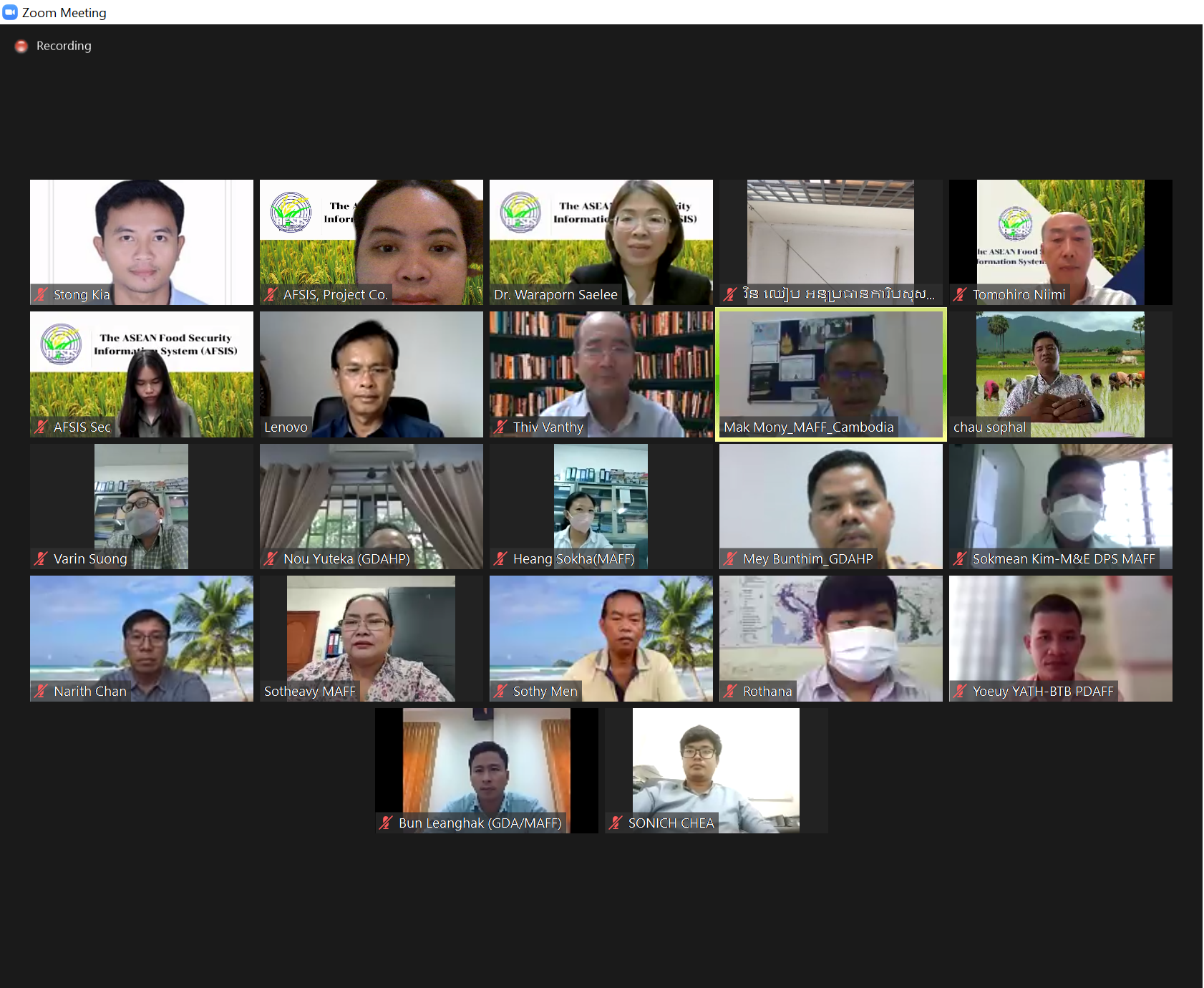
The opening speech was honorably given by Dr. Waraporn Saelee, AFSIS Manager. Moreover, the meeting included the delegates from DPS, General Director of Agriculture (GDA) DALM, Crop department, Department of Industry Agriculture (DIA), Provincial Department Agriculture, Forestry and Fisheries (PDAFF), General Director of Animal Health Production (GDAHP), and AFSIS Secretariat.
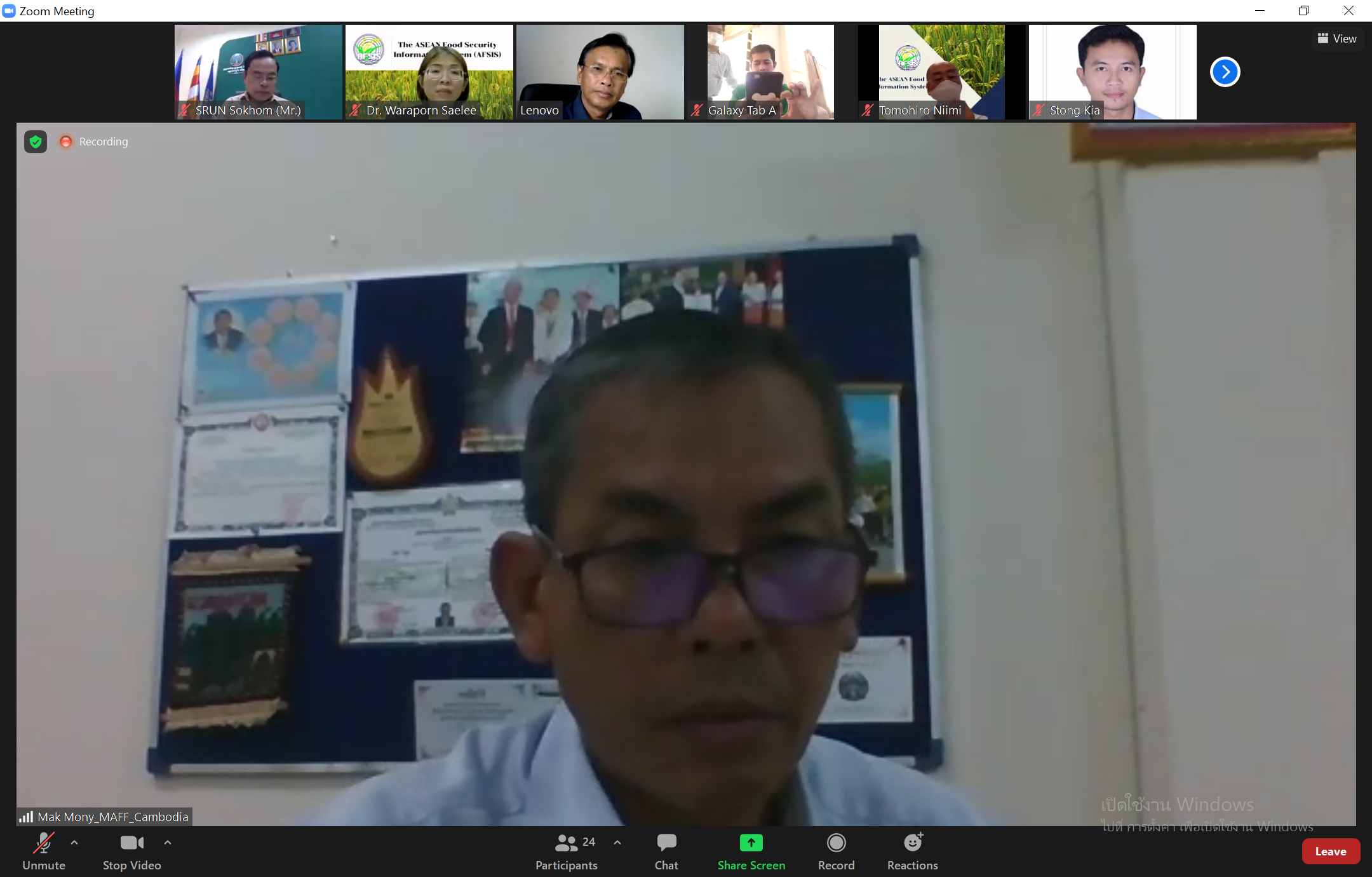
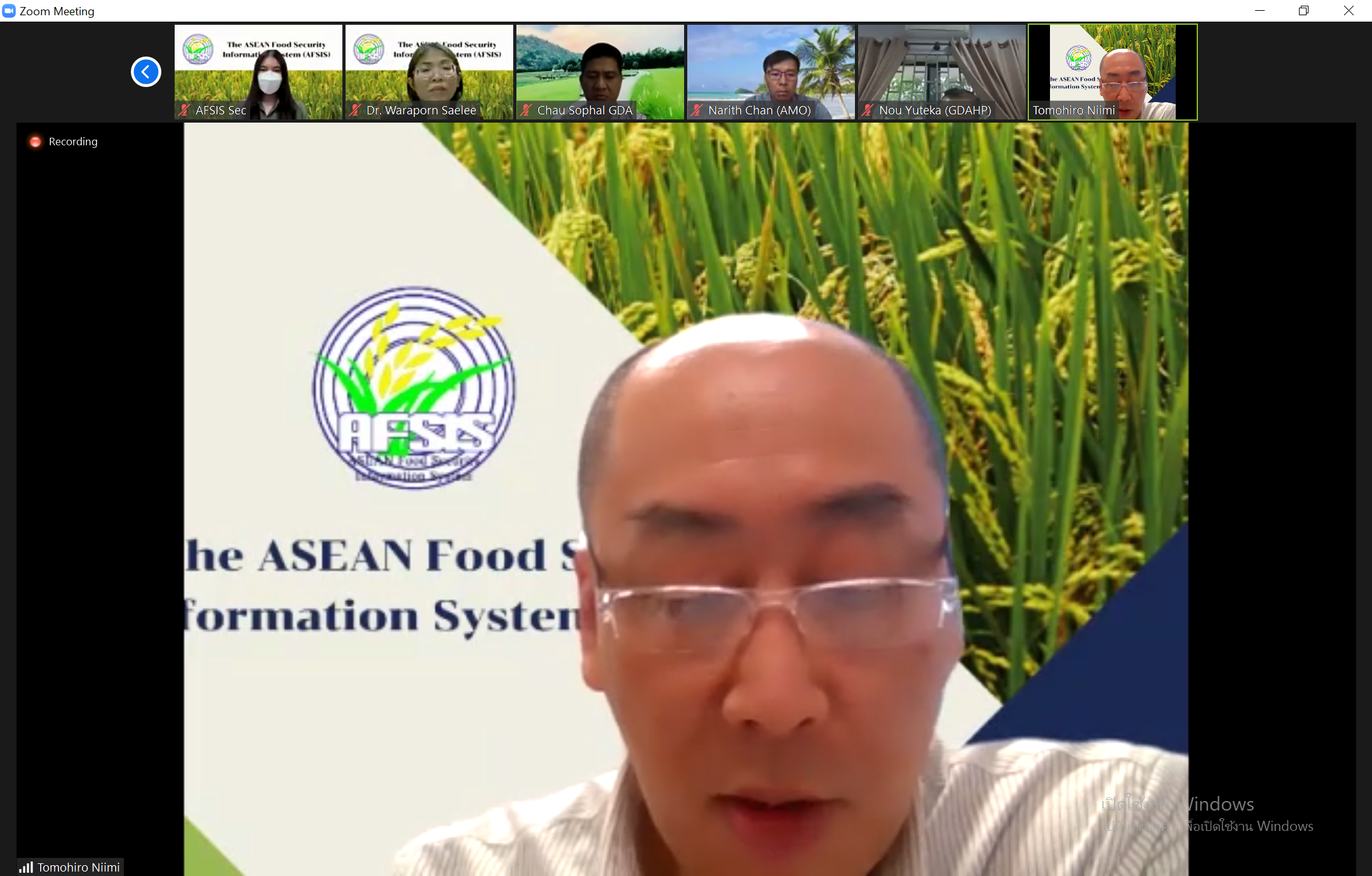
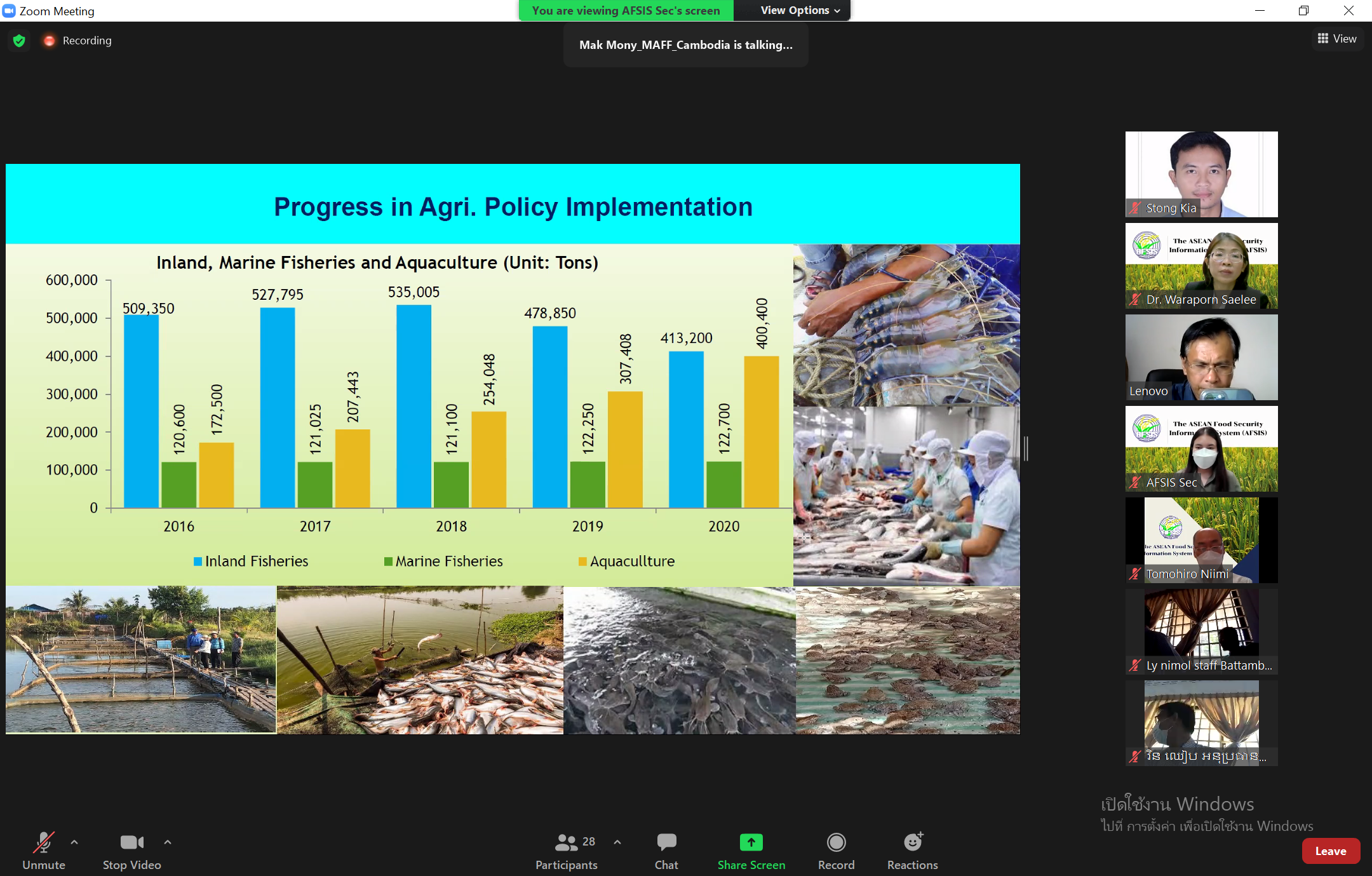
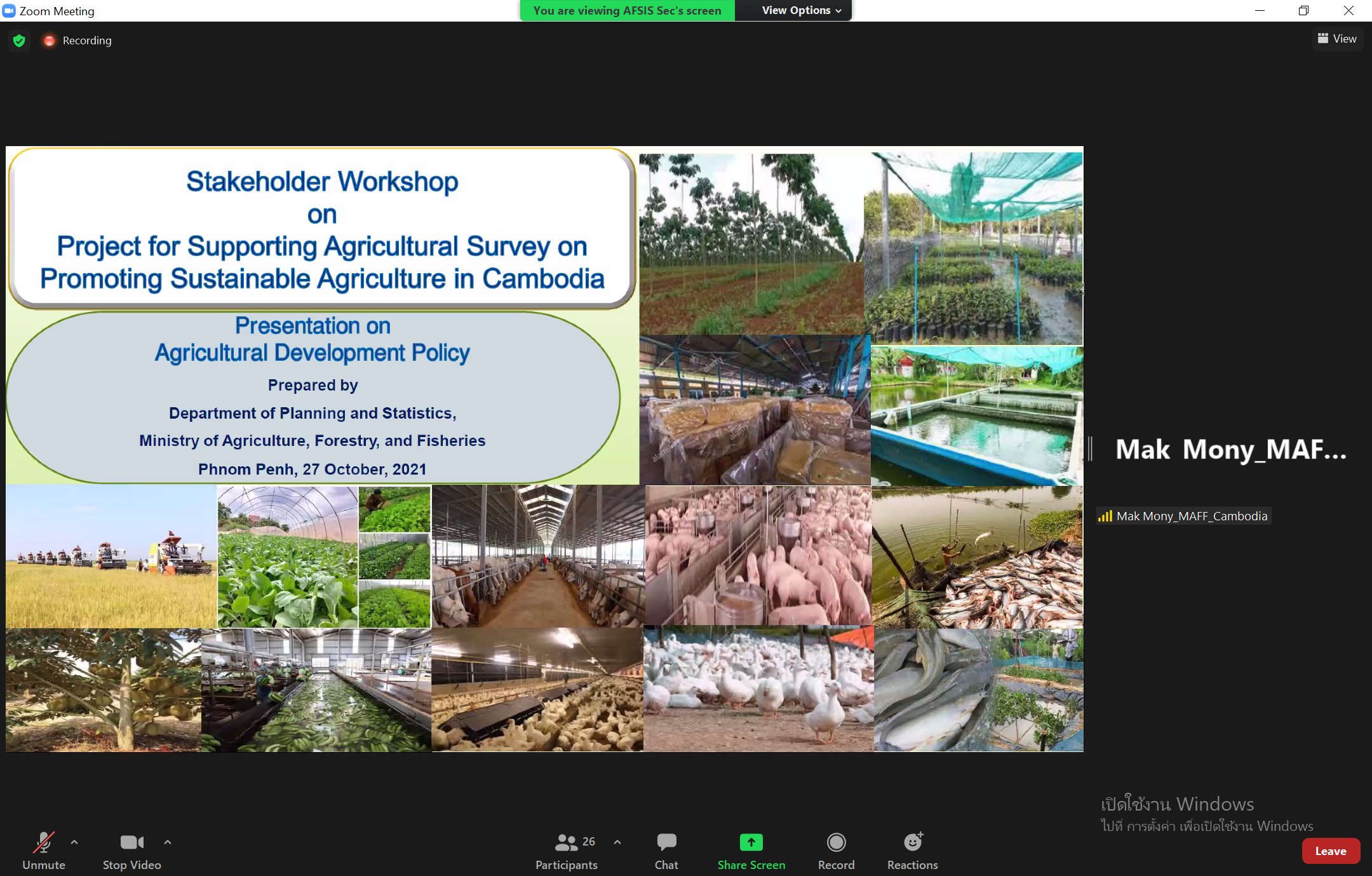
In the meeting, the delegates were presented with the information on Agricultural Policy in Cambodia by Mr. Mak Mony, the Director of DPS, MAFF of Cambodia.Then, it followed by the background of the SAS-PSA Project, along with the brief methodology of SDG indicator 2.4.1 by Mr. NIIMI Tomohiro, the Japanese Expert.
Next, the details of the SAS-PSA project’s implementation in Cambodia were presented by Mr. Stong Kia, the National Consultant of DPS, as well as inform the Meeting with conclusion as follows:
1) The SAS-PSA project in Cambodia will be starting from September 2021 – July 2022.
2) Household samples are 220 households from 3 districts in Battambang province which are Banan, Thma Koul, and Bavel.
3) The manual and questionnaires are now being translated into Khmer language.
The plenary discussion was held during the meeting before it ended with the closing remarks given by Mr. Mak Mony, the Director of DPS, MAFF of Cambodia.

The AFSIS Secretariat participated in the 10th International Conference on Agricultural Statistics (ICAS X), held from 8 to 10 July 2026 at the ICE Krakow Congress Centre in Krakow, Poland. Jointly organized by Statistics Poland, Eurostat, the United States Department of Agriculture (USDA), the World Bank Group, and the Food and Agriculture Organization of the United Nations (FAO).
.JPG)
On 24–25 June 2026, AFSIS Secretariat participated in the 46th Meeting of the ASEAN Food Security Reserve Board (AFSRB) via a virtual conference. The Meeting was jointly organized by the AFSRB Secretariat and the Department of Agriculture (DOA), Ministry of Agriculture, Livestock and Irrigation (MOALI) of the Republic of the Union of Myanmar, and was hosted in Nay Pyi Taw, Myanmar.

On 17–18 June 2026, the 24th AFSIS Focal Point Meeting was successfully convened via video conference, hosted by the Philippine Statistics Authority (PSA) in collaboration with the ASEAN Food Security Information System (AFSIS) Secretariat.
.jpg)
The ASEAN Food Security Information System (AFSIS) Secretariat, in collaboration with the Ministry of Agriculture, Forestry and Fisheries (MAFF) Japan, Japan Aerospace Exploration Agency (JAXA), Remote Sensing Technology Center of Japan (RESTEC), and Geo-Informatics and Space Technology Development Agency (GISTDA), conducted the 2nd Hands-on Training Courses for Agricultural Statisticians, the Final Workshop, and the 2nd Seminar for Executive Officials under the JAIF Project entitled “Improvement of Rice Paddy Area Statistics and Damage Assessment using Earth Observation Satellites for ASEAN” in Sriracha, Chonburi Province, and Bangkok, Thailand.

