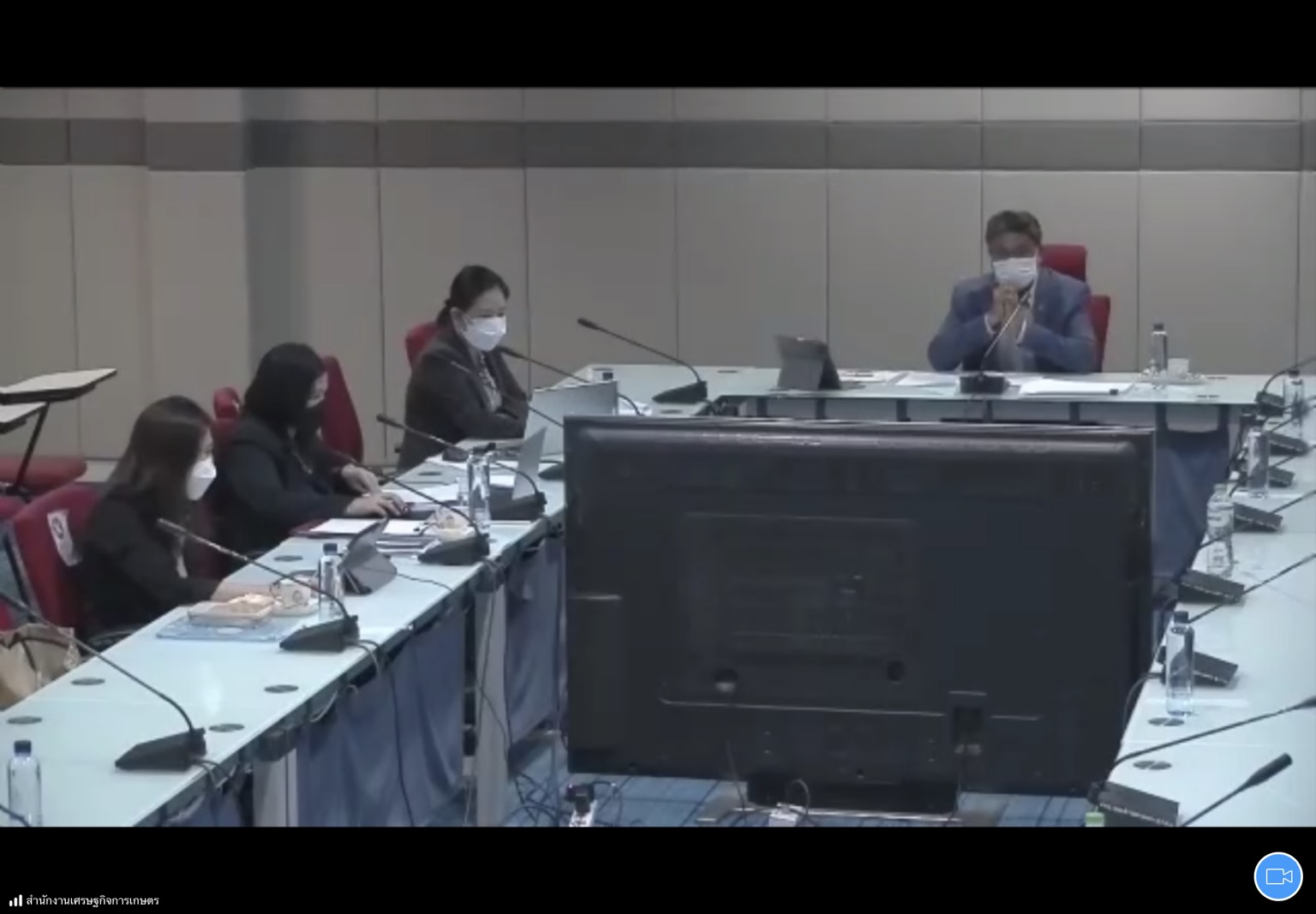
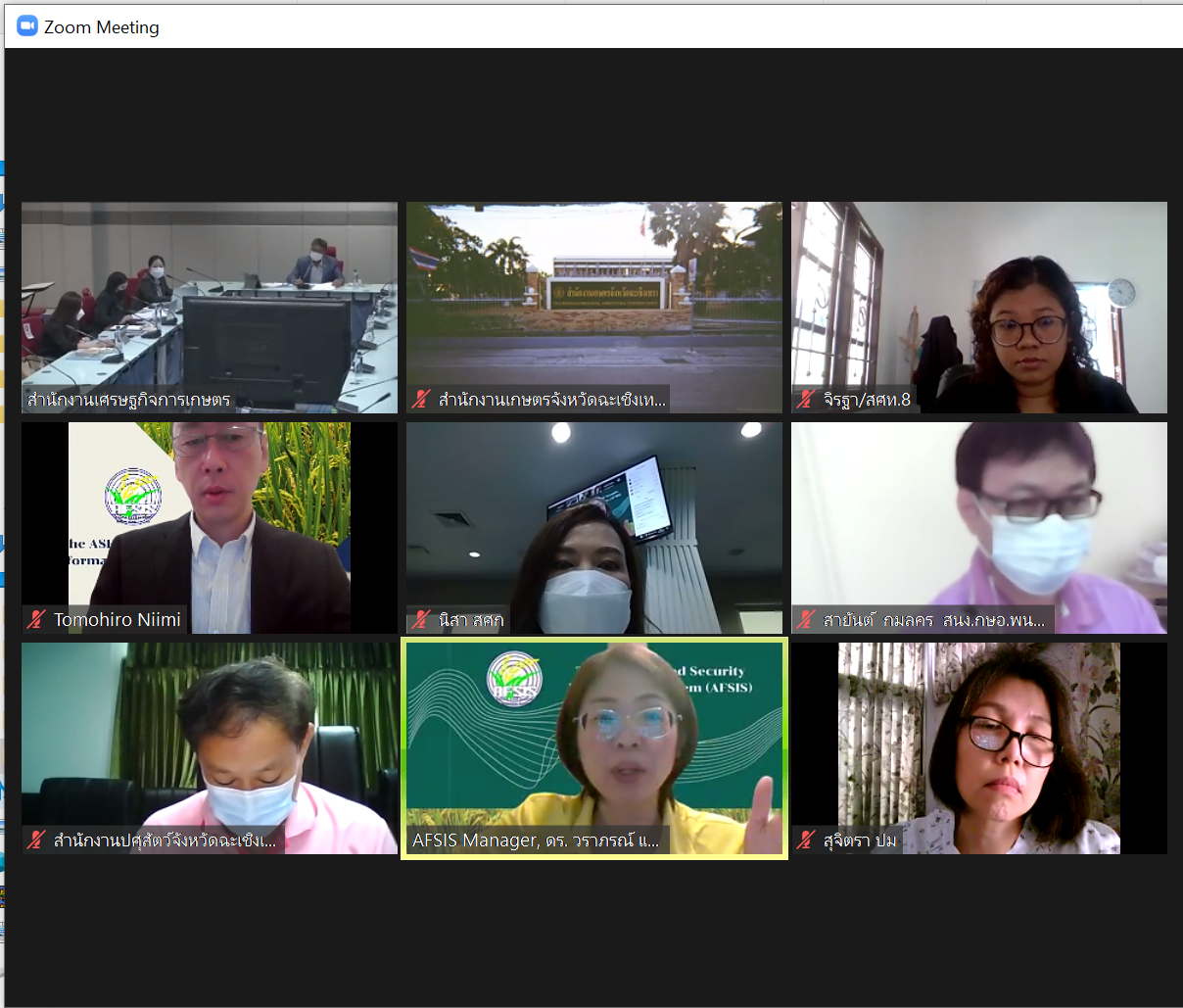
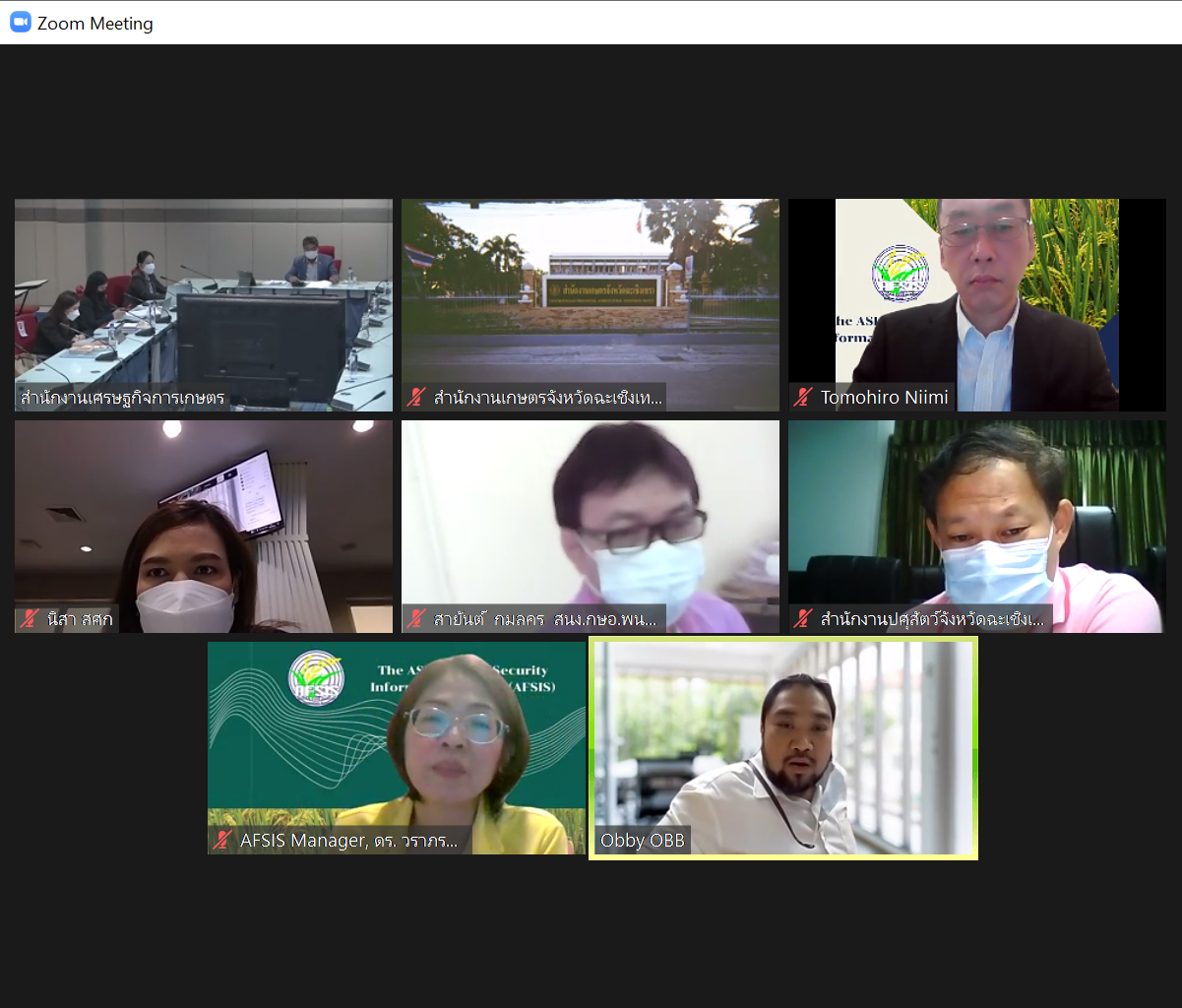
The ASEAN Food Security Information System (AFSIS) Secretariat along with the Center for Agricultural Information (CAI), Agricultural Development Policy and Planning Division, Office of Agricultural Economics (OAE), Ministry of Agriculture and Cooperatives, Thailand, had conducted an In Country Wrap-up Meeting as a part of project for Supporting Agricultural Survey on Promoting Sustainable Agriculture in ASEAN region or SAS-PSA project in Thailand on 17 August 2021 via Zoom application due to the outbreak of COVID-19 pandemic.
In this regard, Mr. Pollachet Tracho, Deputy Secretary General, Office of Agriculture Economics (OAE) was an honorably chairman of the meeting. There were 47 participants which came from AFSIS Secretariat led by Dr. Waraporn Saelee, AFSIS Manager, along with CAI staff led by Mr. Vinit Atisook, the Director of Center for Agricultural Information, Office of Agricultural Economics, Ministry of Agriculture and Cooperatives of Thailand, and other staff from the relevant departments under Ministry of Agriculture and Cooperatives of Thailand.
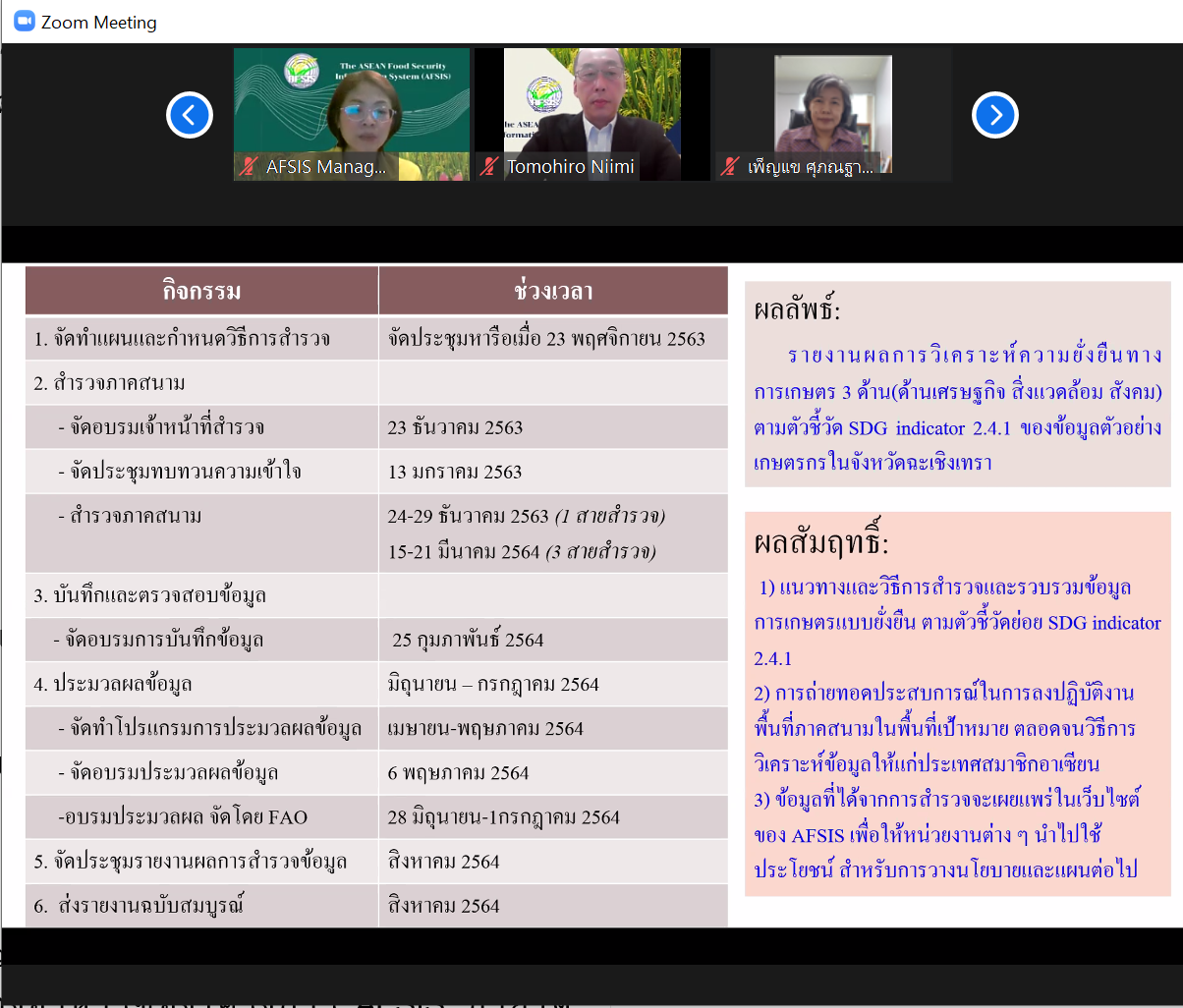
The objective of the meeting is for the CAI to present to the Meeting the details and summary of the SAS-PSA project that had been conducted in Thailand. The details of the presentation included the action plan, the sampling design, the result from the pilot survey and the analysis outcomes of SDG indicator 2.4.1 in Chachoengsao province.
There were also the discussions regarding the limitations and challenges, suggestions for the field pilot survey, and the results of analysis of the SAS-PSA project. Moreover, the recommendations for conducting the country-level of SDG indicator 2.4.1 in the future were also being discussed during the meeting.
At the end of the meeting, AFSIS Manager had expressed the sincere appreciation and gratitude to CAI for the successful implementation of the SAS-PSA project in Thailand despite facing the COVID-19 circumstance. The Meeting agreed unquestioningly that as the main purpose of this pilot survey is to develop and enhance the capacity building in the region, it will be the great contributive foundation to implement the country-level of SDG indicator 2.4.1 in Thailand in the future.

The AFSIS Secretariat participated in the 10th International Conference on Agricultural Statistics (ICAS X), held from 8 to 10 July 2026 at the ICE Krakow Congress Centre in Krakow, Poland. Jointly organized by Statistics Poland, Eurostat, the United States Department of Agriculture (USDA), the World Bank Group, and the Food and Agriculture Organization of the United Nations (FAO).
.JPG)
On 24–25 June 2026, AFSIS Secretariat participated in the 46th Meeting of the ASEAN Food Security Reserve Board (AFSRB) via a virtual conference. The Meeting was jointly organized by the AFSRB Secretariat and the Department of Agriculture (DOA), Ministry of Agriculture, Livestock and Irrigation (MOALI) of the Republic of the Union of Myanmar, and was hosted in Nay Pyi Taw, Myanmar.

On 17–18 June 2026, the 24th AFSIS Focal Point Meeting was successfully convened via video conference, hosted by the Philippine Statistics Authority (PSA) in collaboration with the ASEAN Food Security Information System (AFSIS) Secretariat.
.jpg)
The ASEAN Food Security Information System (AFSIS) Secretariat, in collaboration with the Ministry of Agriculture, Forestry and Fisheries (MAFF) Japan, Japan Aerospace Exploration Agency (JAXA), Remote Sensing Technology Center of Japan (RESTEC), and Geo-Informatics and Space Technology Development Agency (GISTDA), conducted the 2nd Hands-on Training Courses for Agricultural Statisticians, the Final Workshop, and the 2nd Seminar for Executive Officials under the JAIF Project entitled “Improvement of Rice Paddy Area Statistics and Damage Assessment using Earth Observation Satellites for ASEAN” in Sriracha, Chonburi Province, and Bangkok, Thailand.

