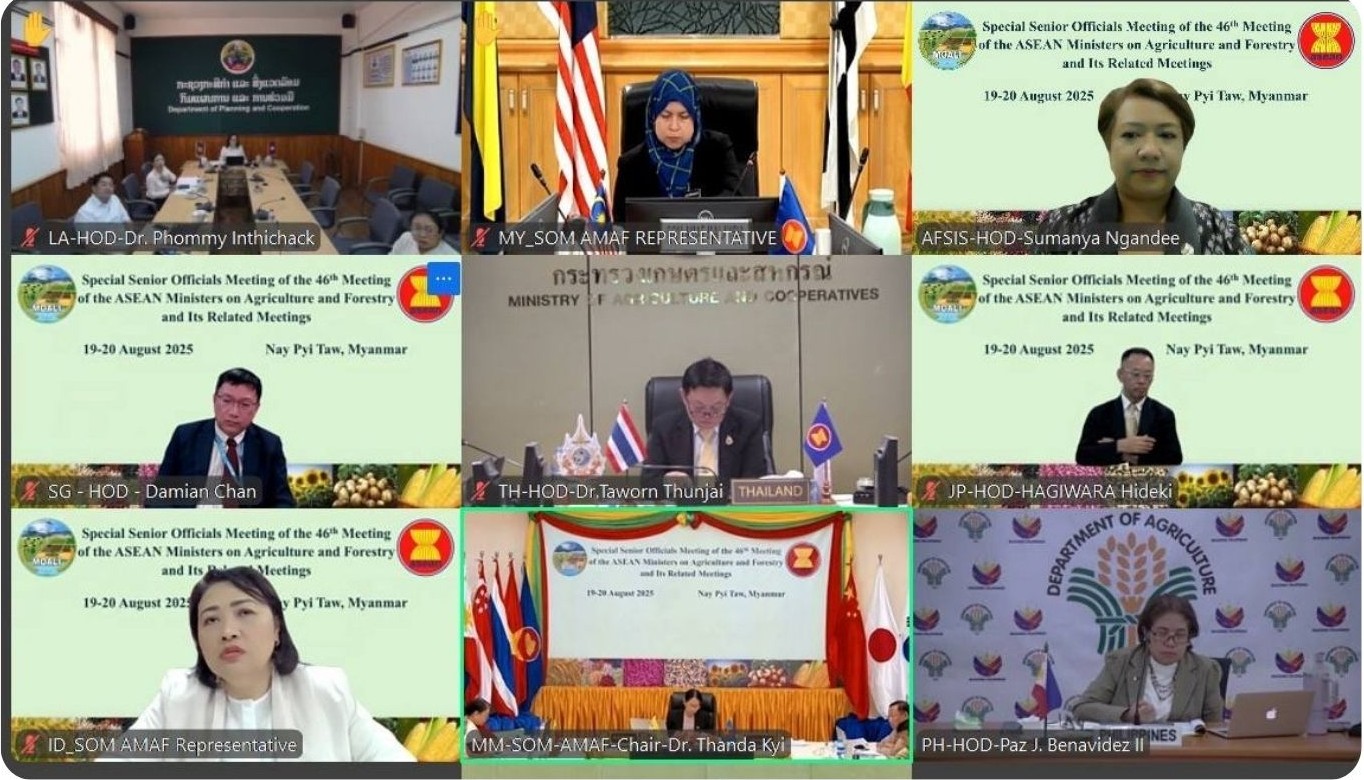
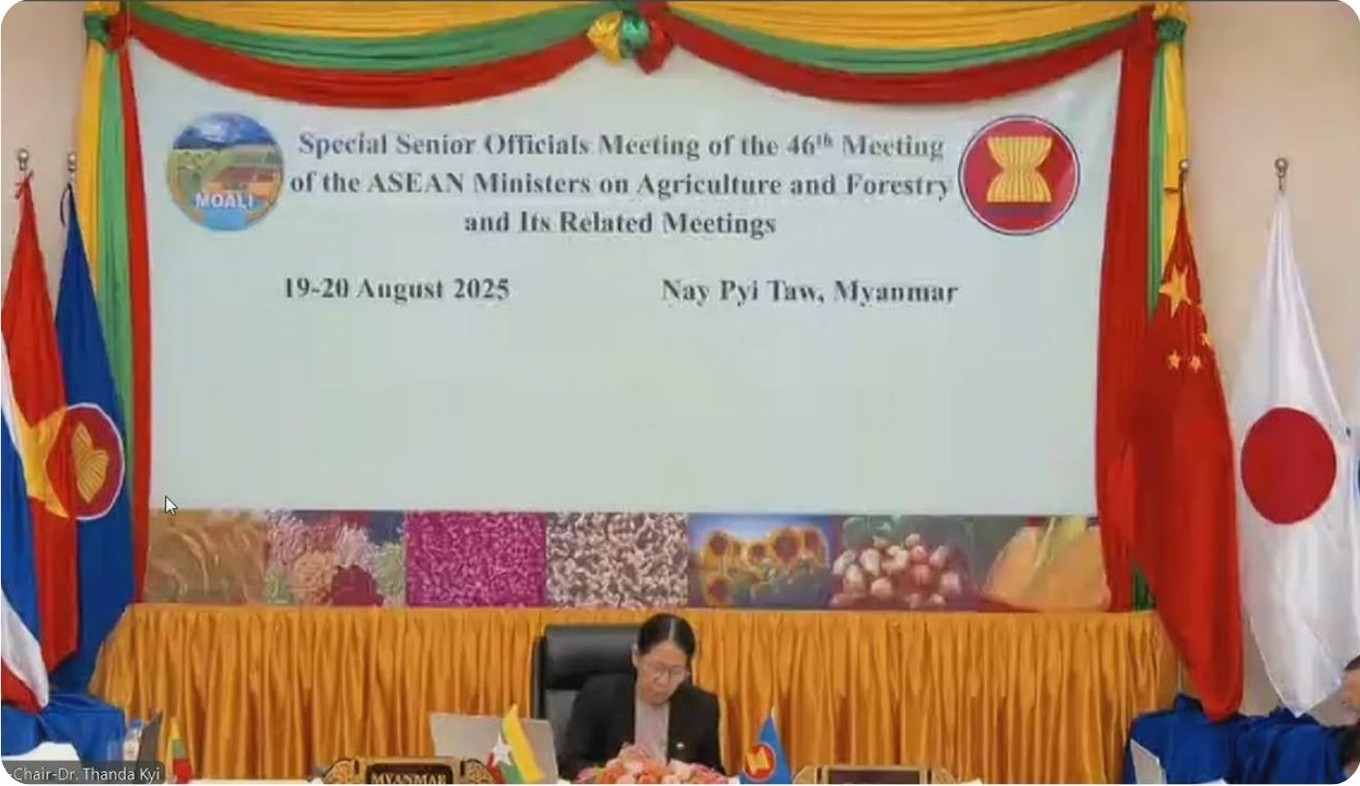
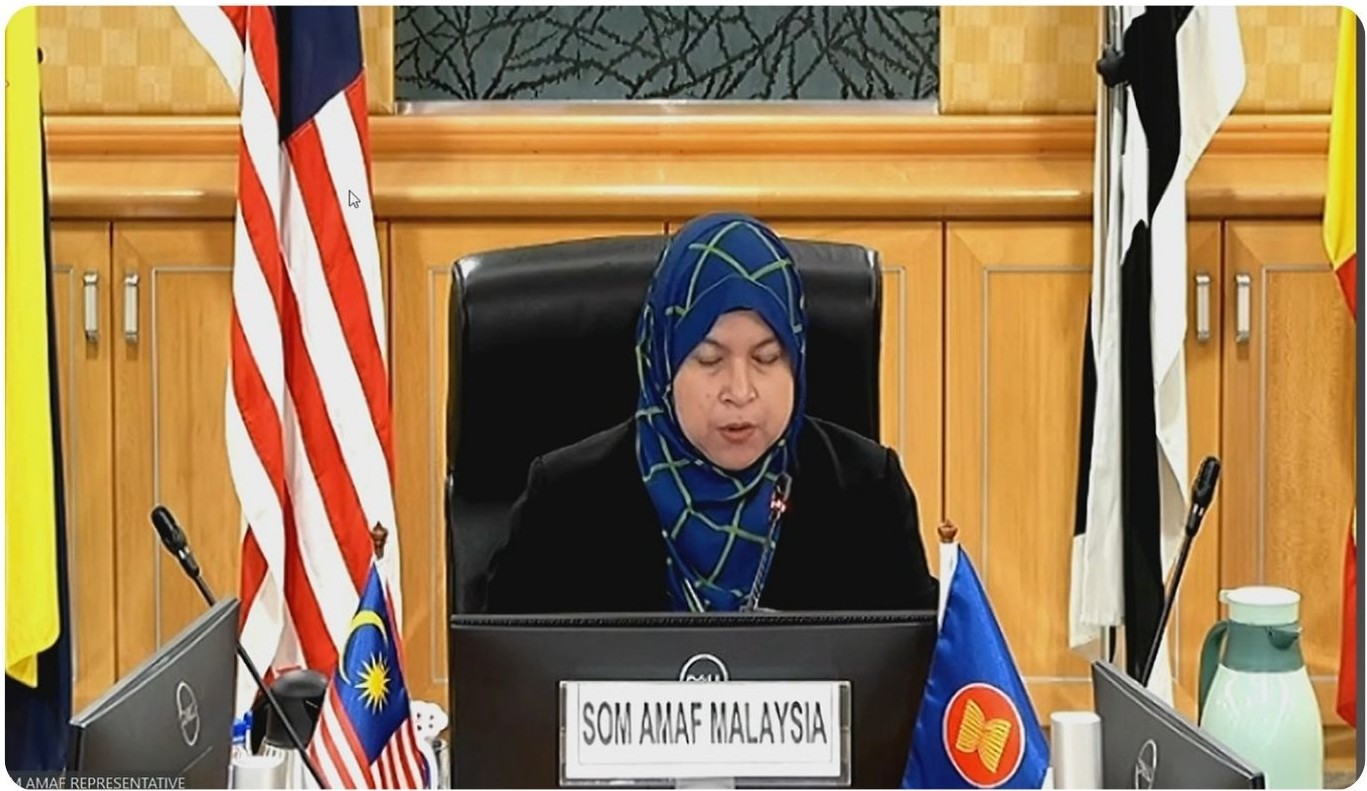
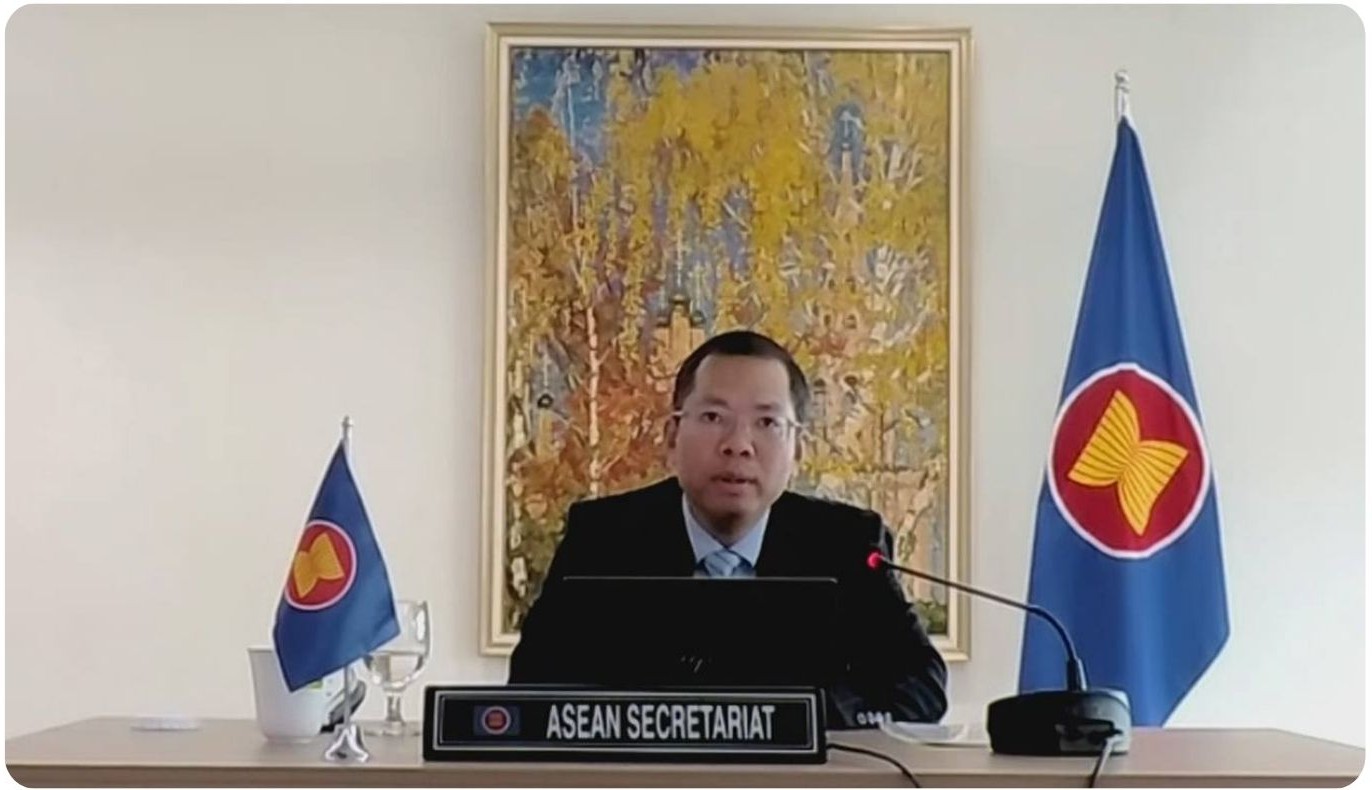
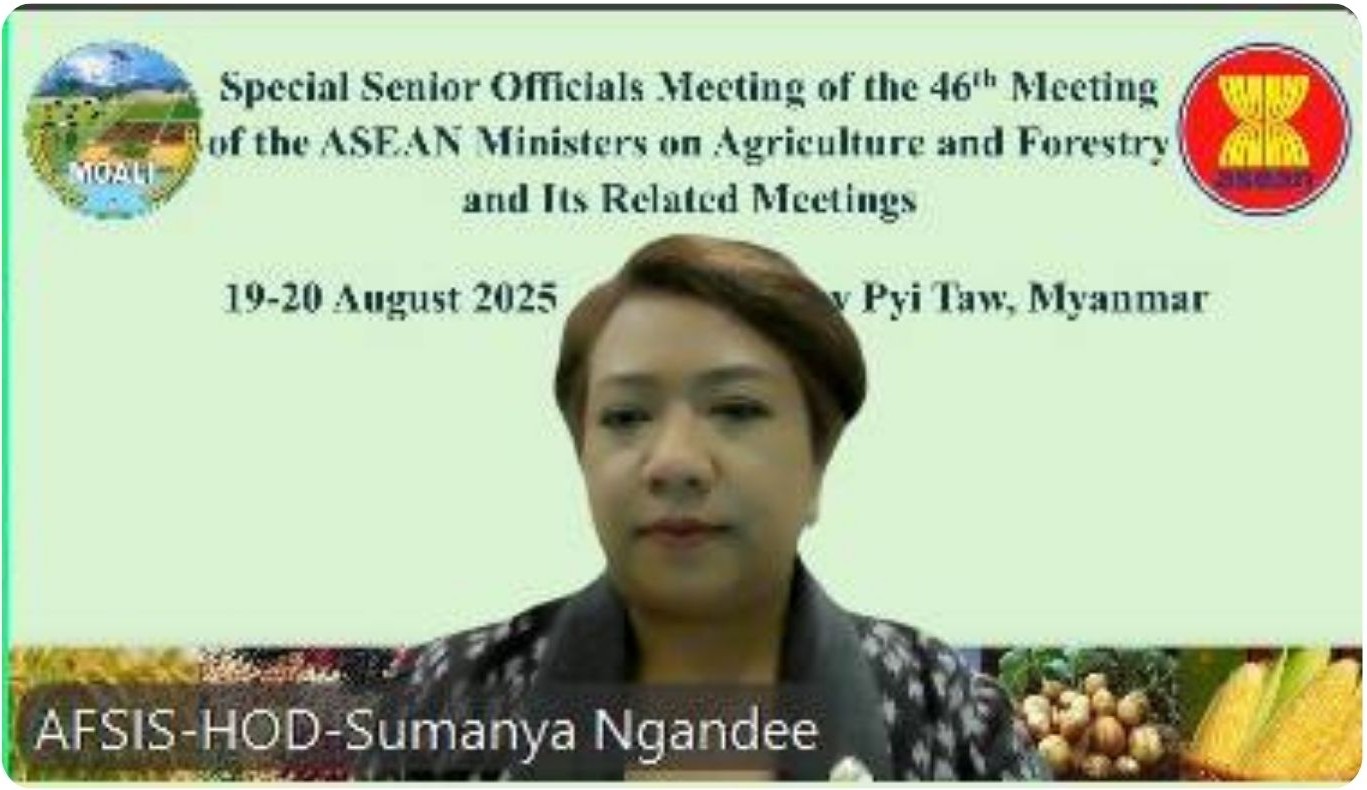
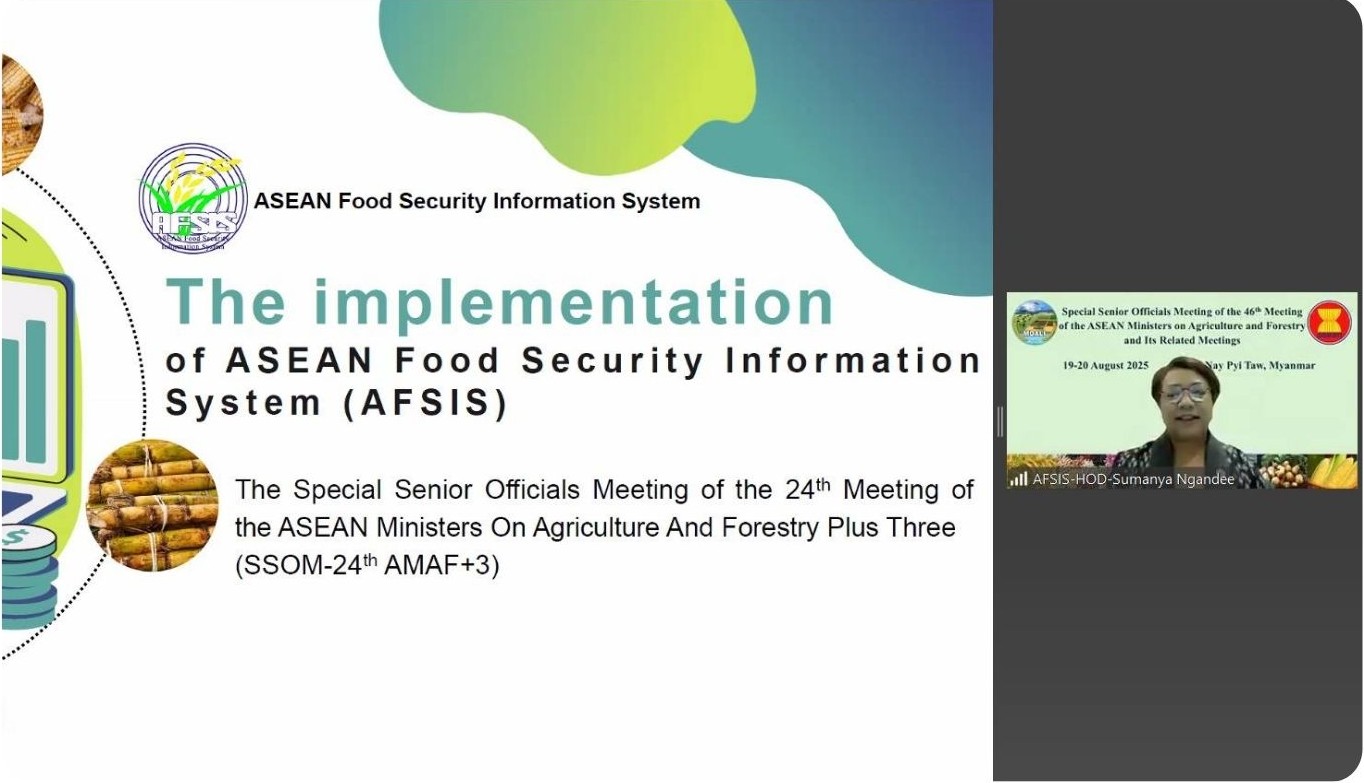
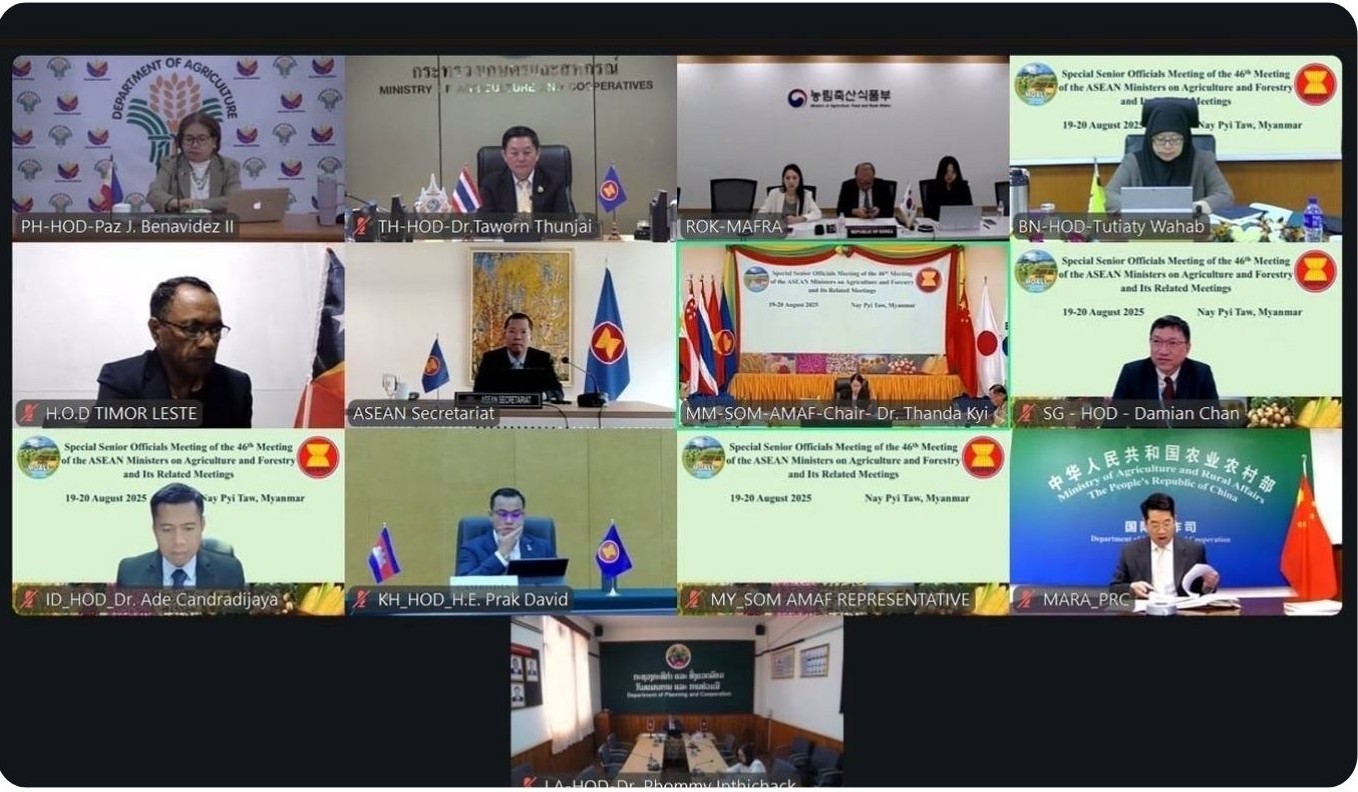
On 20 August 2025, the AFSIS Secretariat participated in the Special Senior Officials Meeting of the 24th Meeting of the ASEAN Ministers on Agriculture and Forestry Plus Three (SSOM-24th AMAF+3), hosted by Myanmar via video conference. The AFSIS Secretariat was represented by Dr. Sumanya Ngandee, AFSIS Manager.
During the meeting, Dr. Sumanya presented the progress of AFSIS activities for 2024–2025 (Q2), the future work plan, and also introduced a new initiative to be implemented in the coming year, the AFSIS Geospatial Information System (AFSIS-GIS) project. She further highlighted that AFSIS will begin discussions on strengthening its financial sustainability, based on the joint understanding reached at the upcoming Special Workshop in Japan this October.
The Meeting noted the AFSIS progress report for 2024–2025 (Q2), which covered the implementation of financial sustainability measures in line with the joint understanding. The report also included updates on administrative functions, human resource development activities, food security information development, and cooperation projects with Plus Three countries and other relevant organizations, emphasizing the importance of agricultural statistical data and information management in ASEAN.
Furthermore, the Meeting recognized the importance of ensuring AFSIS’s sustainability to strengthen its role, functions, and long-term operational capacity. Member States also reaffirmed the importance of AFSIS and acknowledged the necessity of enhancing its sustainability to further reinforce its roles and capabilities in the long term. They expressed their commitment to actively participating in the upcoming discussions to contribute to strengthening the self-reliance and long-term sustainability of AFSIS. The Meeting expressed its anticipation of continuing discussions on this matter at the Special Workshop in October 2025.

The AFSIS Secretariat participated in the 10th International Conference on Agricultural Statistics (ICAS X), held from 8 to 10 July 2026 at the ICE Krakow Congress Centre in Krakow, Poland. Jointly organized by Statistics Poland, Eurostat, the United States Department of Agriculture (USDA), the World Bank Group, and the Food and Agriculture Organization of the United Nations (FAO).
.JPG)
On 24–25 June 2026, AFSIS Secretariat participated in the 46th Meeting of the ASEAN Food Security Reserve Board (AFSRB) via a virtual conference. The Meeting was jointly organized by the AFSRB Secretariat and the Department of Agriculture (DOA), Ministry of Agriculture, Livestock and Irrigation (MOALI) of the Republic of the Union of Myanmar, and was hosted in Nay Pyi Taw, Myanmar.

On 17–18 June 2026, the 24th AFSIS Focal Point Meeting was successfully convened via video conference, hosted by the Philippine Statistics Authority (PSA) in collaboration with the ASEAN Food Security Information System (AFSIS) Secretariat.
.jpg)
The ASEAN Food Security Information System (AFSIS) Secretariat, in collaboration with the Ministry of Agriculture, Forestry and Fisheries (MAFF) Japan, Japan Aerospace Exploration Agency (JAXA), Remote Sensing Technology Center of Japan (RESTEC), and Geo-Informatics and Space Technology Development Agency (GISTDA), conducted the 2nd Hands-on Training Courses for Agricultural Statisticians, the Final Workshop, and the 2nd Seminar for Executive Officials under the JAIF Project entitled “Improvement of Rice Paddy Area Statistics and Damage Assessment using Earth Observation Satellites for ASEAN” in Sriracha, Chonburi Province, and Bangkok, Thailand.

