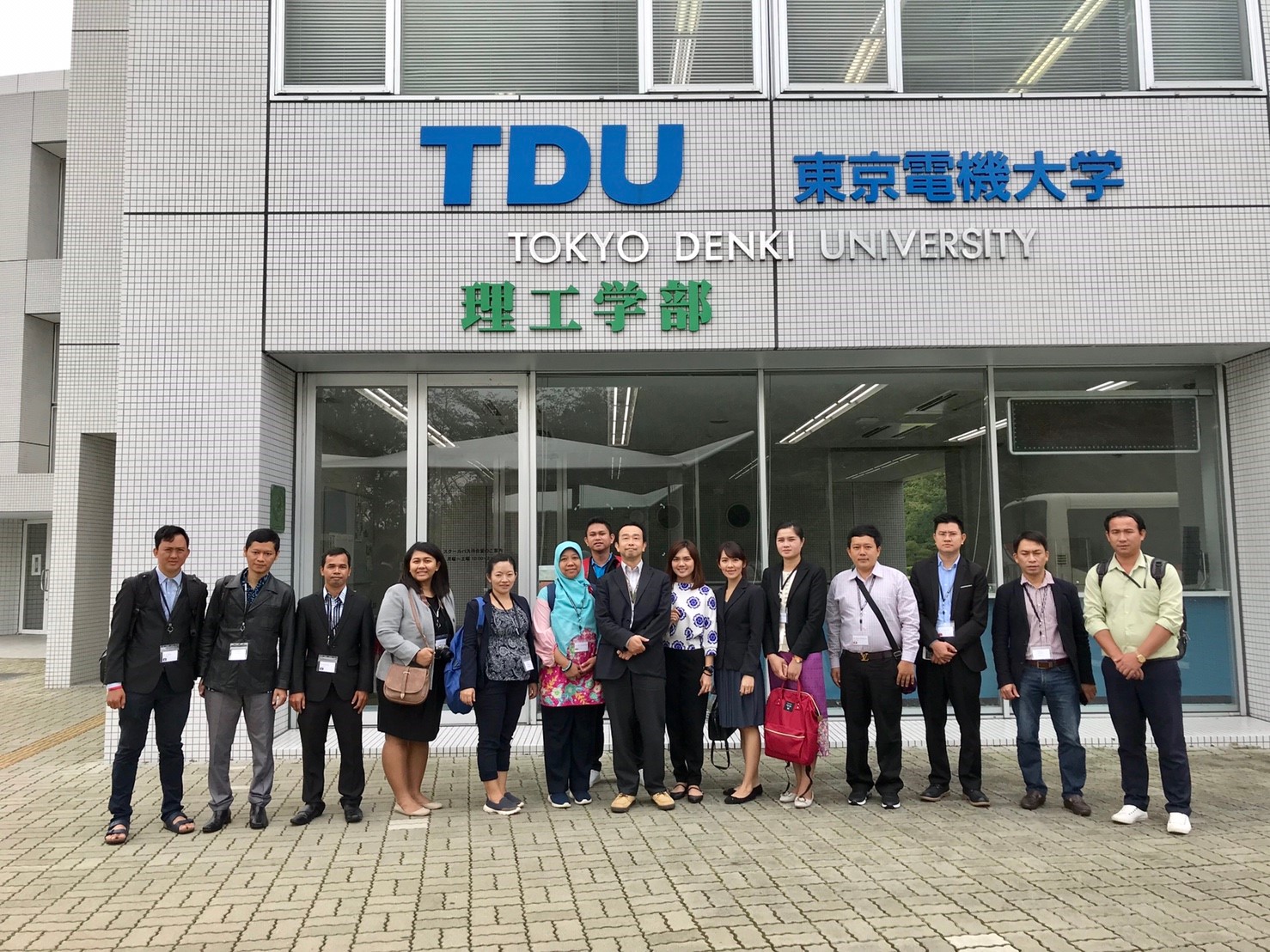
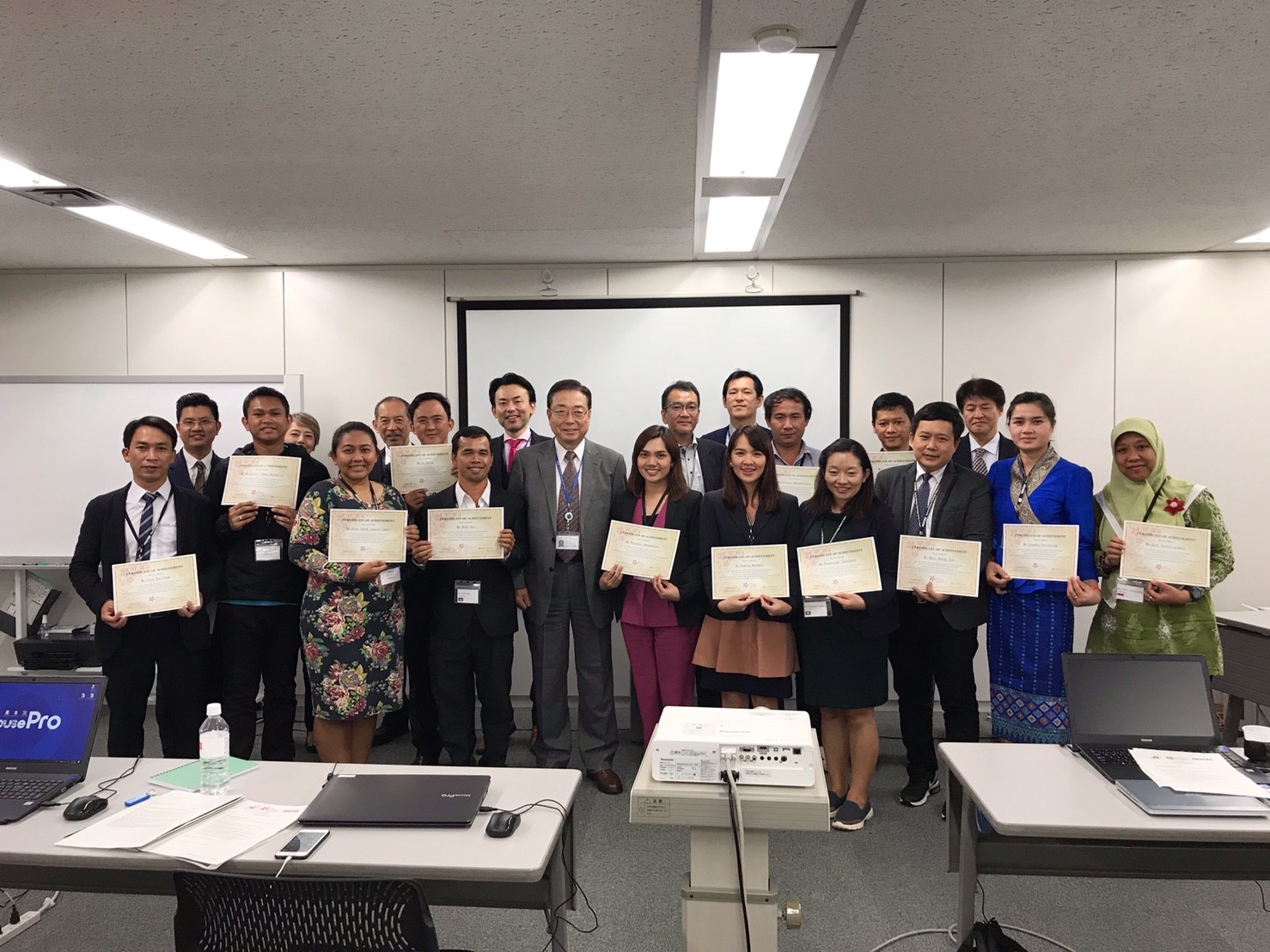
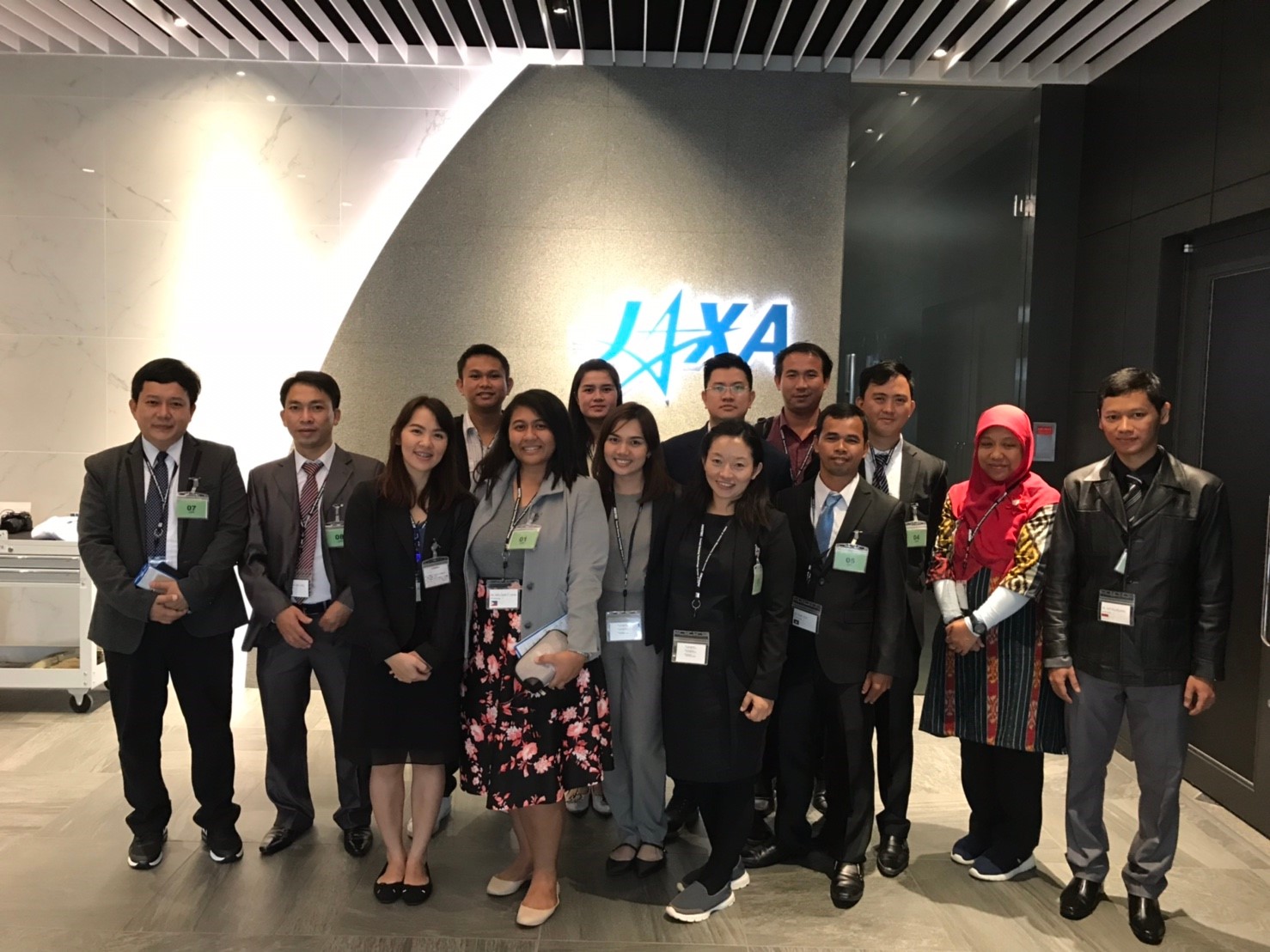
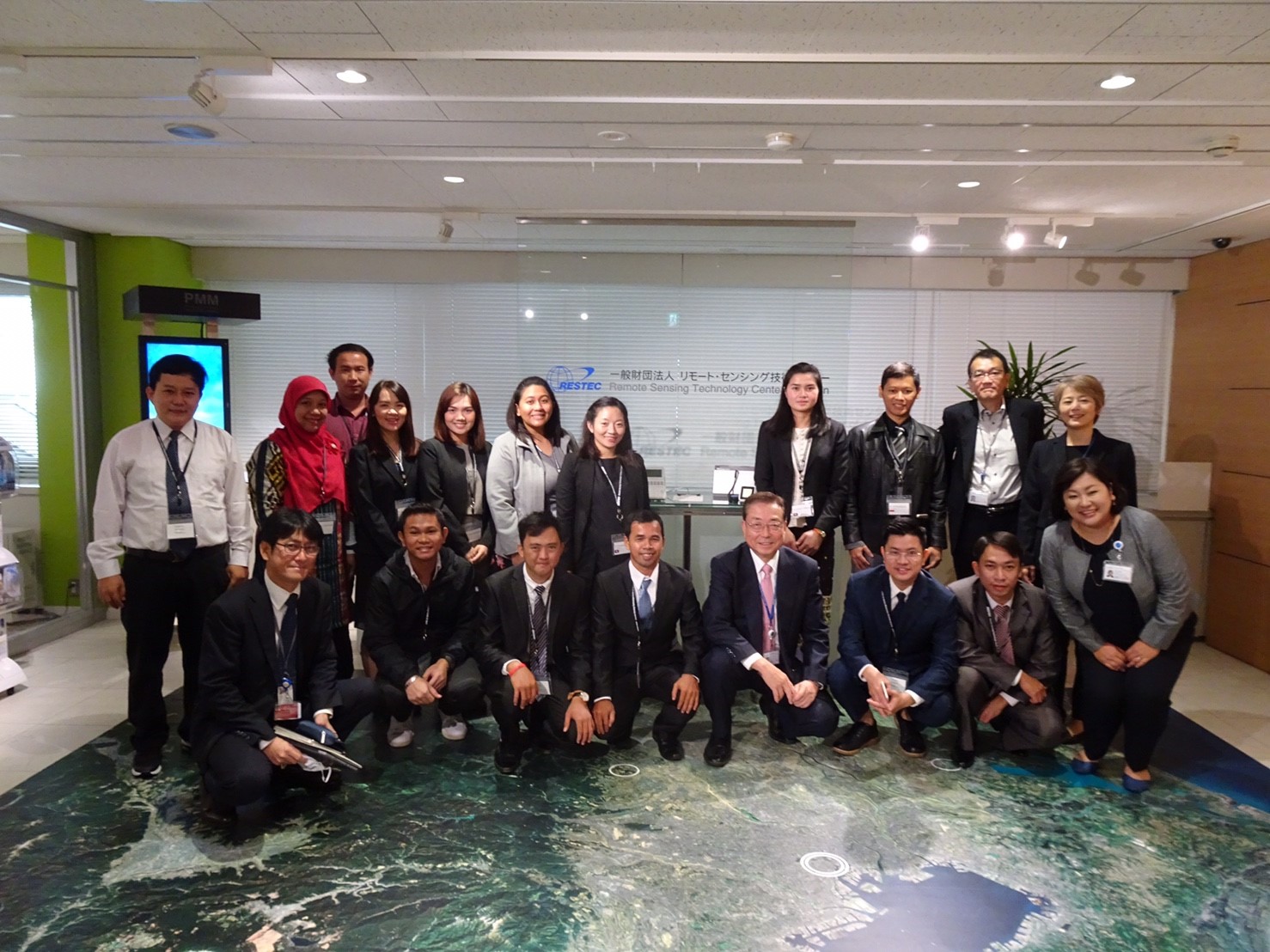
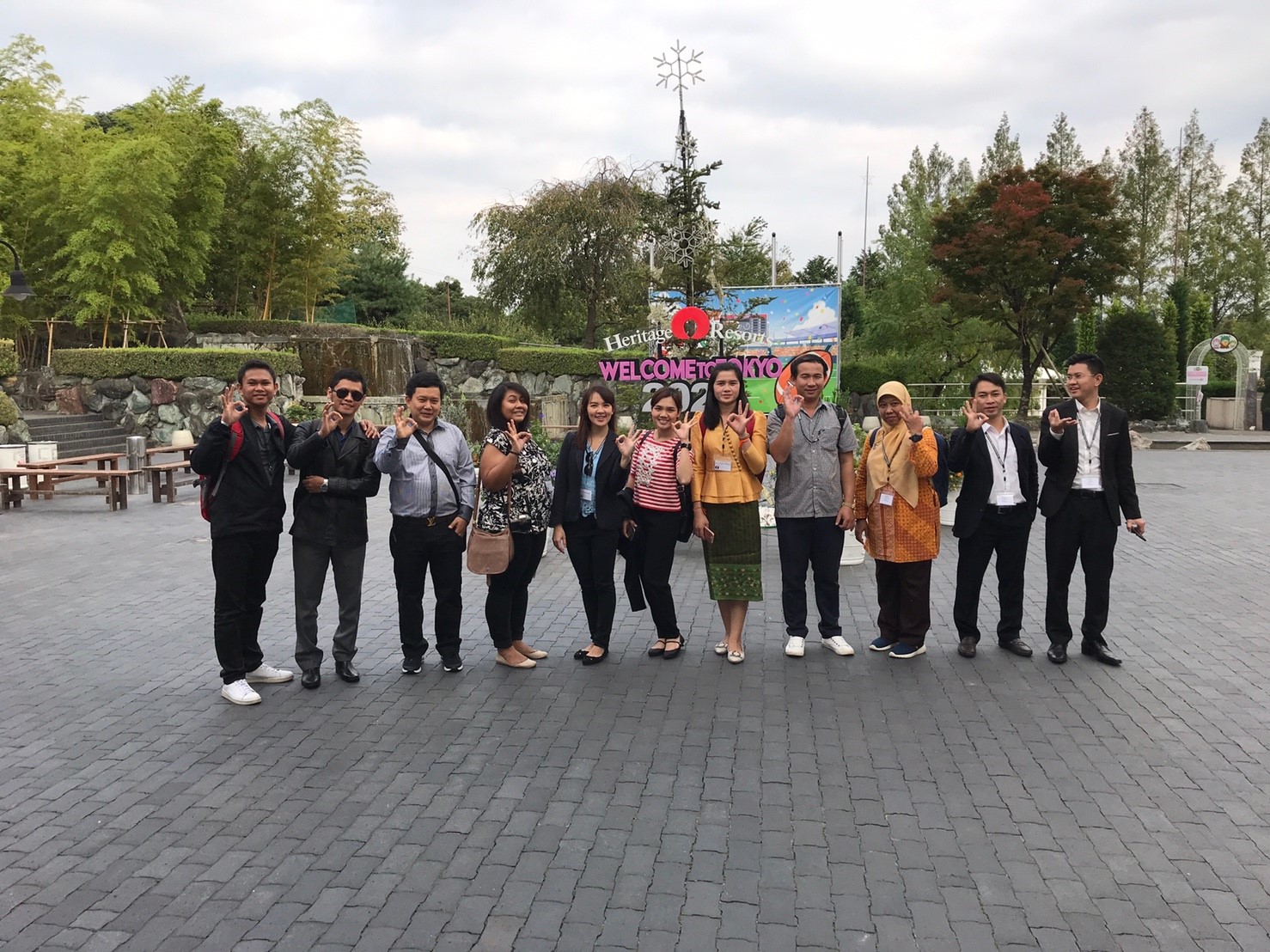
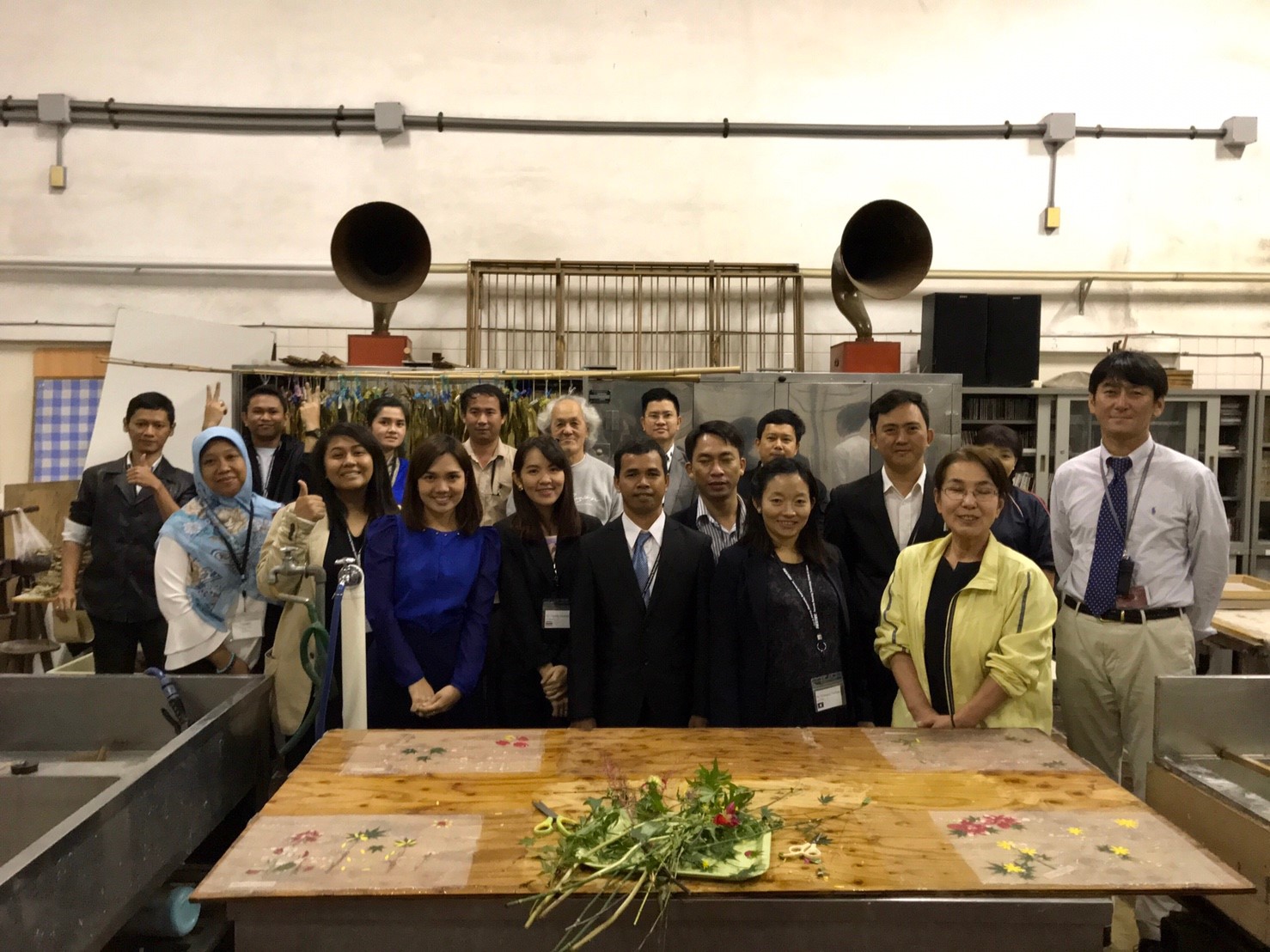
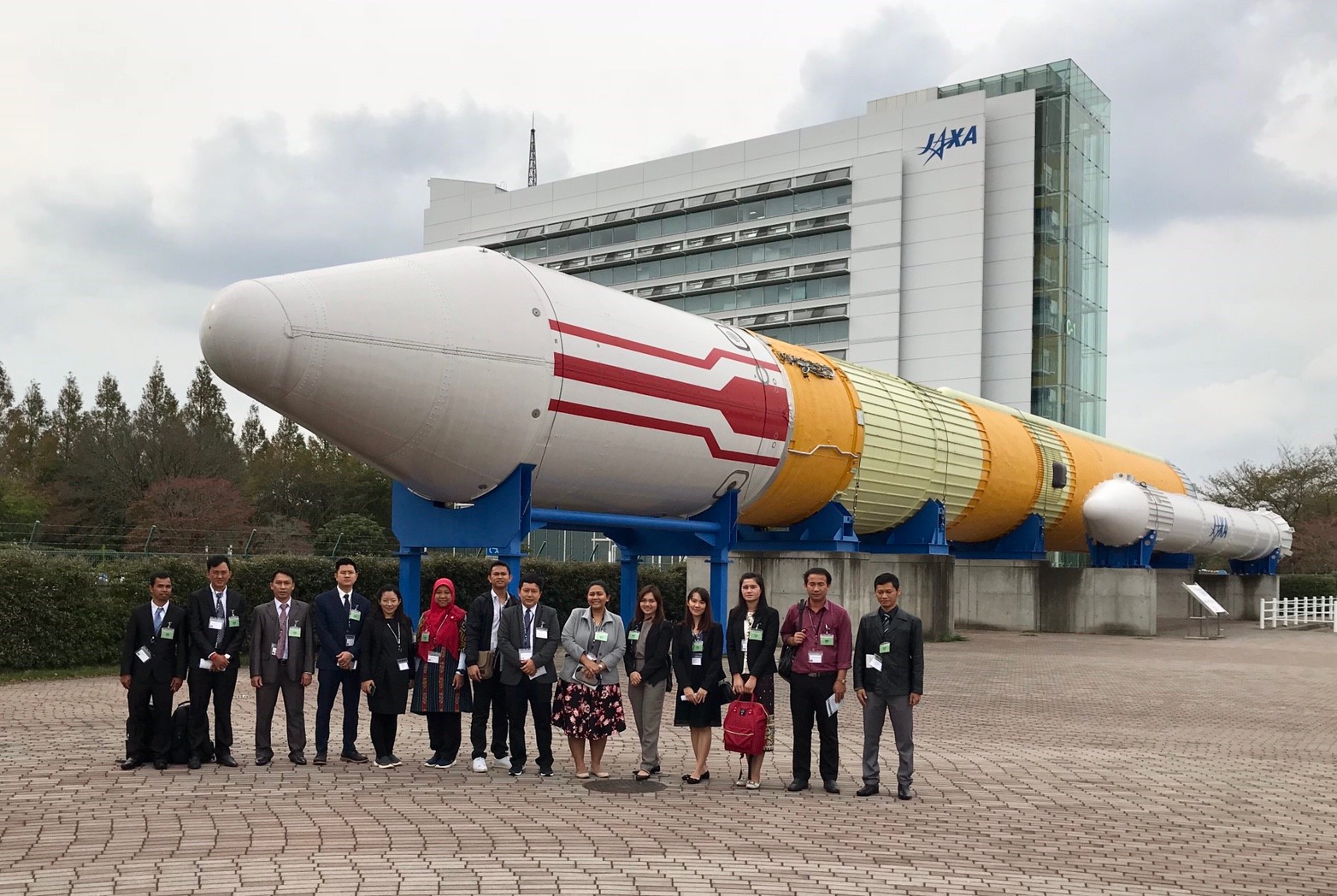
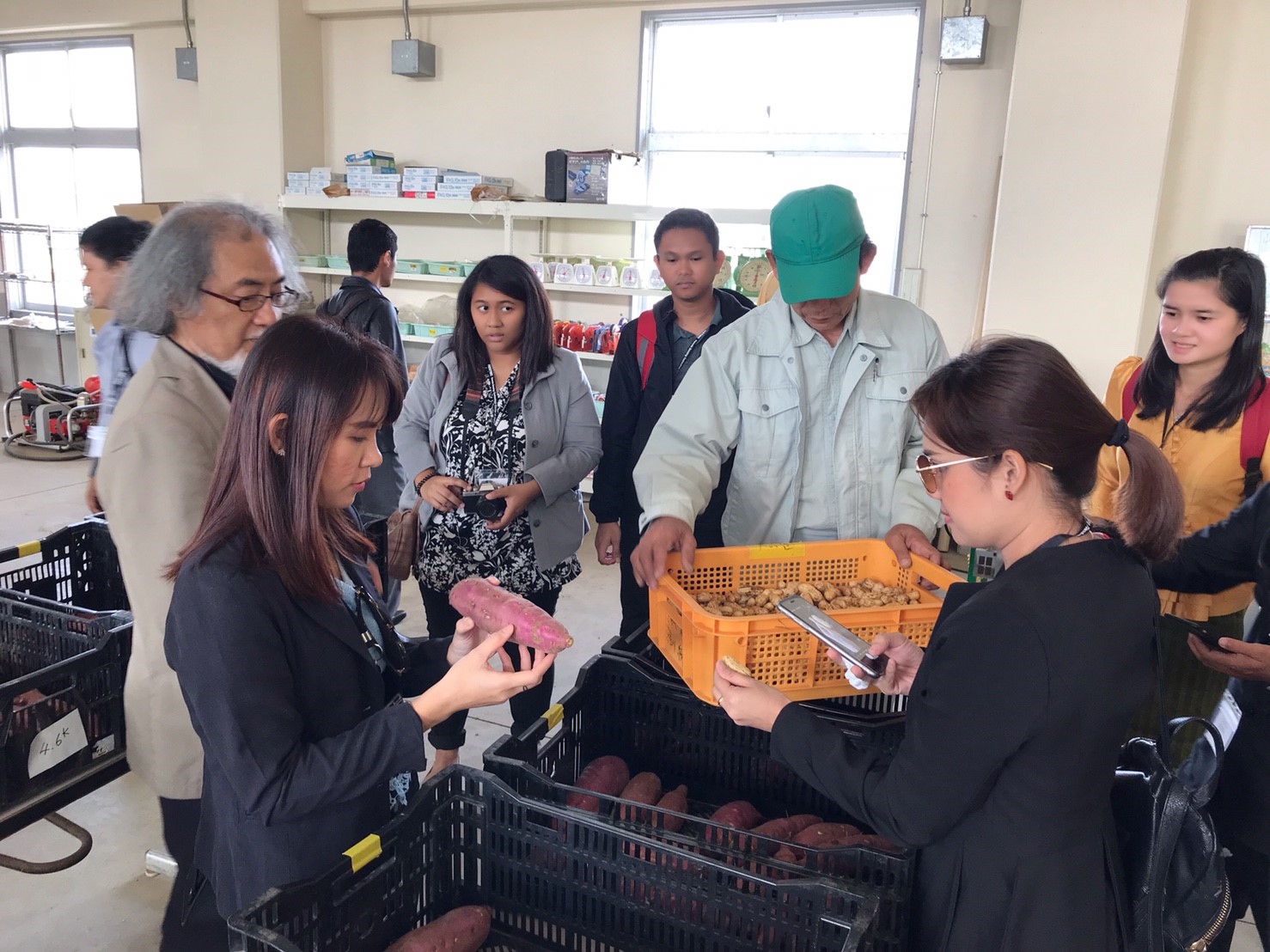
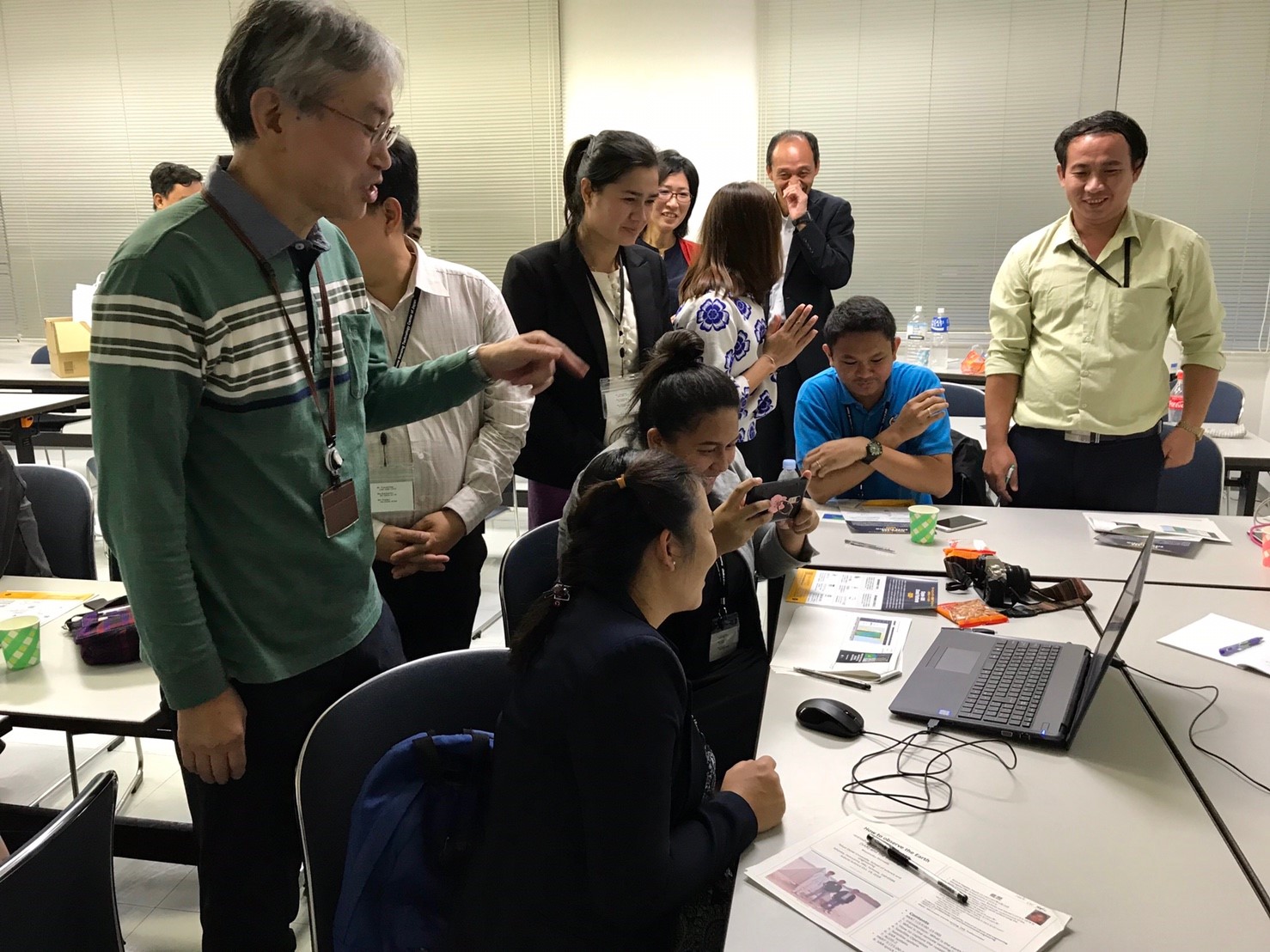
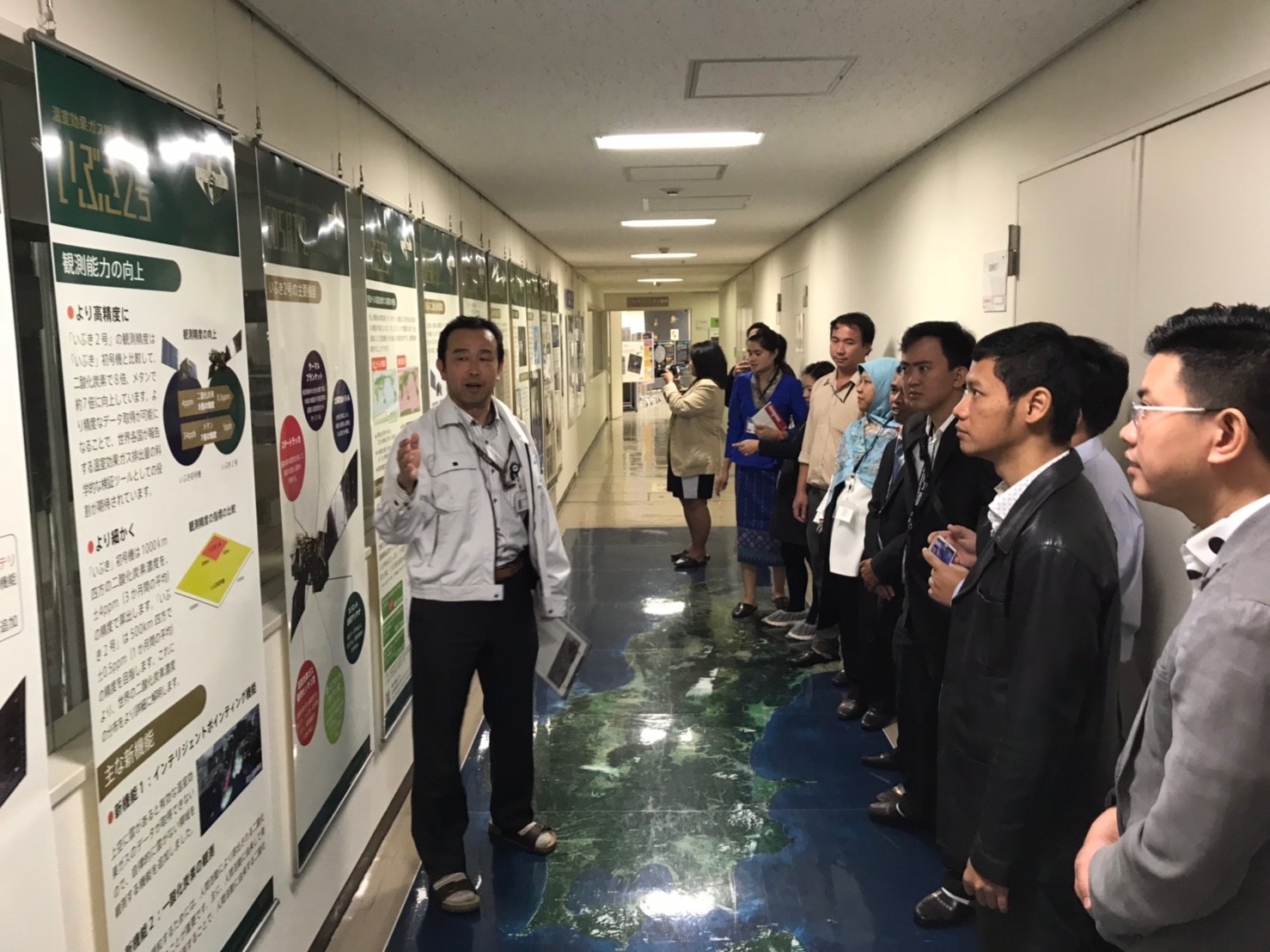
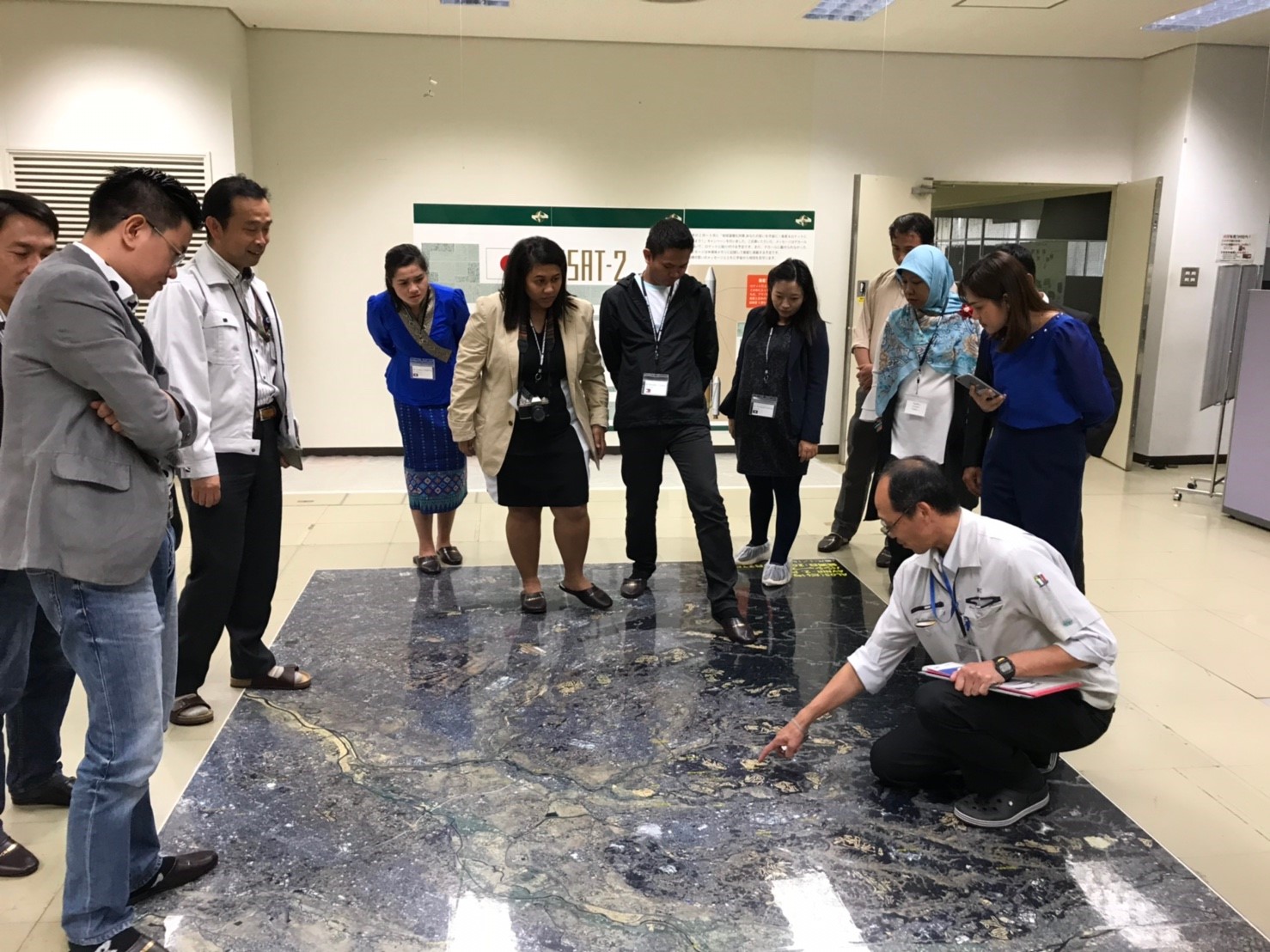
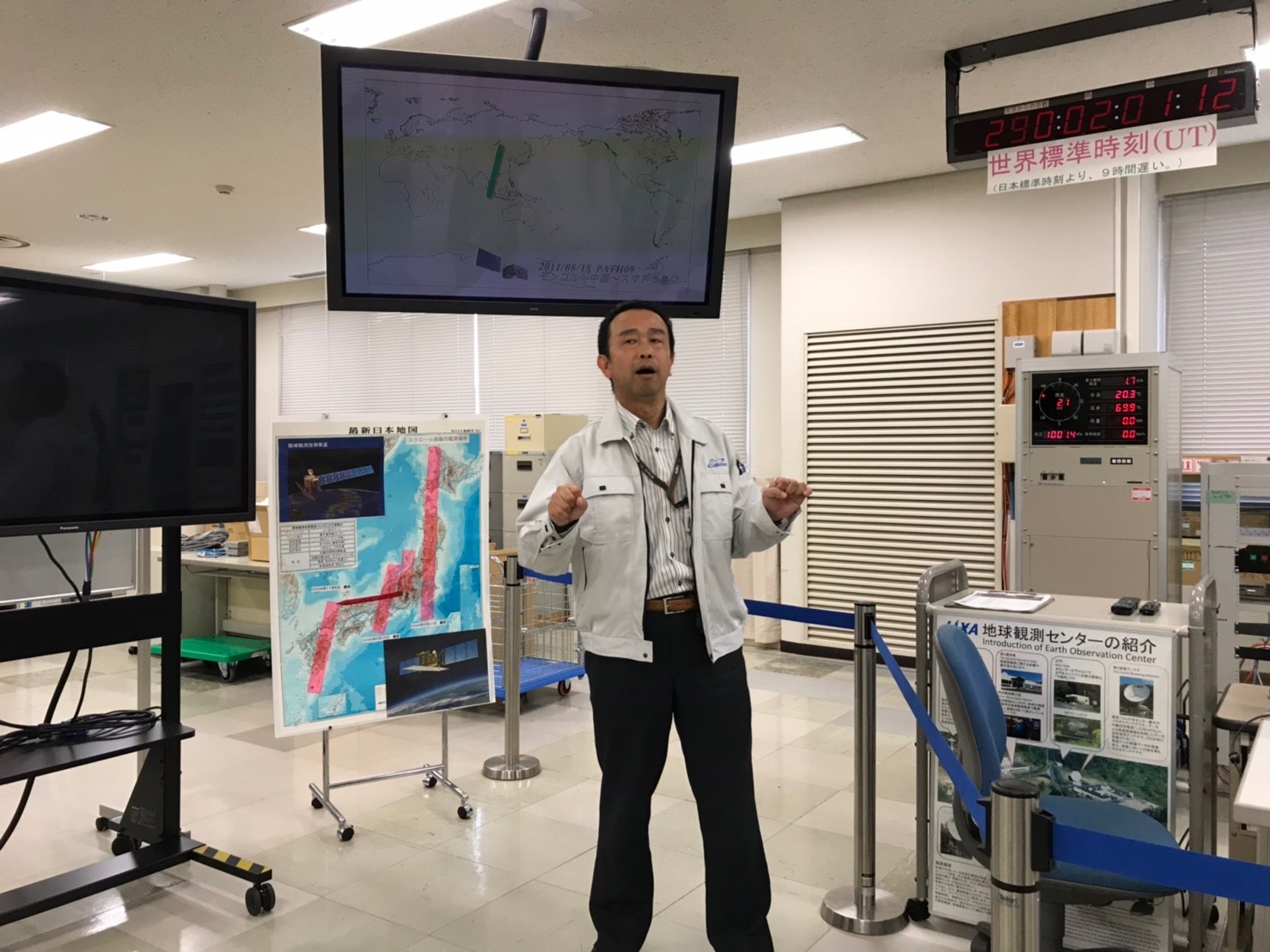
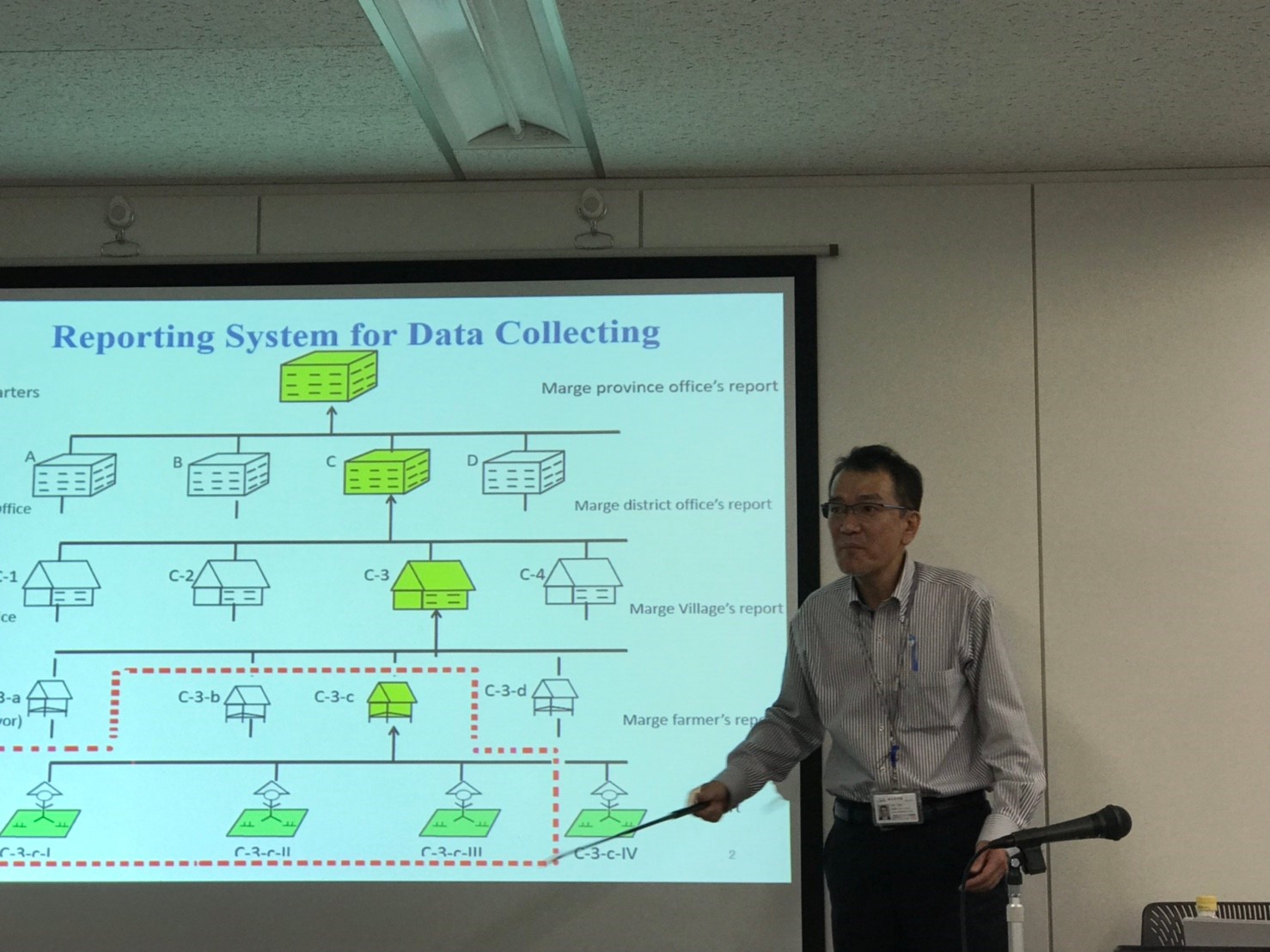
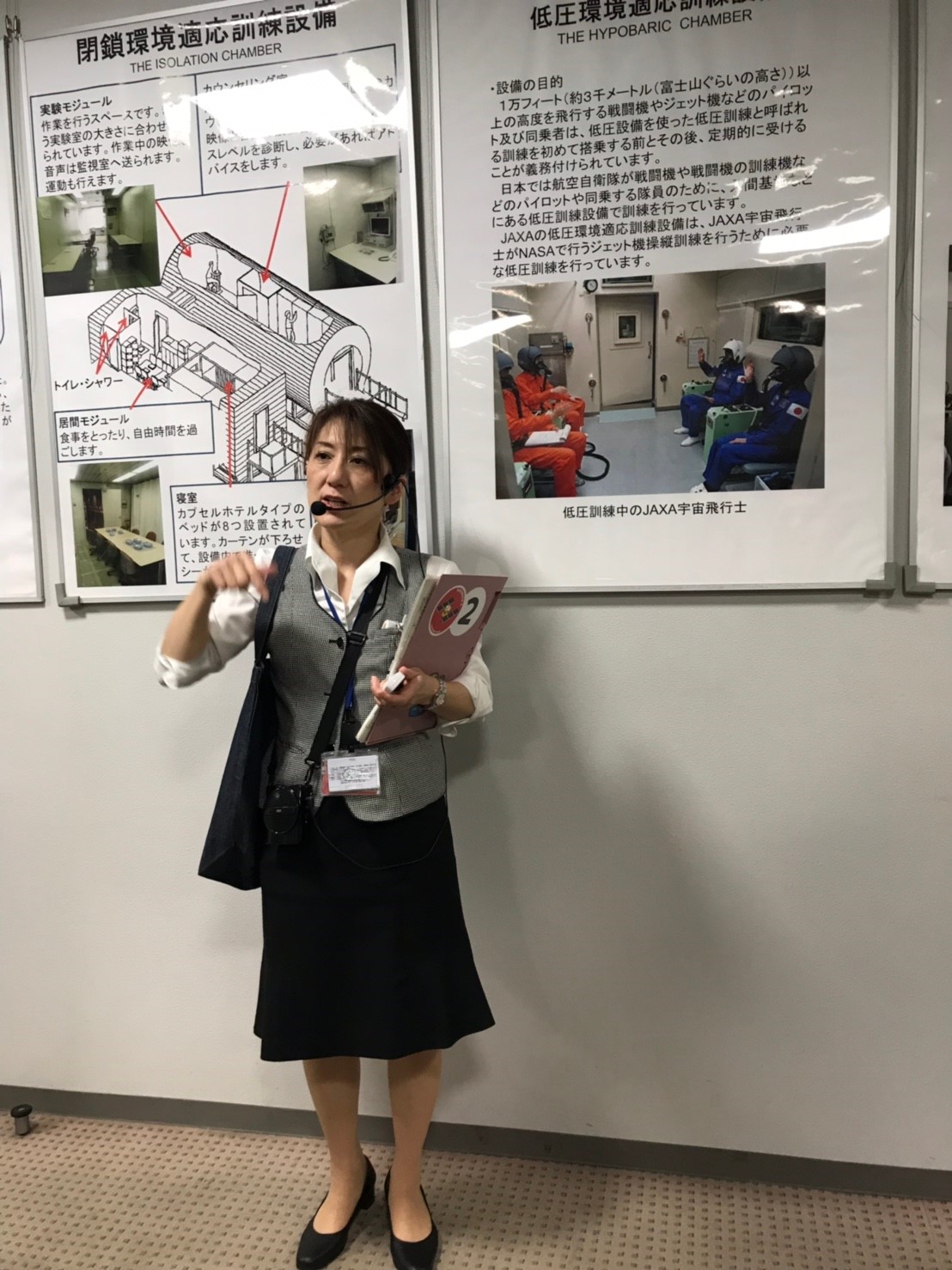
RESTEC (Remote Sensing Technology Center of Japan) coordinated with AFSIS (ASEAN+3 Food SecurityInformation System) organized Japan-Asia Youth Exchange Program in Science in Japan under SAKURA Exchange program in Science in Japan.
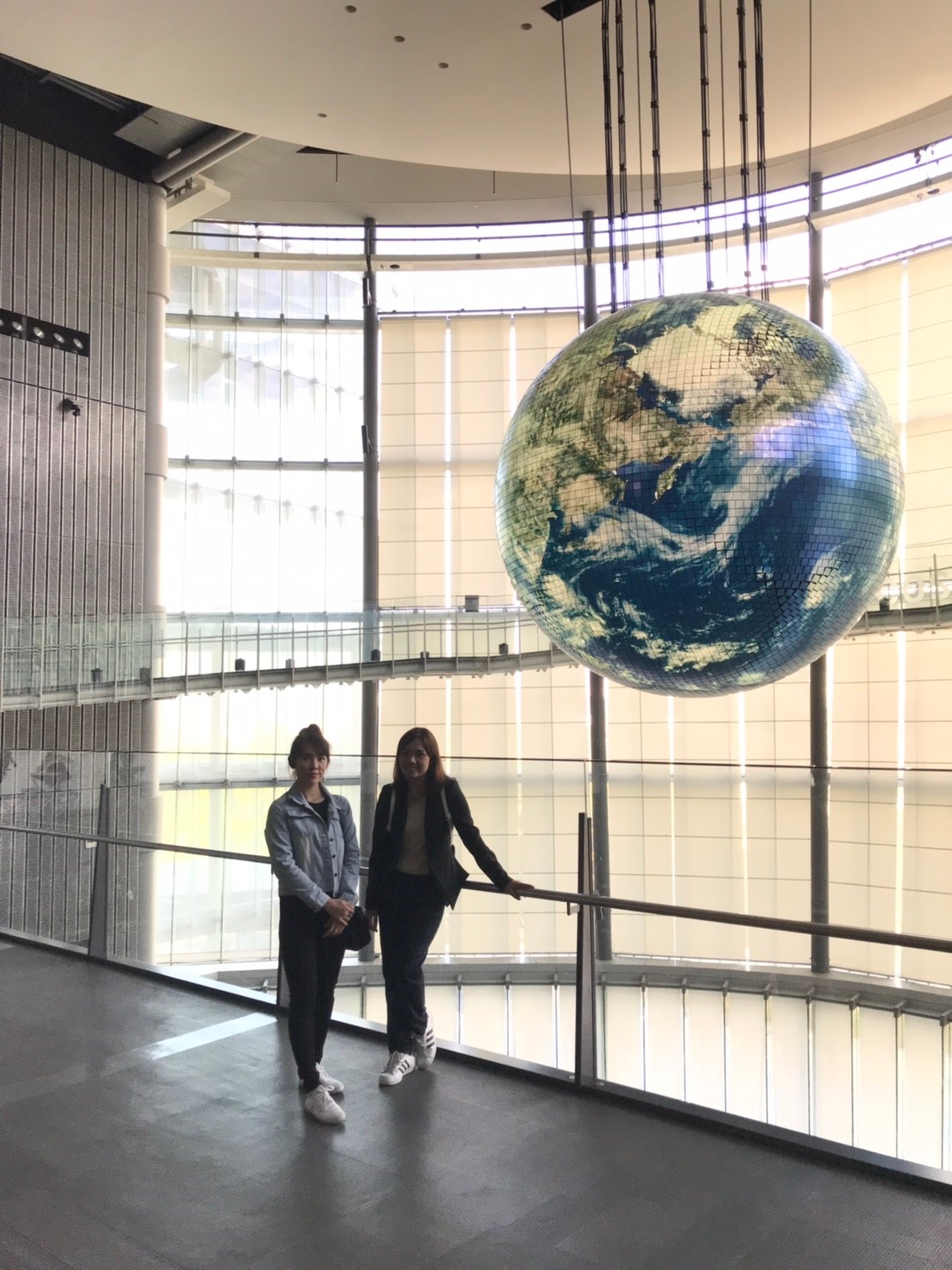
There are 14 participants from 7 countries attending this program during 15-24 October 2018. This program played an important role in inspiring future rising talented civil servant, as important force in science and technology field especially Geo Informatics technology..RESTEC agency gives trainees wide range of special lecturing classes and exhibitions, include interesting and useful fieldtrip. These visiting consist of Tsukuba Space Center, Japan Aerospace Exploration Agency (JAXA), Earth Observation Center (EOC), Nation Museum of Emerging Science and Innovation (Miraikan), Hitachi Corp. Center for exploratory research, irrigation facility for agriculture, and Saitama agriculture management junior college. The lecturing class about remote sensing at Rissho University, Tokyo Denki University and RESTEC.

The AFSIS Secretariat participated in the 10th International Conference on Agricultural Statistics (ICAS X), held from 8 to 10 July 2026 at the ICE Krakow Congress Centre in Krakow, Poland. Jointly organized by Statistics Poland, Eurostat, the United States Department of Agriculture (USDA), the World Bank Group, and the Food and Agriculture Organization of the United Nations (FAO).
.JPG)
On 24–25 June 2026, AFSIS Secretariat participated in the 46th Meeting of the ASEAN Food Security Reserve Board (AFSRB) via a virtual conference. The Meeting was jointly organized by the AFSRB Secretariat and the Department of Agriculture (DOA), Ministry of Agriculture, Livestock and Irrigation (MOALI) of the Republic of the Union of Myanmar, and was hosted in Nay Pyi Taw, Myanmar.

On 17–18 June 2026, the 24th AFSIS Focal Point Meeting was successfully convened via video conference, hosted by the Philippine Statistics Authority (PSA) in collaboration with the ASEAN Food Security Information System (AFSIS) Secretariat.
.jpg)
The ASEAN Food Security Information System (AFSIS) Secretariat, in collaboration with the Ministry of Agriculture, Forestry and Fisheries (MAFF) Japan, Japan Aerospace Exploration Agency (JAXA), Remote Sensing Technology Center of Japan (RESTEC), and Geo-Informatics and Space Technology Development Agency (GISTDA), conducted the 2nd Hands-on Training Courses for Agricultural Statisticians, the Final Workshop, and the 2nd Seminar for Executive Officials under the JAIF Project entitled “Improvement of Rice Paddy Area Statistics and Damage Assessment using Earth Observation Satellites for ASEAN” in Sriracha, Chonburi Province, and Bangkok, Thailand.

