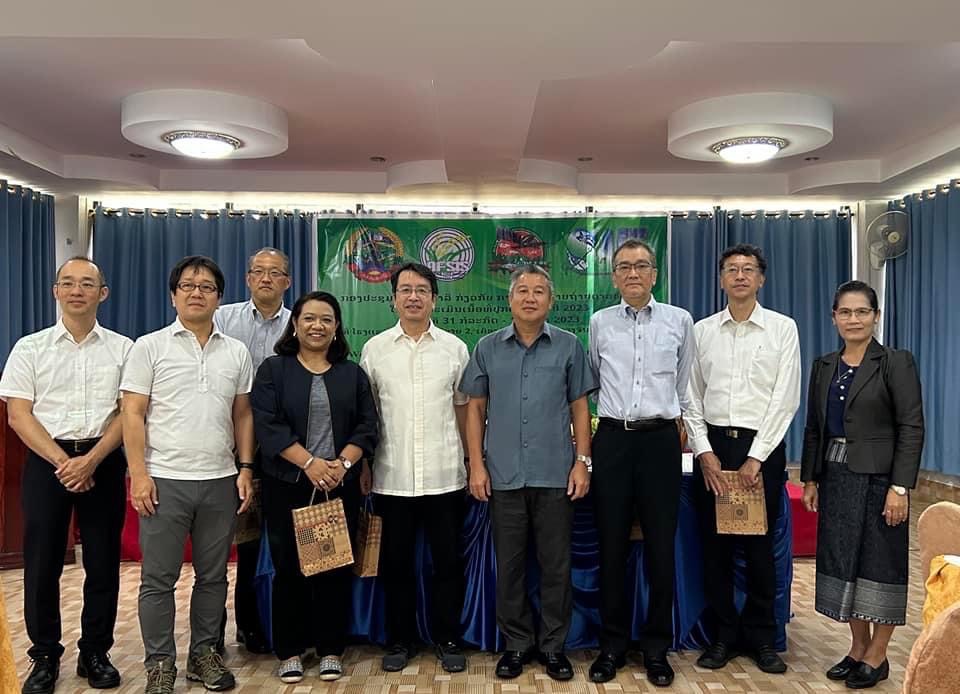
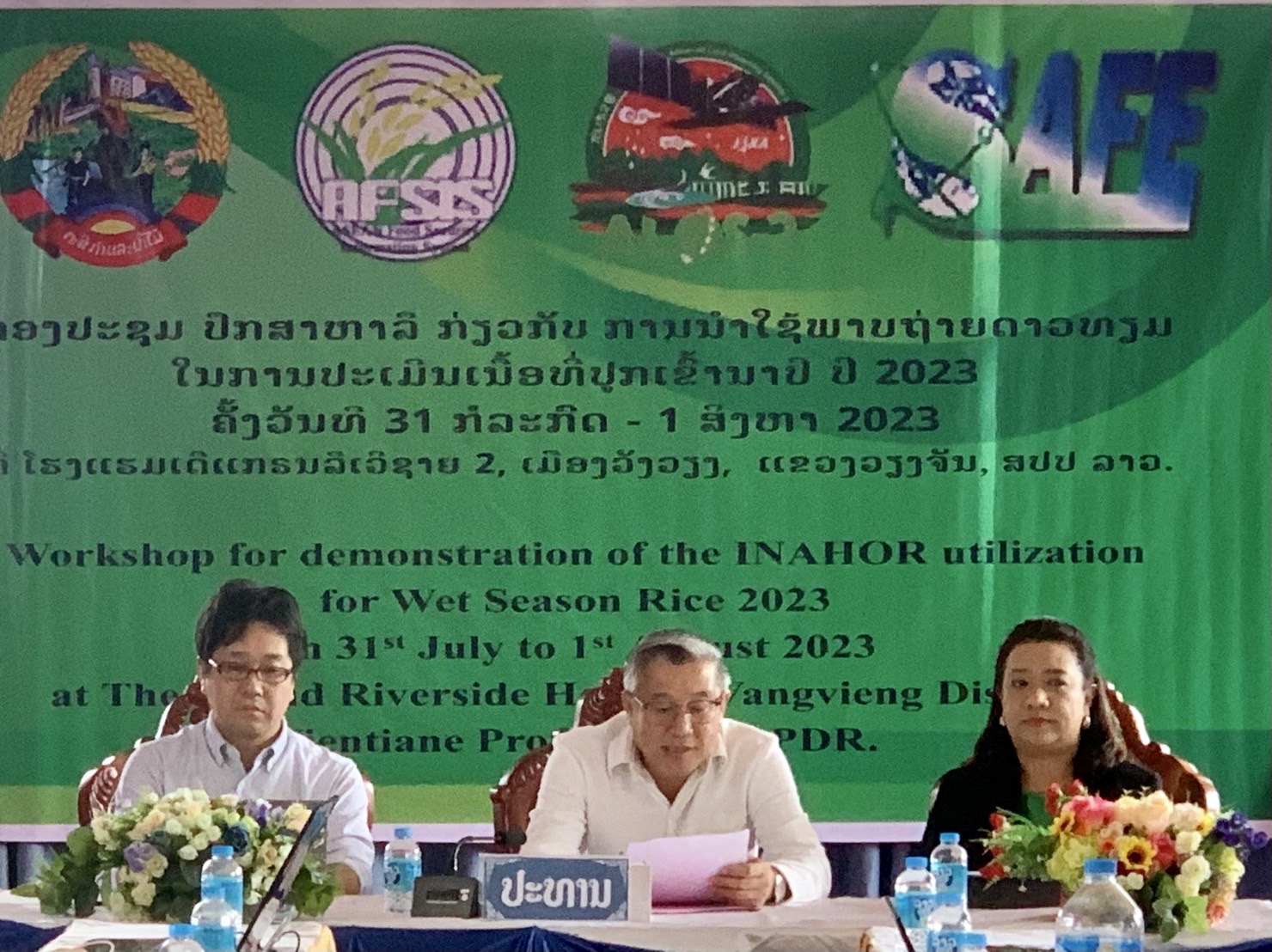
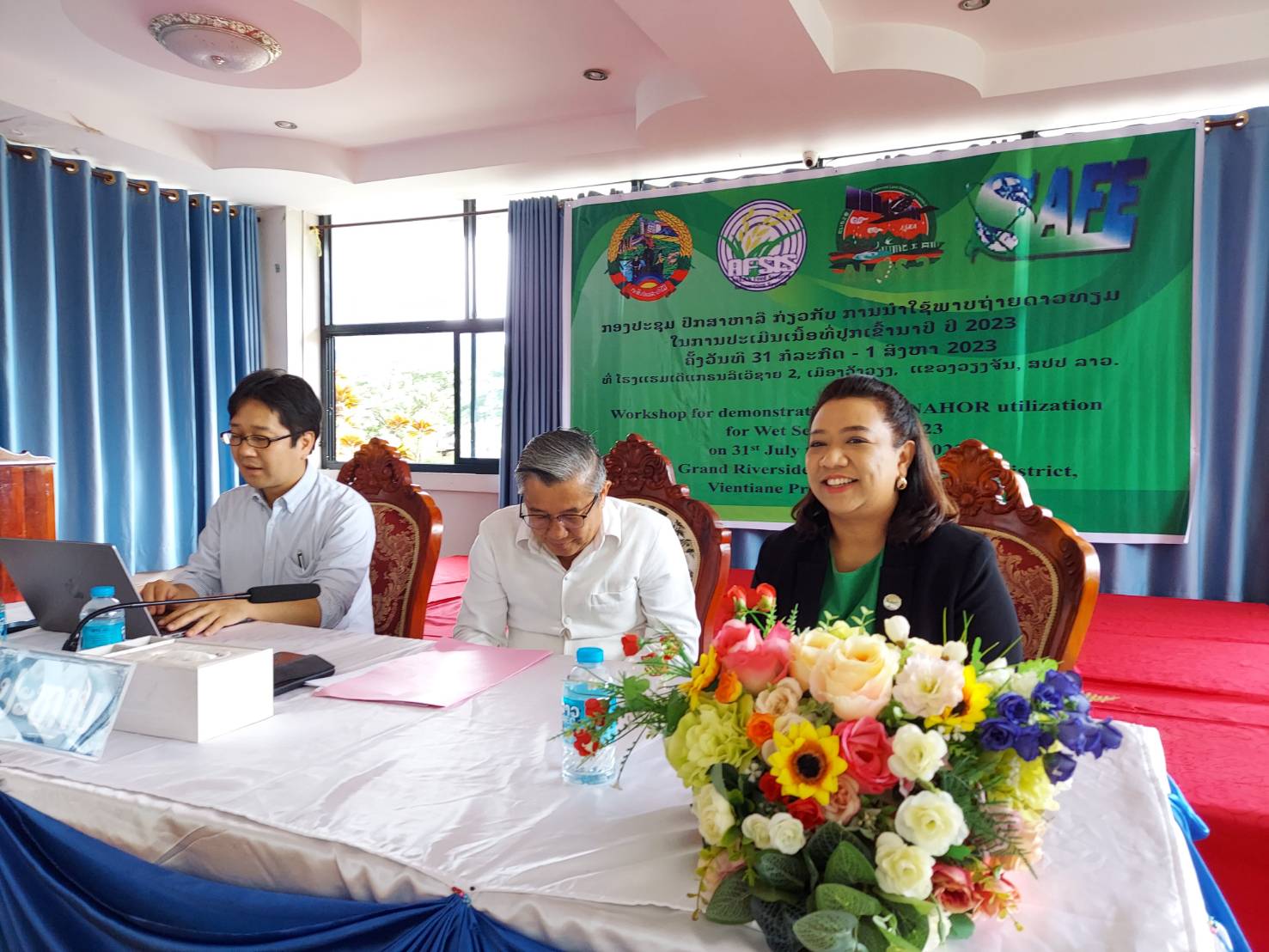
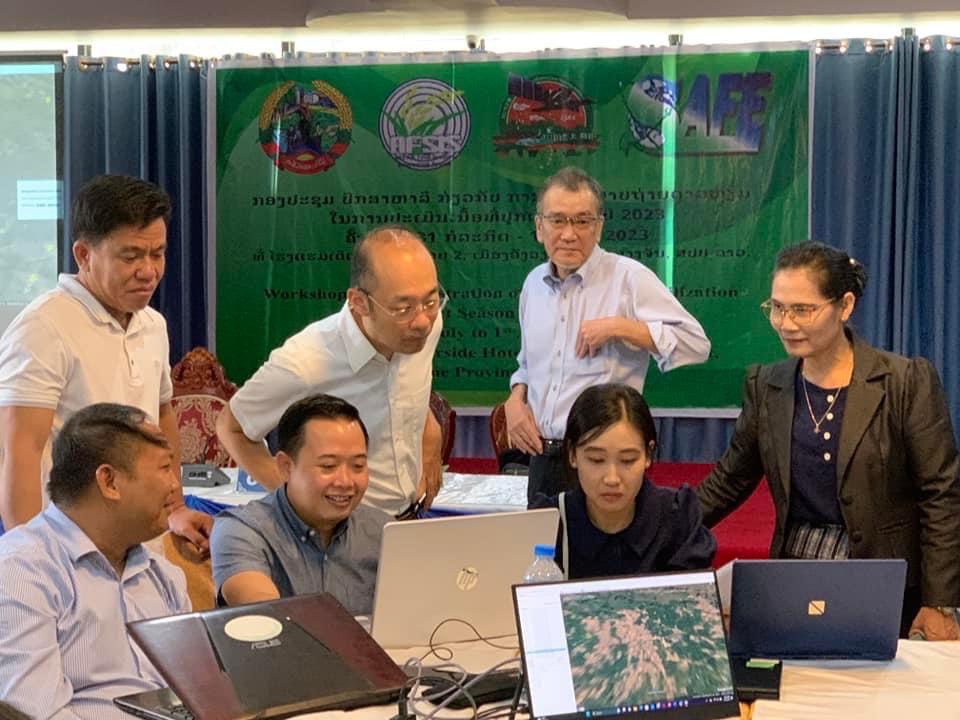
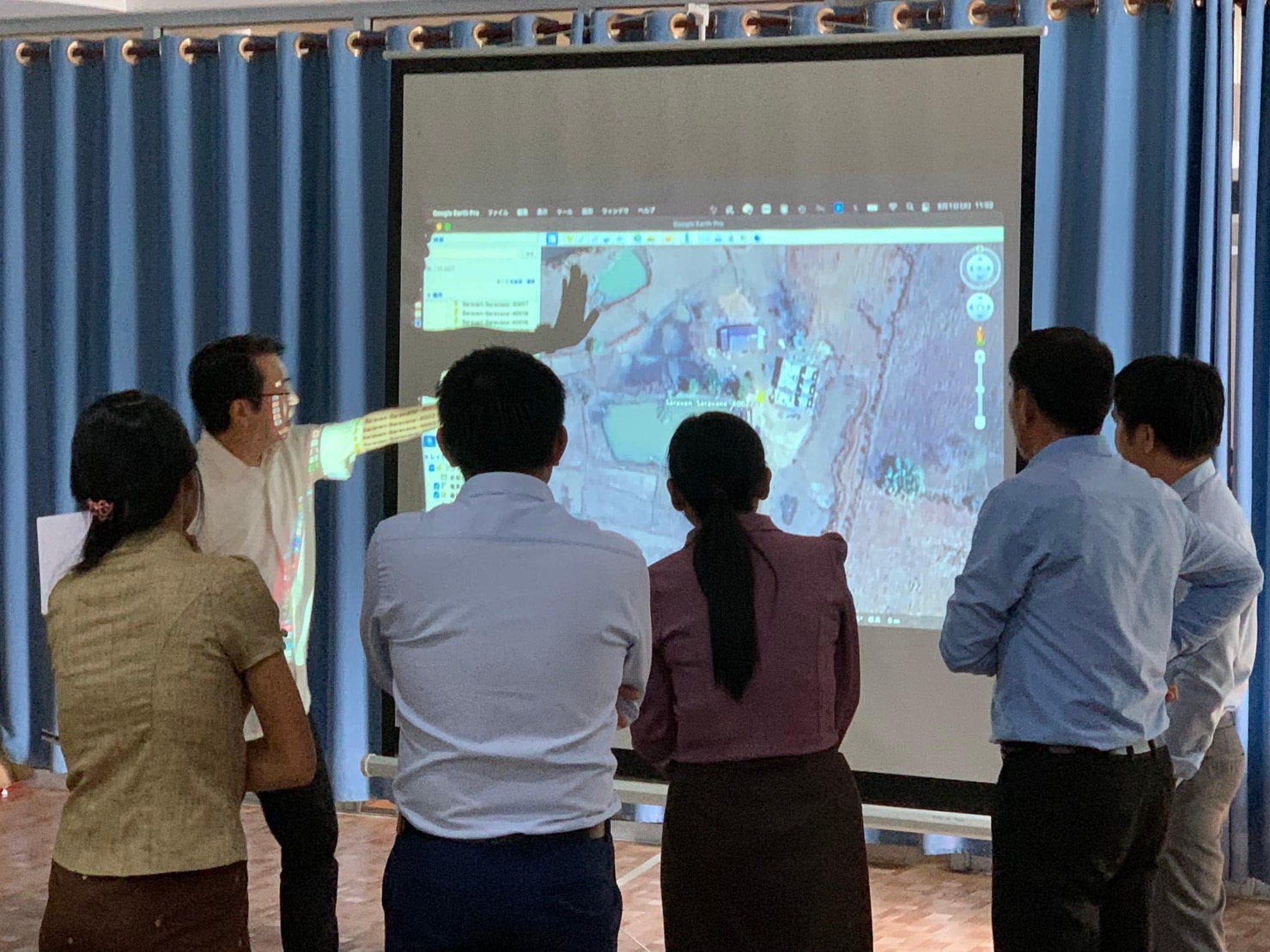
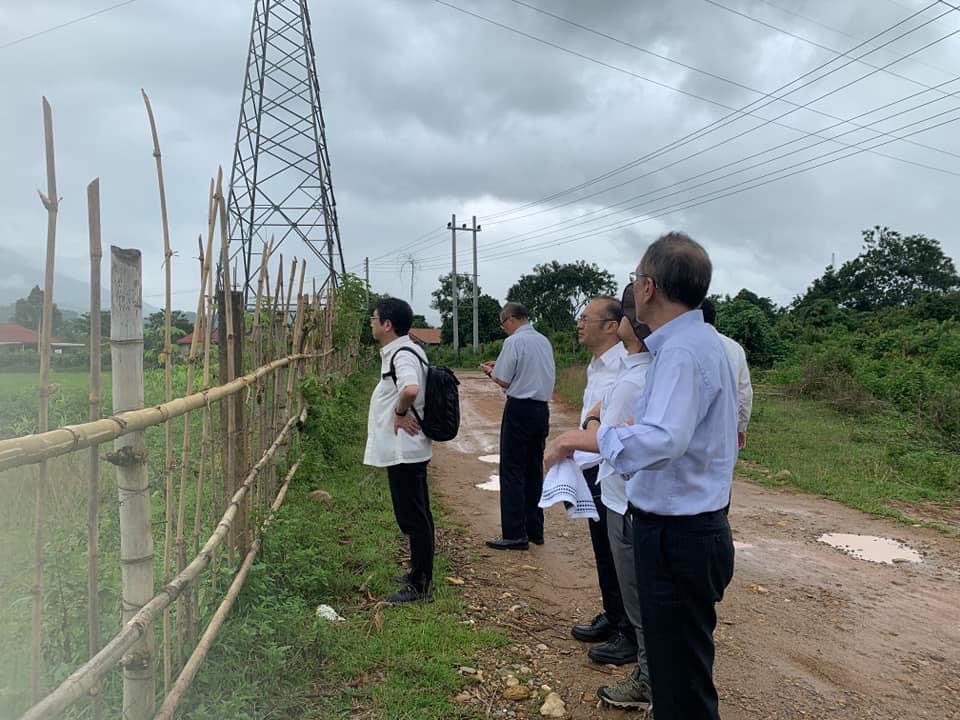
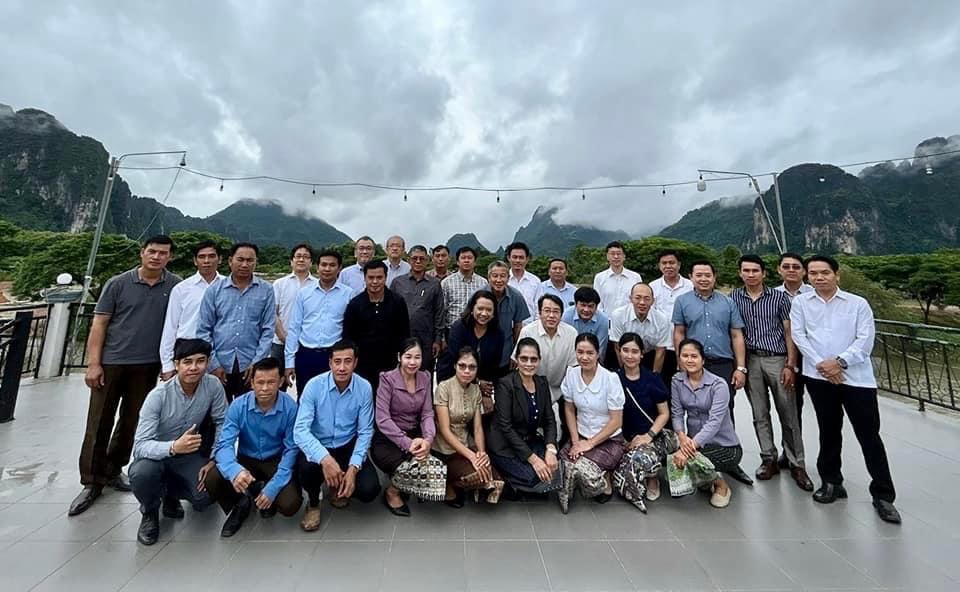
On 31 July – 1 August 2023, the AFSIS Secretariat in collaboration with Japan Aerospace Exploration Agency (JAXA), and the Ministry of Agriculture and Forestry (MAF) of Lao PDR conducted the Workshop for the demonstration of INAHOR utilization for 2023 Rainy Season Rice in Vang Vieng, Lao PDR.
In the opening session, it was honored by Dr. Soulaphone Inthavong, Deputy Director General of the Department of Planning and Cooperation, MAF of Lao PDR, to deliver the opening remark. While the representatives of the AFSIS Secretariat were Dr. Sumanya Ngandee, AFSIS Manager, and Mr. Miyake Yasuhiro, AFSIS Japanese Expert, who attended the aforesaid workshop.
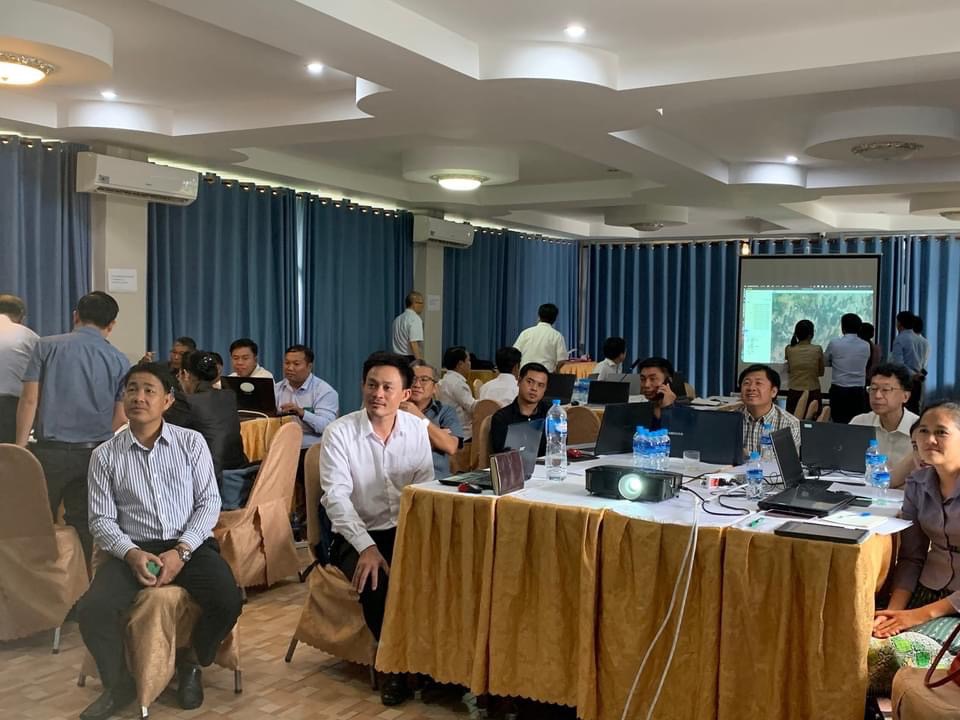
The workshop was under the rice crop monitoring project (INAHOR activity) in the Asia Pacific Regional Space Forum (APRSAF) Space Applications for Environment (SAFE) initiative to promote rice planted area estimation using space-based technologies, with the objective to demonstrate the INAHOR utilization and develop the training data in Lao PDR for the whole country in 2023. The participants were officials from the Center for Agricultural Statistics (CAS), and the Provincial Agriculture and Forestry Office, Ministry of Agriculture and Forestry (MAF) of Lao PDR.
During the workshop, there was a session for making training data for 2023 rainy season rice which grid points in country areas will be judged on Google Earth Pro in consultation with the training tutors, CAS staff, and provincial staff. The INAHOR analysis results from this project will be provided to CAS for further implementation.
In addition, all outputs of this workshop will be implemented with the AFSIS project entitled “Project for Strengthening ASEAN Food Security Information System (AFSIS) Function for Emergency" or SAFER project under its activity “Developing crop area estimation method using satellite image” which AFSIS also plans to conduct the training workshop related to INHOR activity this year.

The AFSIS Secretariat participated in the 10th International Conference on Agricultural Statistics (ICAS X), held from 8 to 10 July 2026 at the ICE Krakow Congress Centre in Krakow, Poland. Jointly organized by Statistics Poland, Eurostat, the United States Department of Agriculture (USDA), the World Bank Group, and the Food and Agriculture Organization of the United Nations (FAO).
.JPG)
On 24–25 June 2026, AFSIS Secretariat participated in the 46th Meeting of the ASEAN Food Security Reserve Board (AFSRB) via a virtual conference. The Meeting was jointly organized by the AFSRB Secretariat and the Department of Agriculture (DOA), Ministry of Agriculture, Livestock and Irrigation (MOALI) of the Republic of the Union of Myanmar, and was hosted in Nay Pyi Taw, Myanmar.

On 17–18 June 2026, the 24th AFSIS Focal Point Meeting was successfully convened via video conference, hosted by the Philippine Statistics Authority (PSA) in collaboration with the ASEAN Food Security Information System (AFSIS) Secretariat.
.jpg)
The ASEAN Food Security Information System (AFSIS) Secretariat, in collaboration with the Ministry of Agriculture, Forestry and Fisheries (MAFF) Japan, Japan Aerospace Exploration Agency (JAXA), Remote Sensing Technology Center of Japan (RESTEC), and Geo-Informatics and Space Technology Development Agency (GISTDA), conducted the 2nd Hands-on Training Courses for Agricultural Statisticians, the Final Workshop, and the 2nd Seminar for Executive Officials under the JAIF Project entitled “Improvement of Rice Paddy Area Statistics and Damage Assessment using Earth Observation Satellites for ASEAN” in Sriracha, Chonburi Province, and Bangkok, Thailand.

