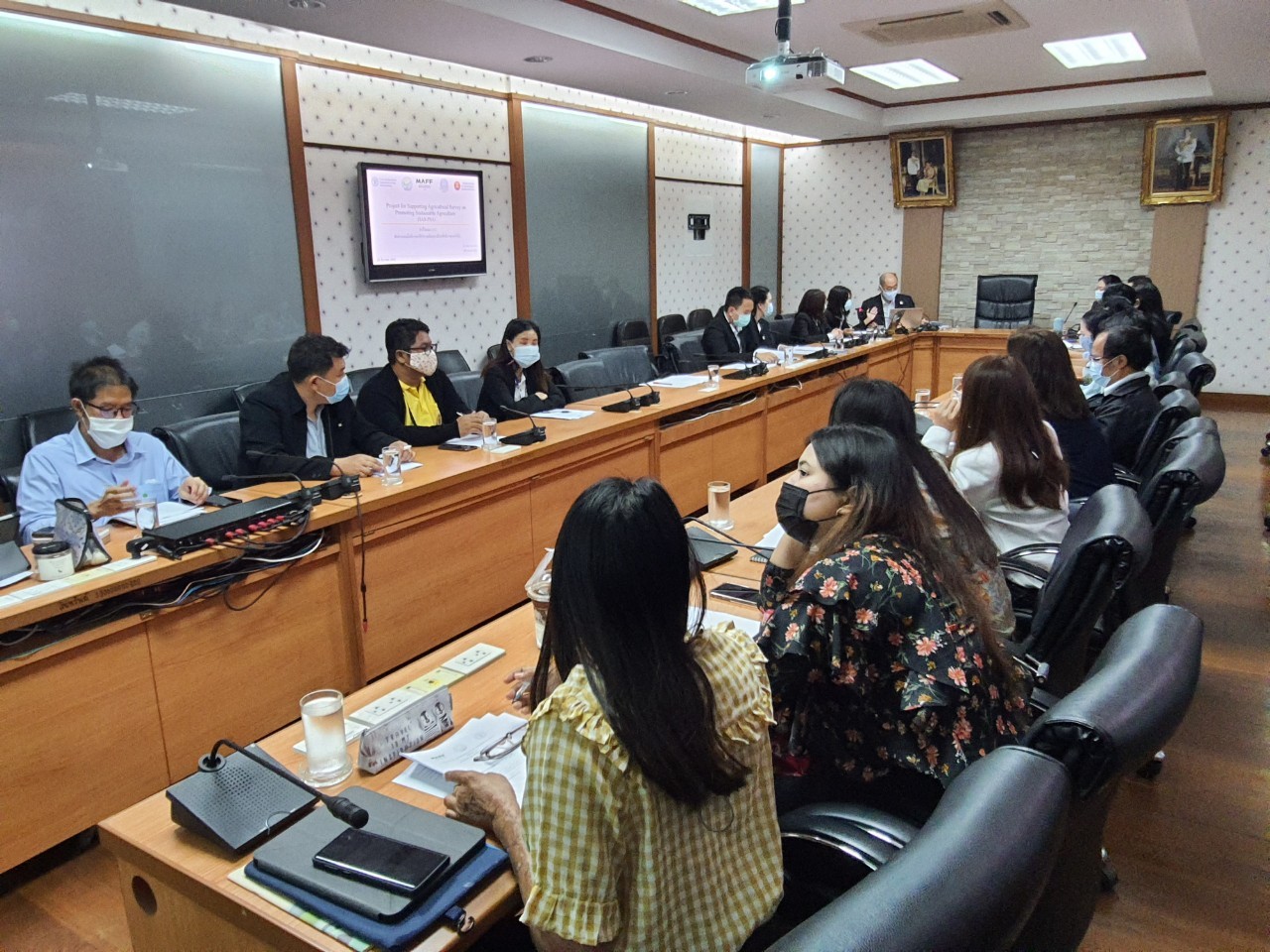
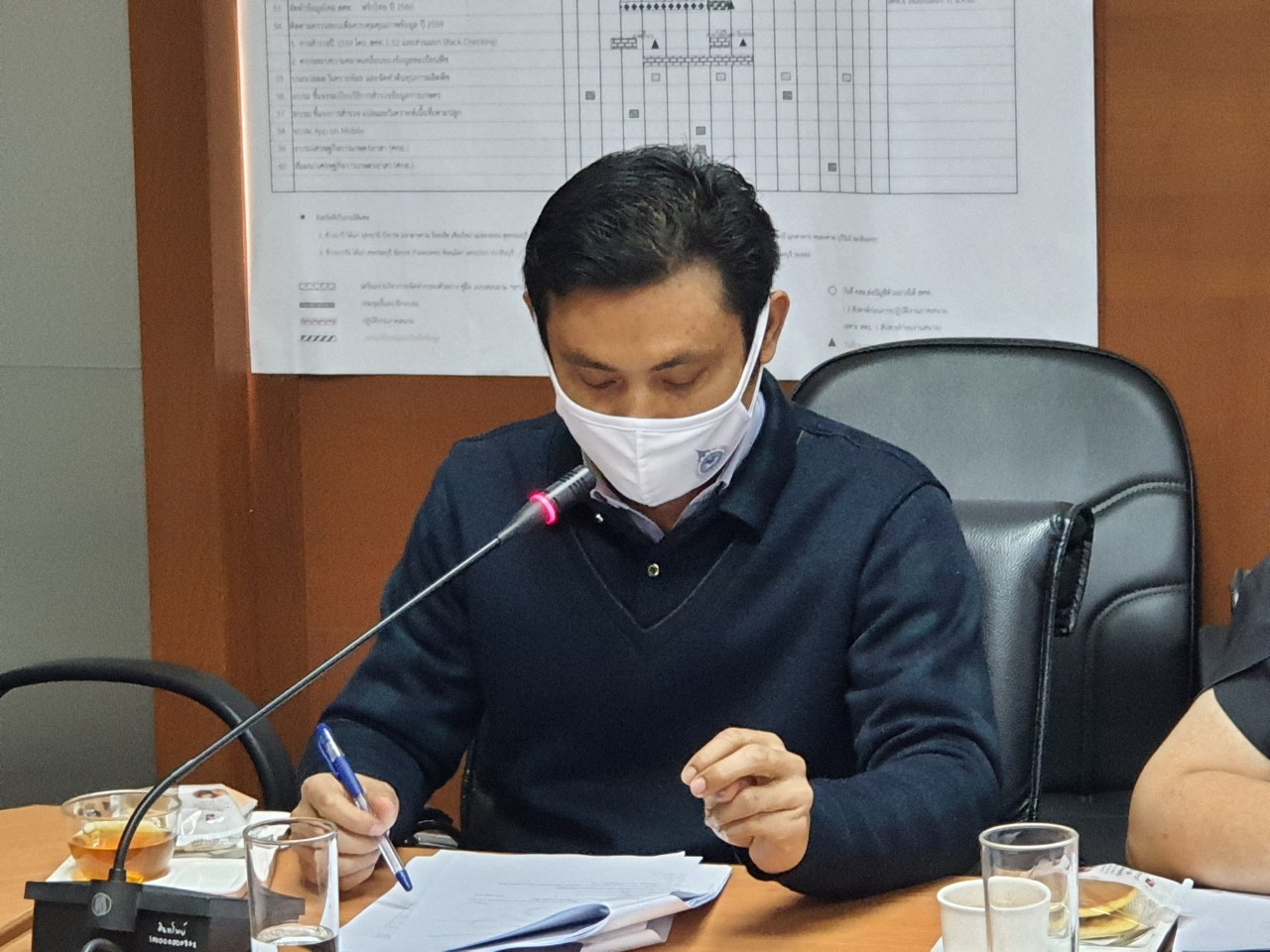
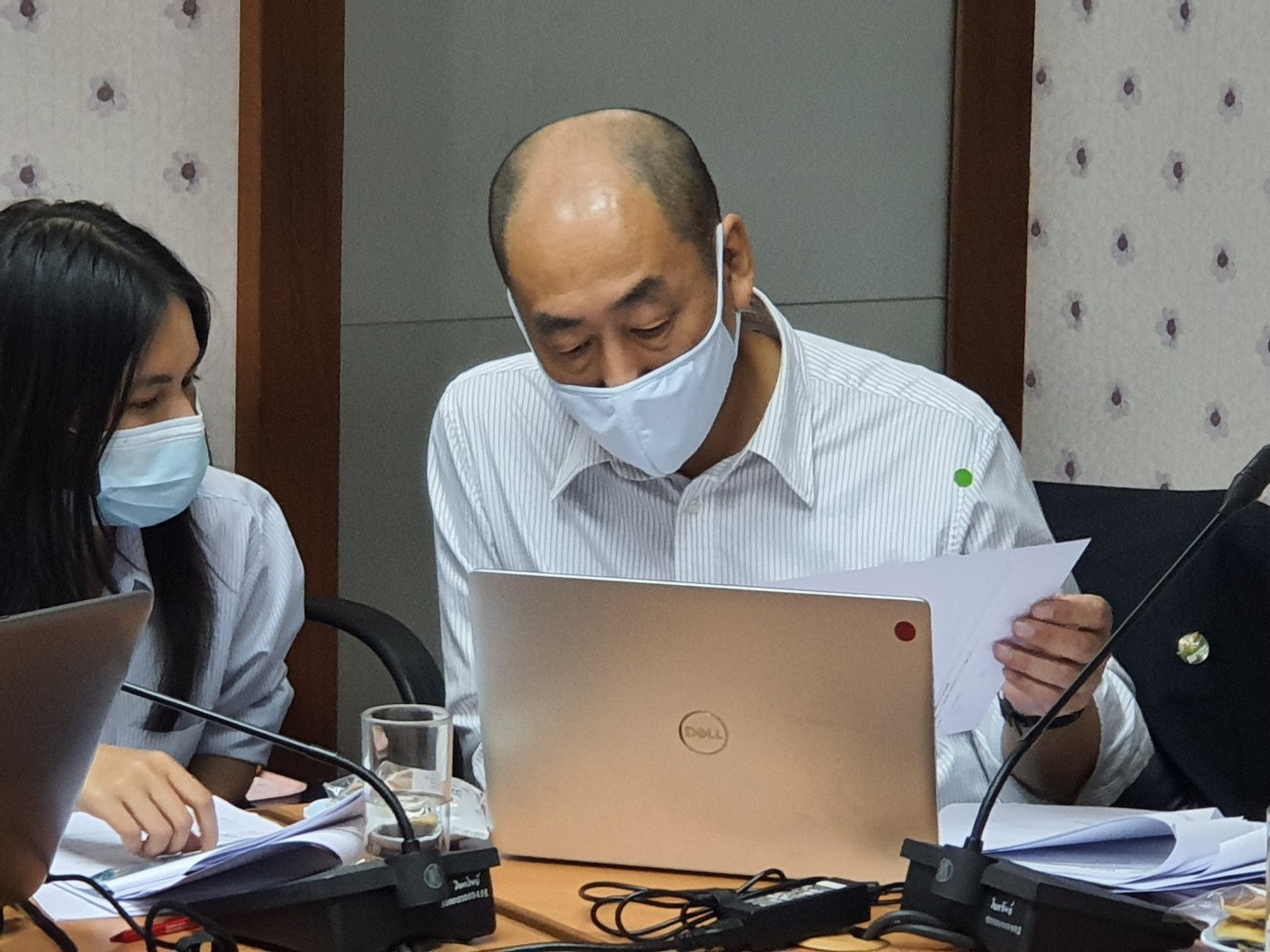
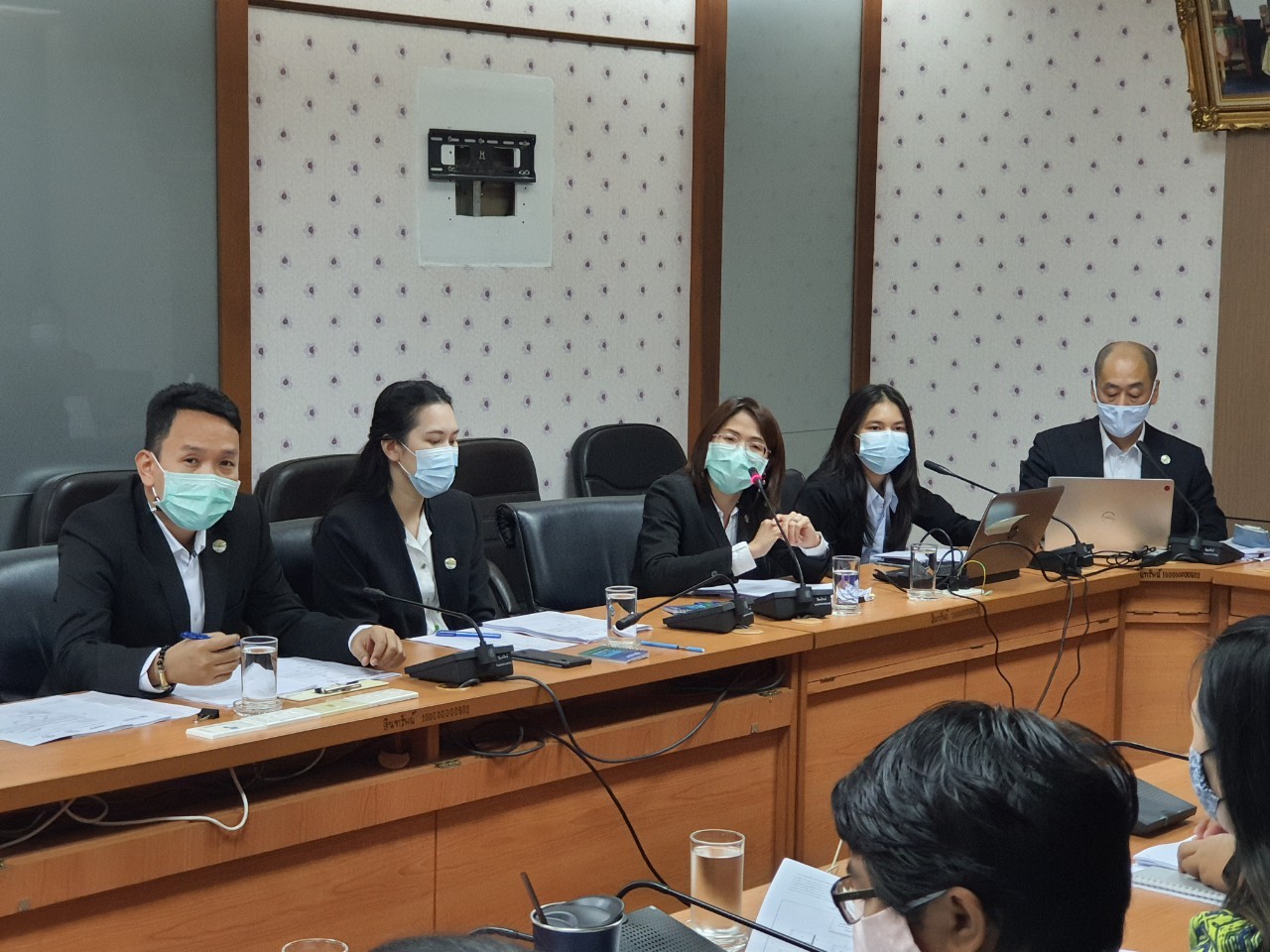
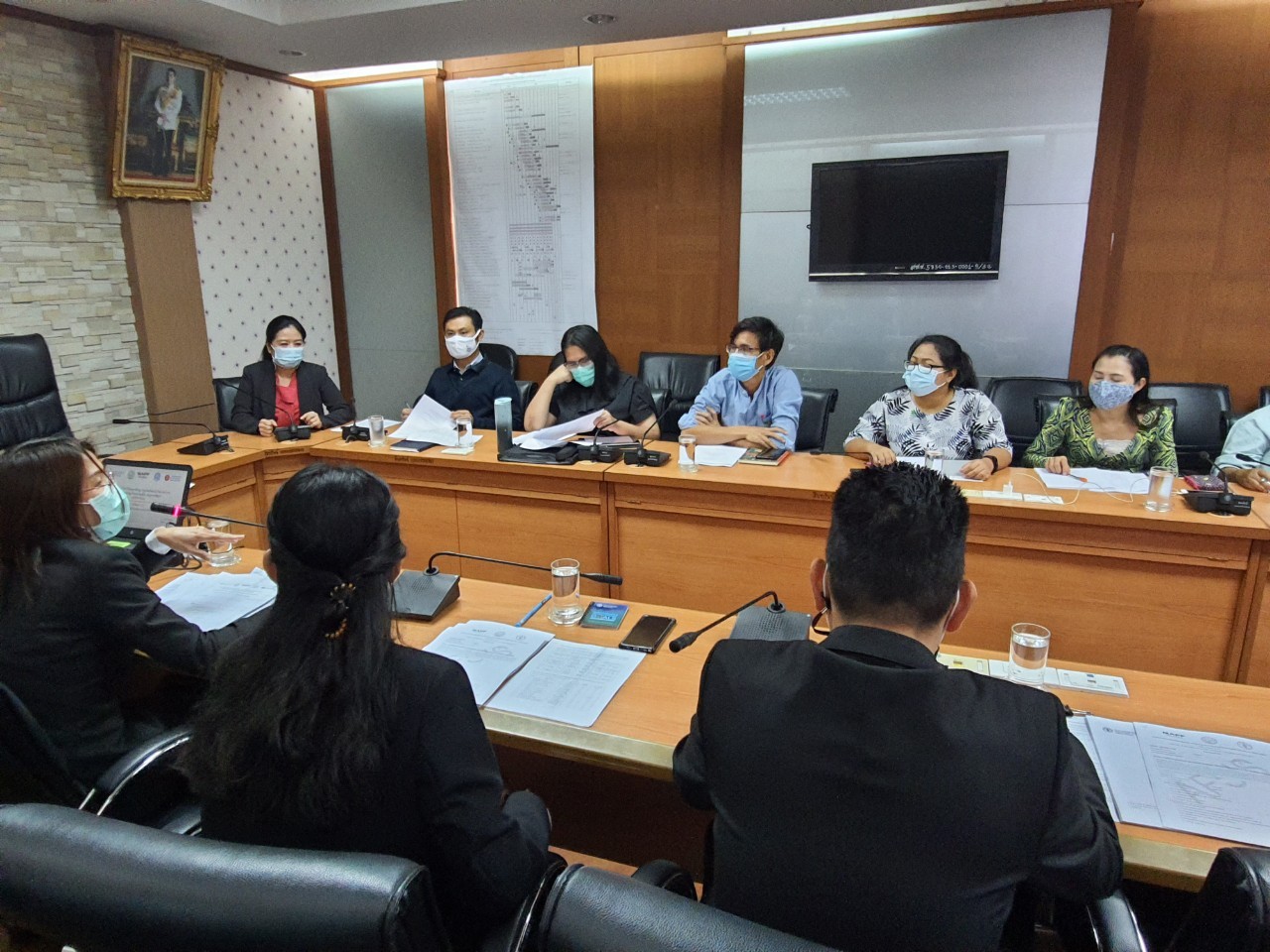
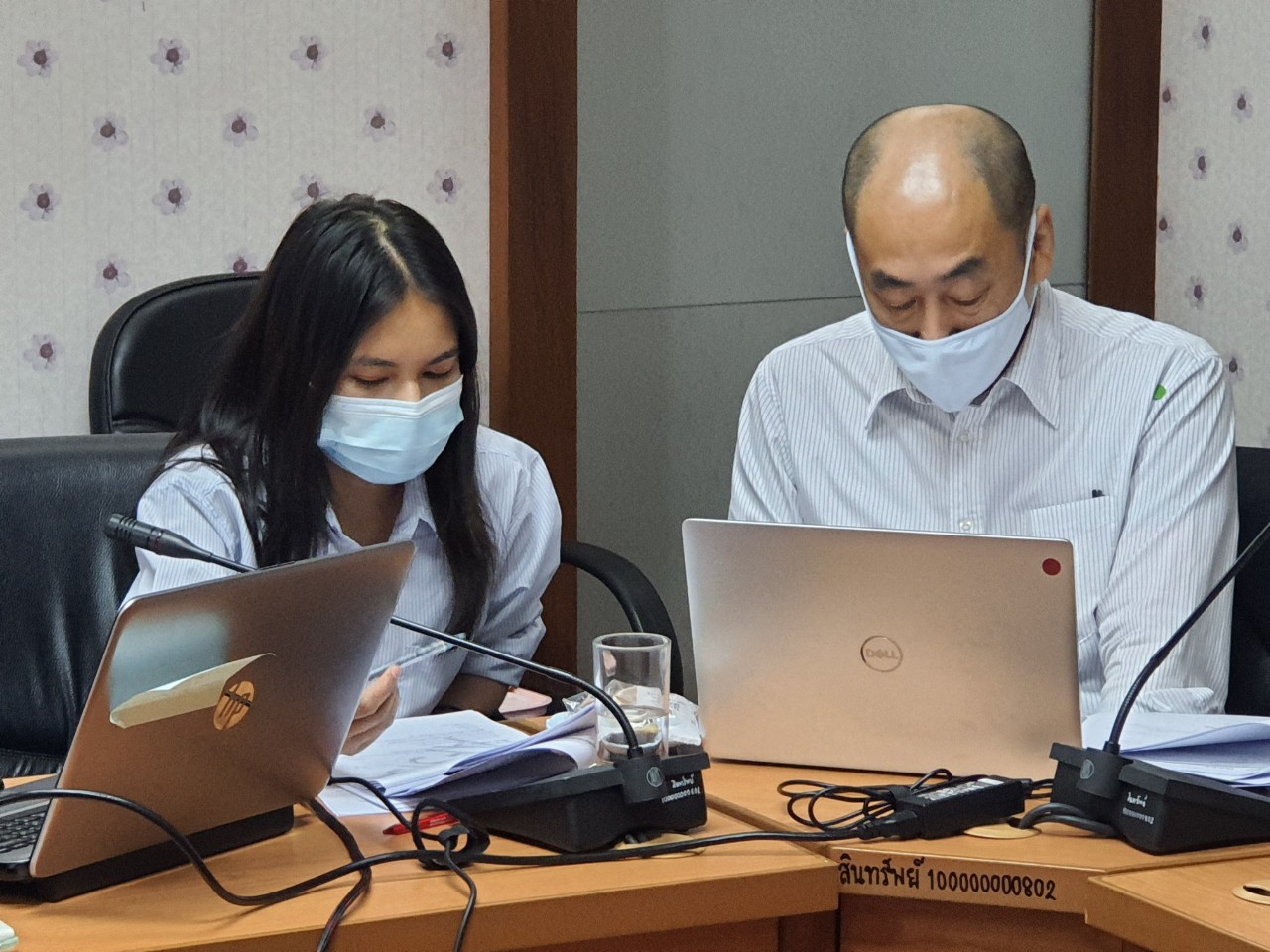
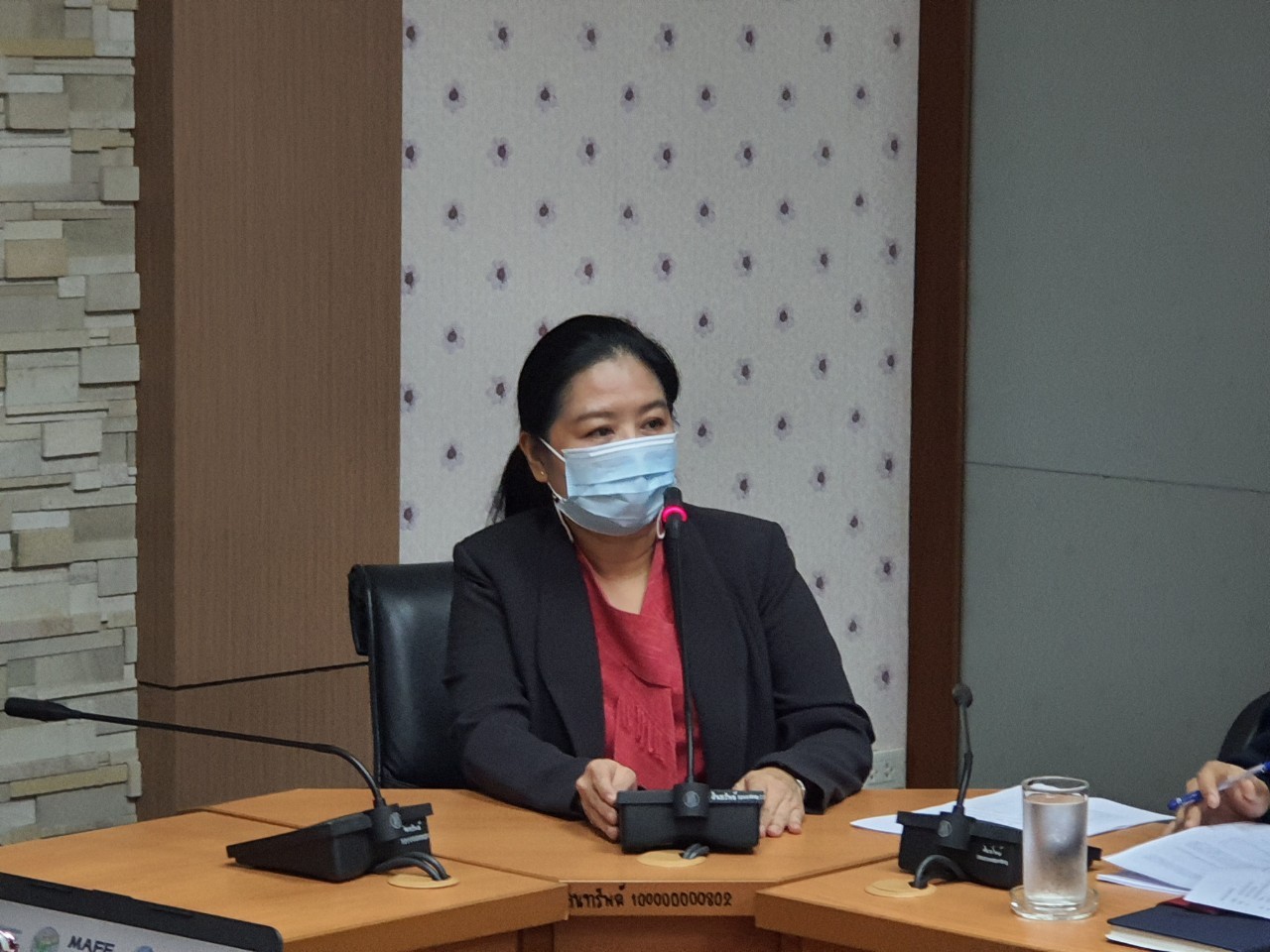
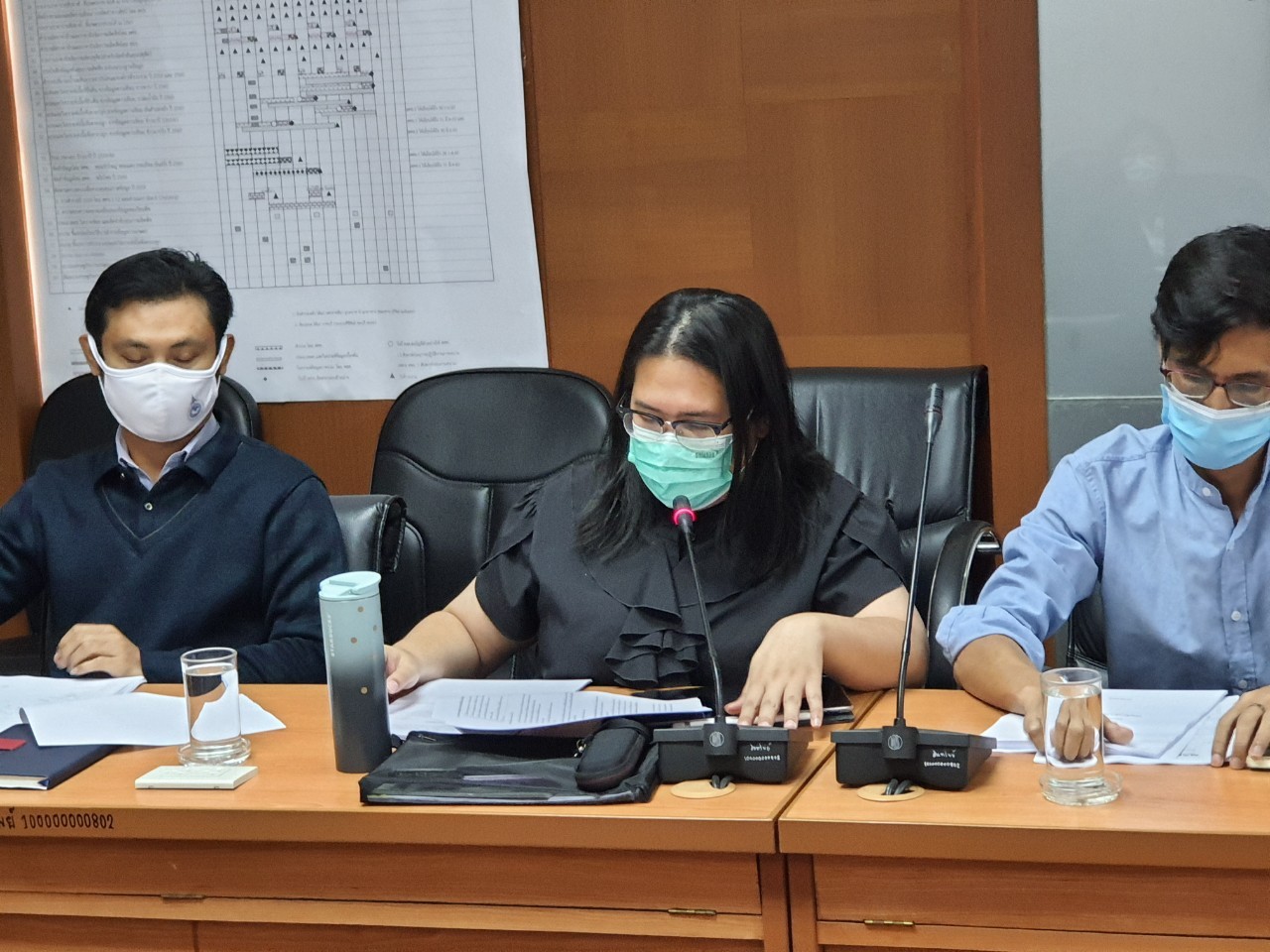
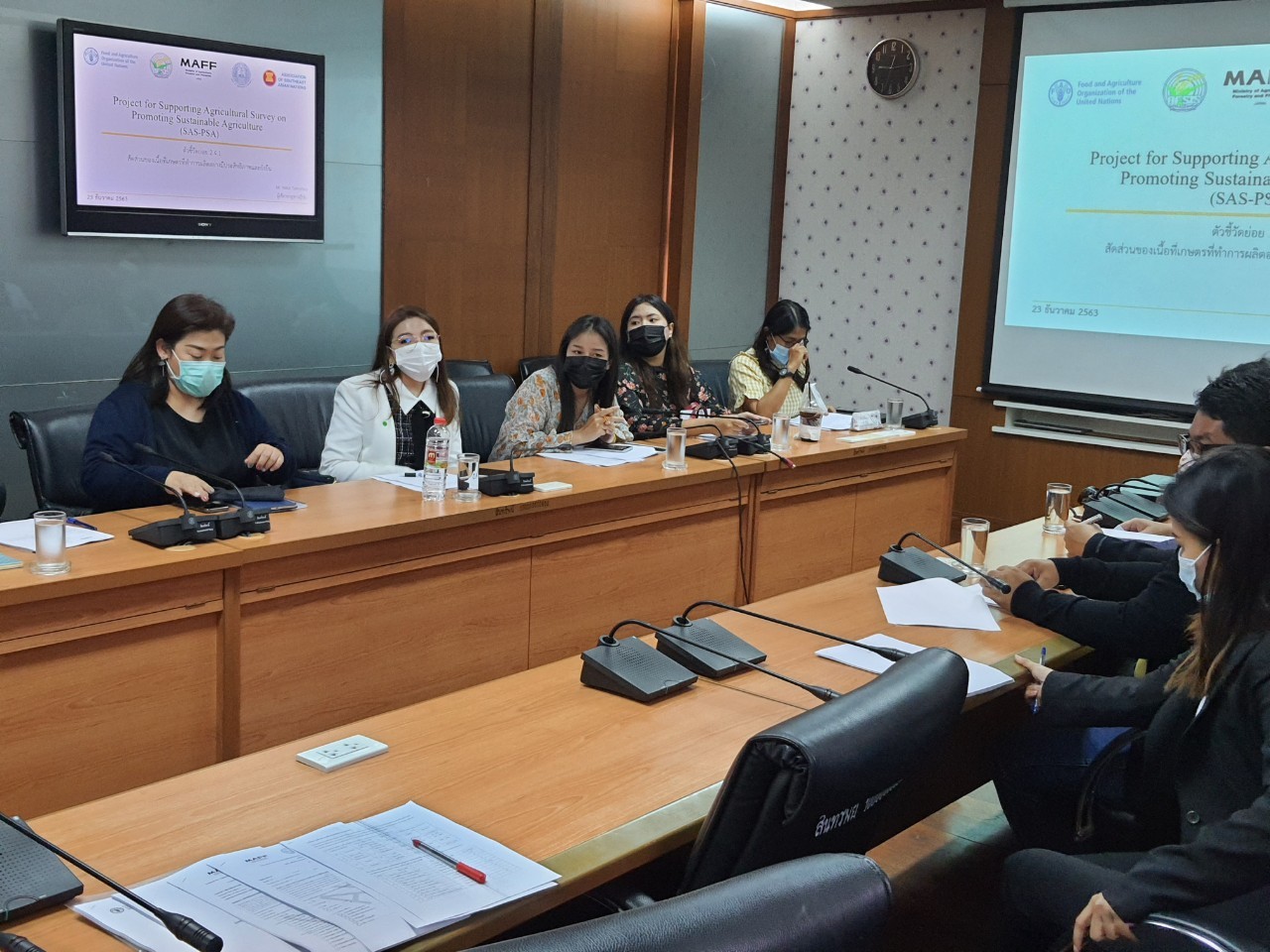
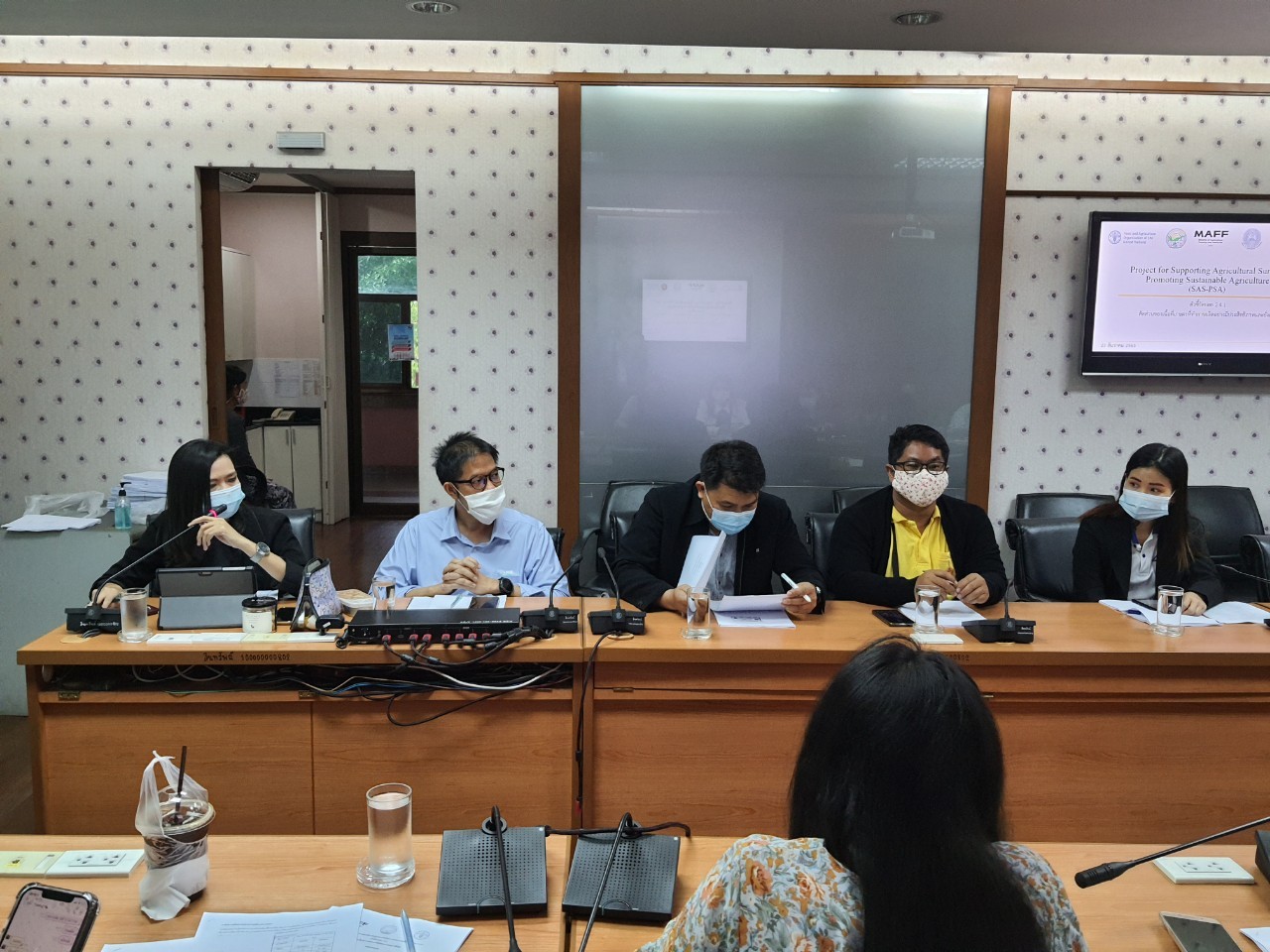
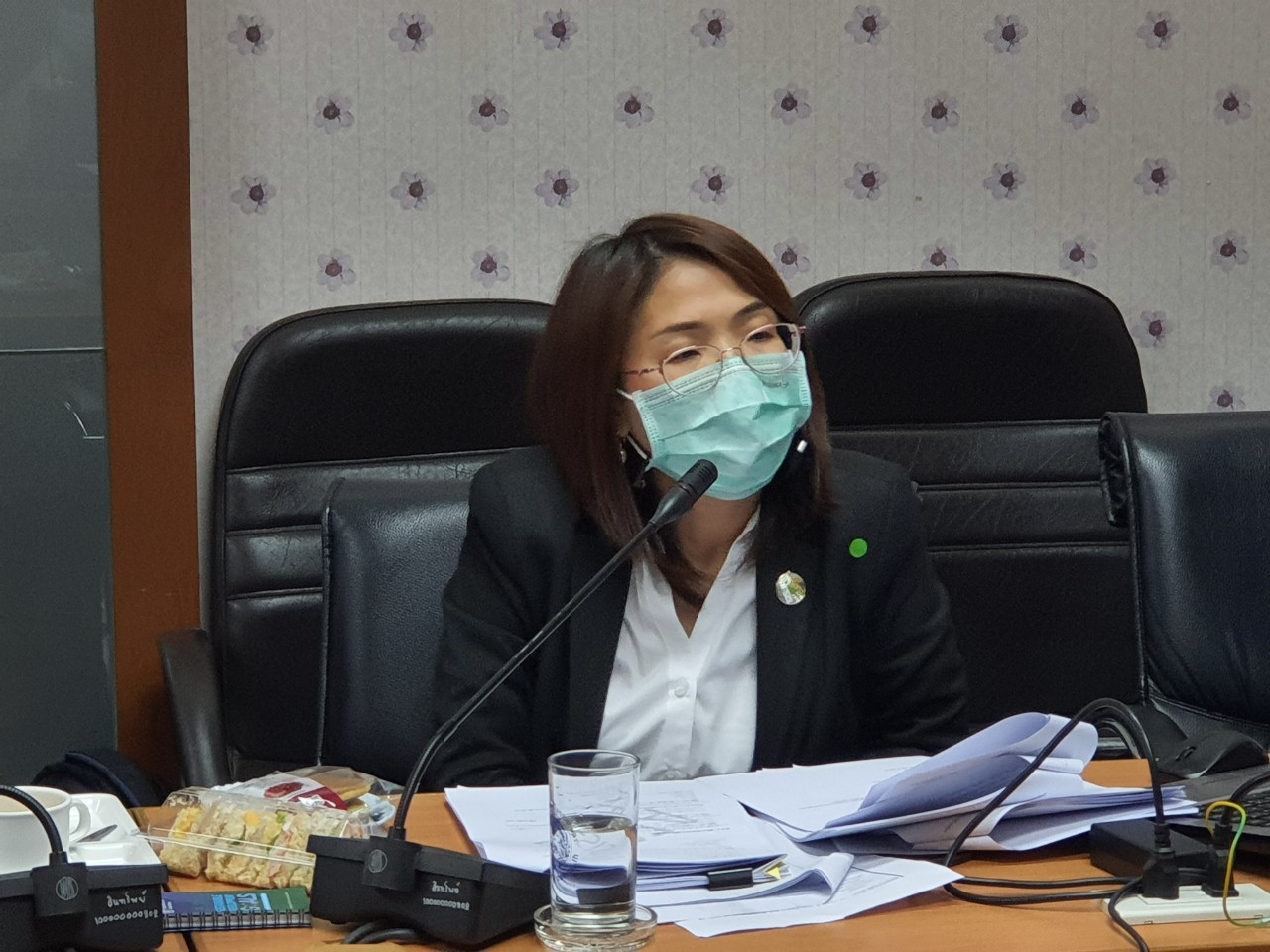
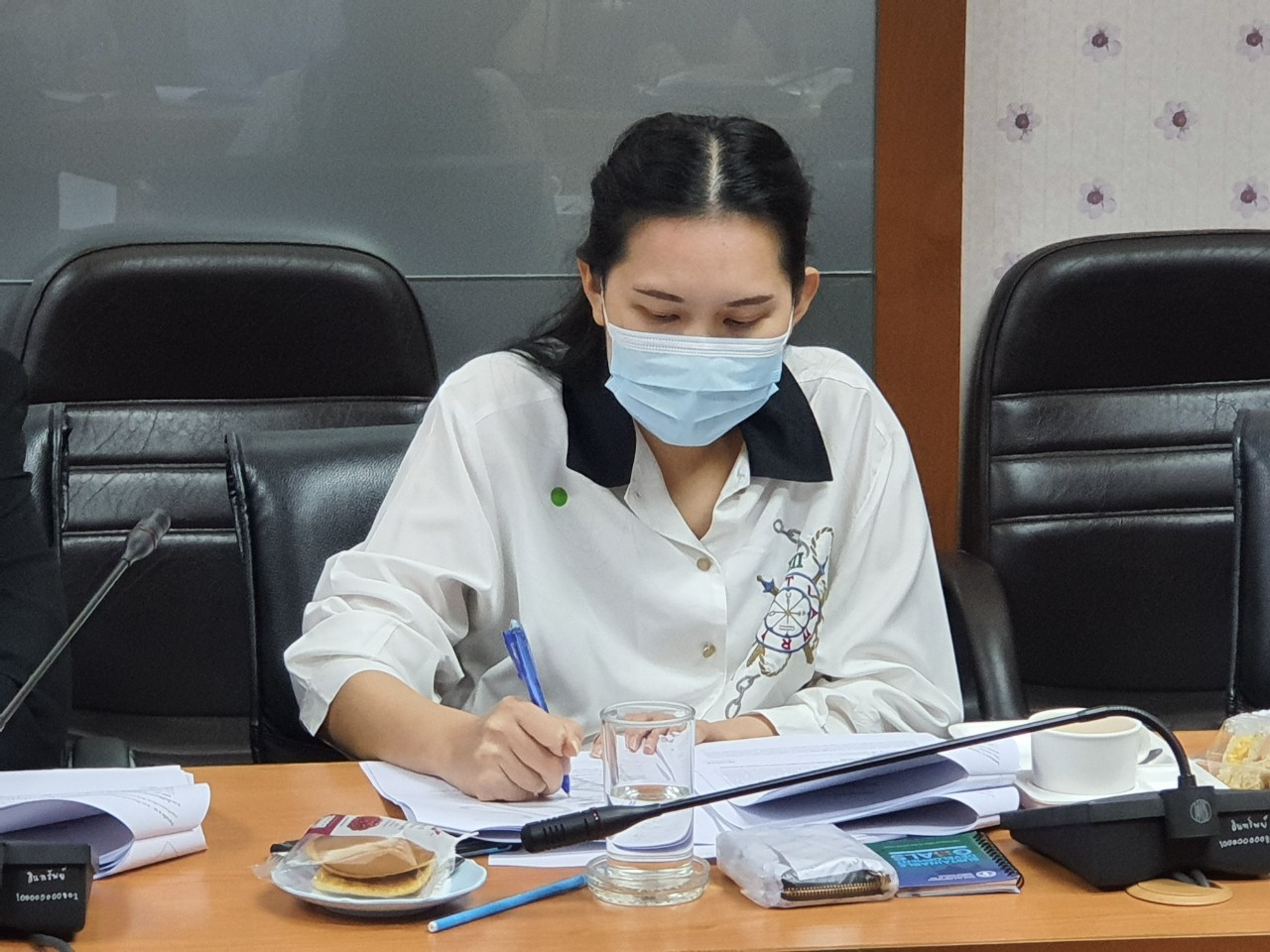
On December 23, 2020, AFSIS Secretariat and Center for Agricultural Information (CAI), Agricultural Development Policy and Planning Division, Office of Agricultural Economics (OAE), Ministry of Agriculture and Cooperatives, Thailand, had conducted Enumerator Training Workshop as a part of project for Supporting Agricultural Survey on Promoting Sustainable Agriculture in ASEAN Region or SAS-PSA project in Thailand.
In this regard, Dr. Waraporn Saelee, AFSIS Manager, Statistician, Senior Professional Level, Office of Agricultural Economics, Ministry of Agriculture and Cooperatives, Thailand, and Mr. NIIMI Tomohiro, Japanese Expert, have performed as lecturers in this workshop. The objectives of the workshop are to make the same understanding in each question in the questionnaire applying the SDG indicator 2.4.1 method based on FAO Survey Module, increase the knowledge of the pilot survey questionnaire and develop capacity for the enumerators before collecting data from farm households.
Therefore, the enumerators are collecting the pilot survey in Chachoengsao from December 24, 2020, and it is expected to finish on January 23, 2021.
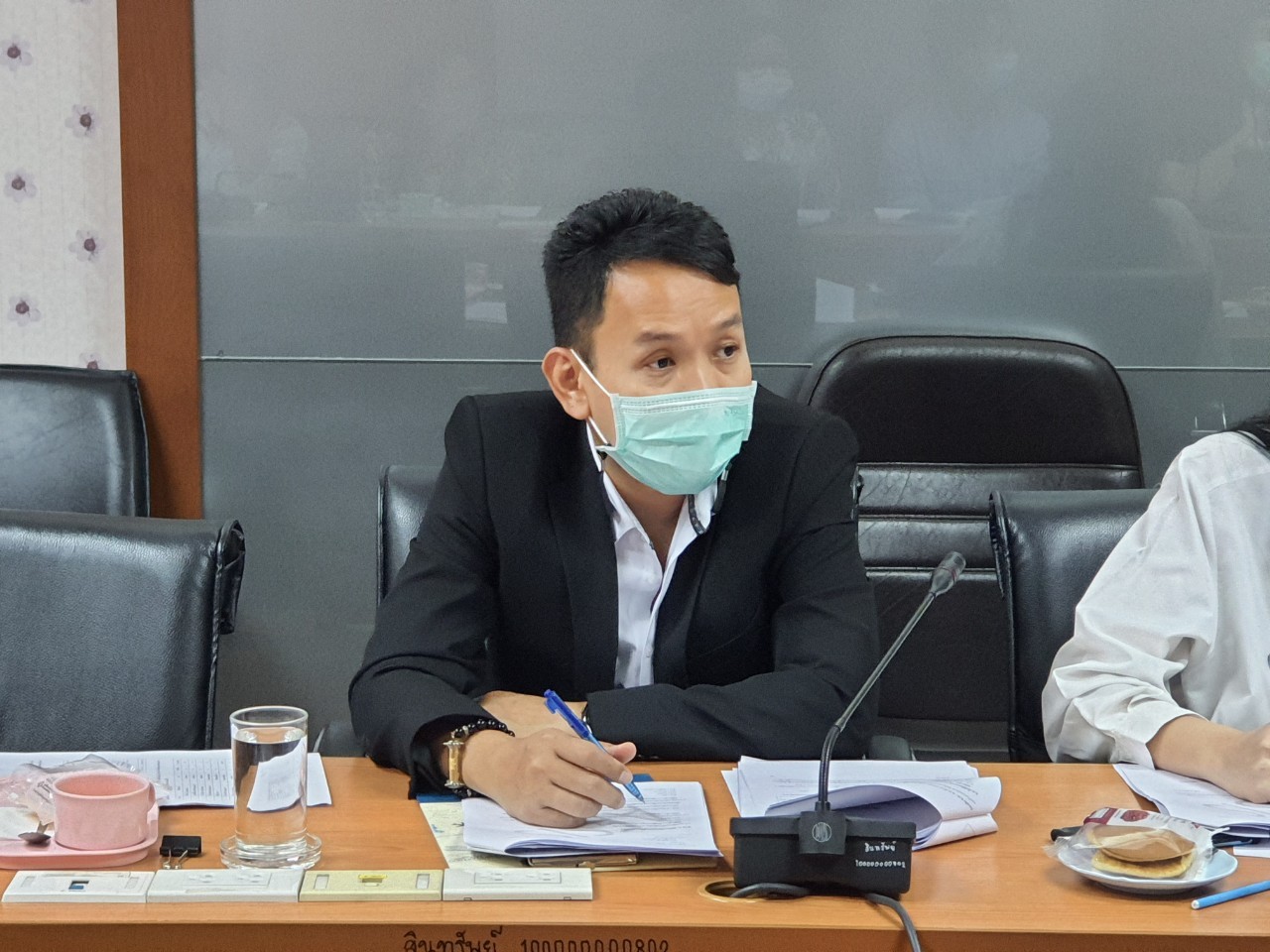

The AFSIS Secretariat participated in the 10th International Conference on Agricultural Statistics (ICAS X), held from 8 to 10 July 2026 at the ICE Krakow Congress Centre in Krakow, Poland. Jointly organized by Statistics Poland, Eurostat, the United States Department of Agriculture (USDA), the World Bank Group, and the Food and Agriculture Organization of the United Nations (FAO).
.JPG)
On 24–25 June 2026, AFSIS Secretariat participated in the 46th Meeting of the ASEAN Food Security Reserve Board (AFSRB) via a virtual conference. The Meeting was jointly organized by the AFSRB Secretariat and the Department of Agriculture (DOA), Ministry of Agriculture, Livestock and Irrigation (MOALI) of the Republic of the Union of Myanmar, and was hosted in Nay Pyi Taw, Myanmar.

On 17–18 June 2026, the 24th AFSIS Focal Point Meeting was successfully convened via video conference, hosted by the Philippine Statistics Authority (PSA) in collaboration with the ASEAN Food Security Information System (AFSIS) Secretariat.
.jpg)
The ASEAN Food Security Information System (AFSIS) Secretariat, in collaboration with the Ministry of Agriculture, Forestry and Fisheries (MAFF) Japan, Japan Aerospace Exploration Agency (JAXA), Remote Sensing Technology Center of Japan (RESTEC), and Geo-Informatics and Space Technology Development Agency (GISTDA), conducted the 2nd Hands-on Training Courses for Agricultural Statisticians, the Final Workshop, and the 2nd Seminar for Executive Officials under the JAIF Project entitled “Improvement of Rice Paddy Area Statistics and Damage Assessment using Earth Observation Satellites for ASEAN” in Sriracha, Chonburi Province, and Bangkok, Thailand.

