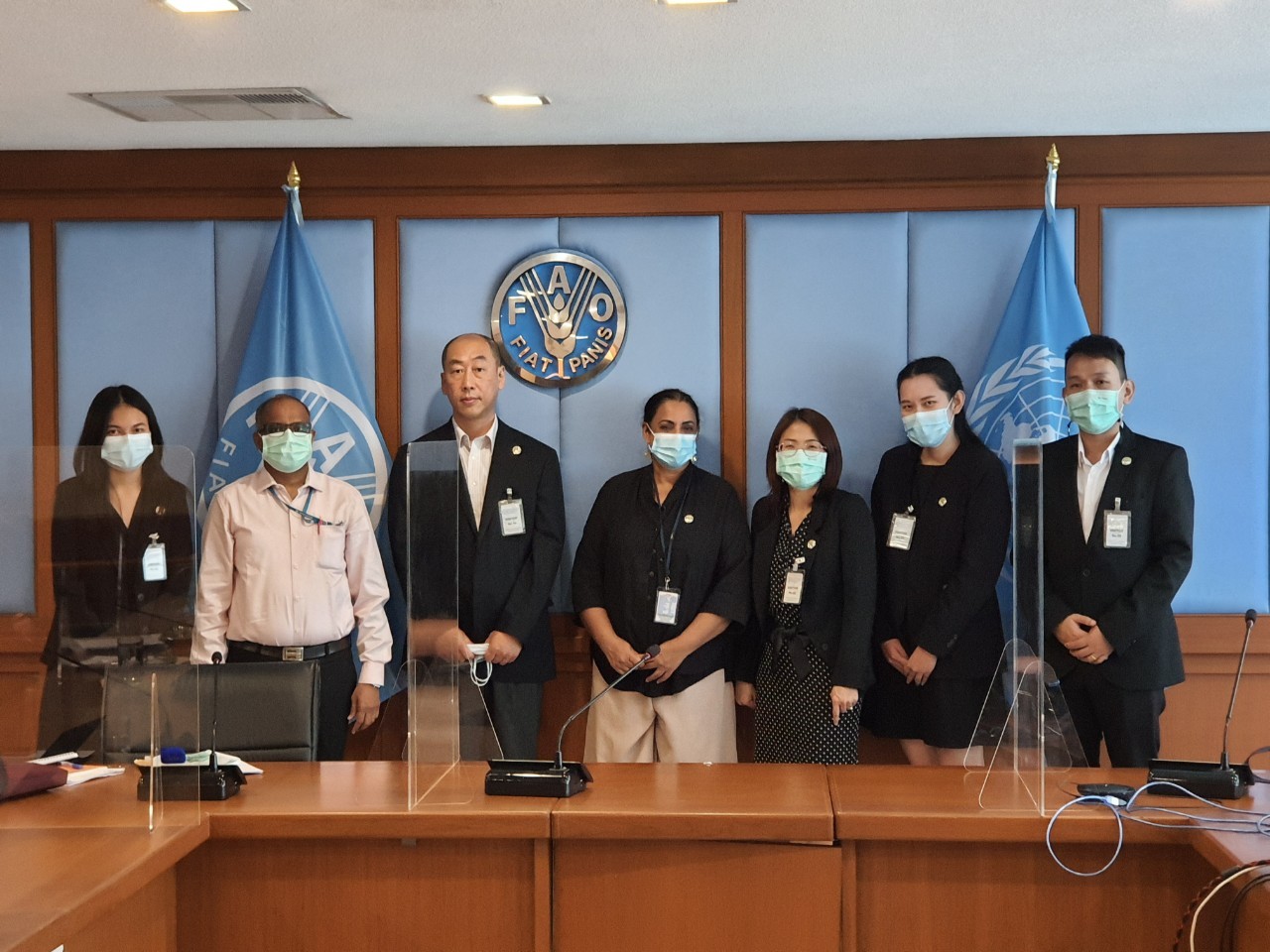
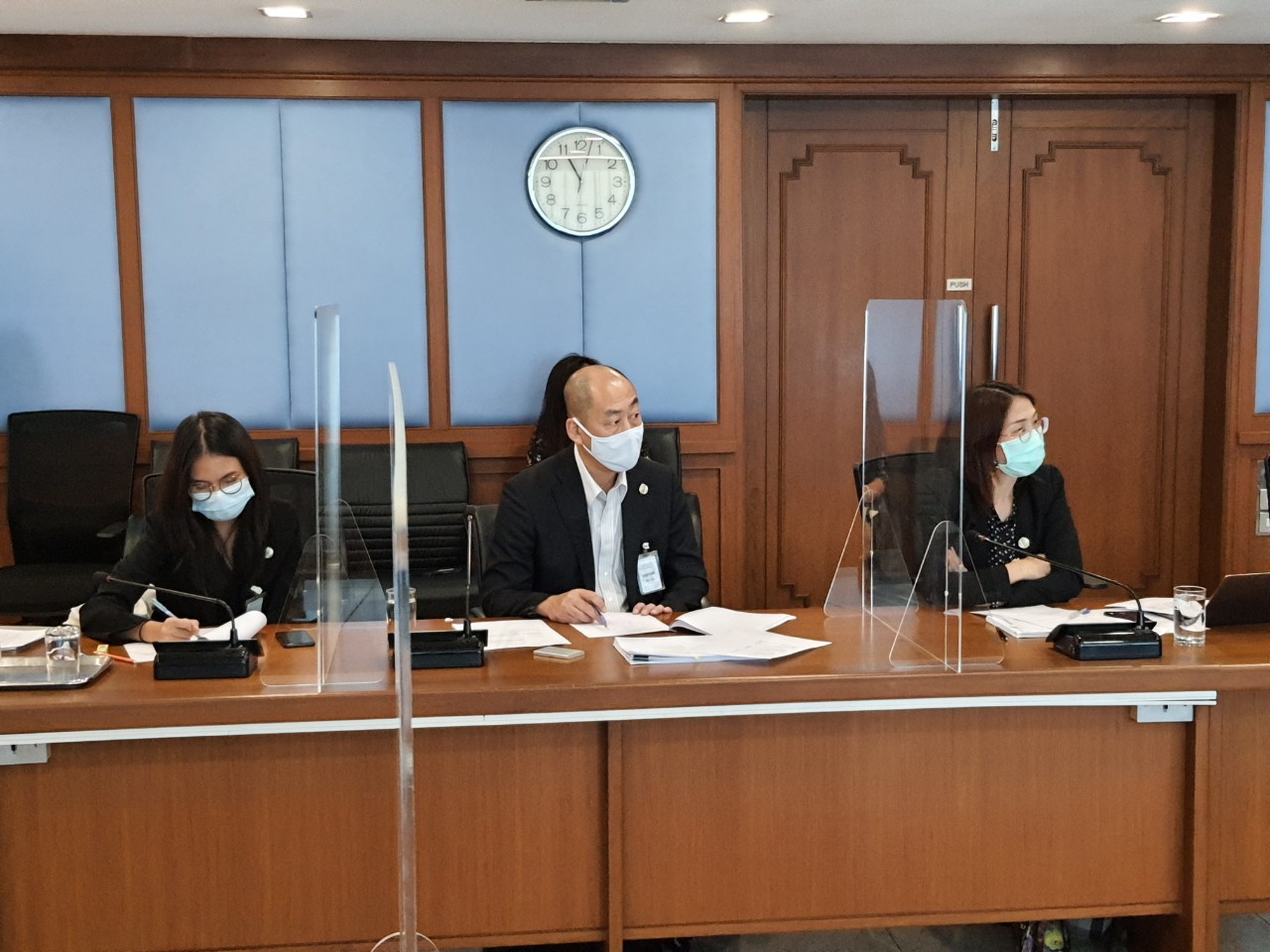
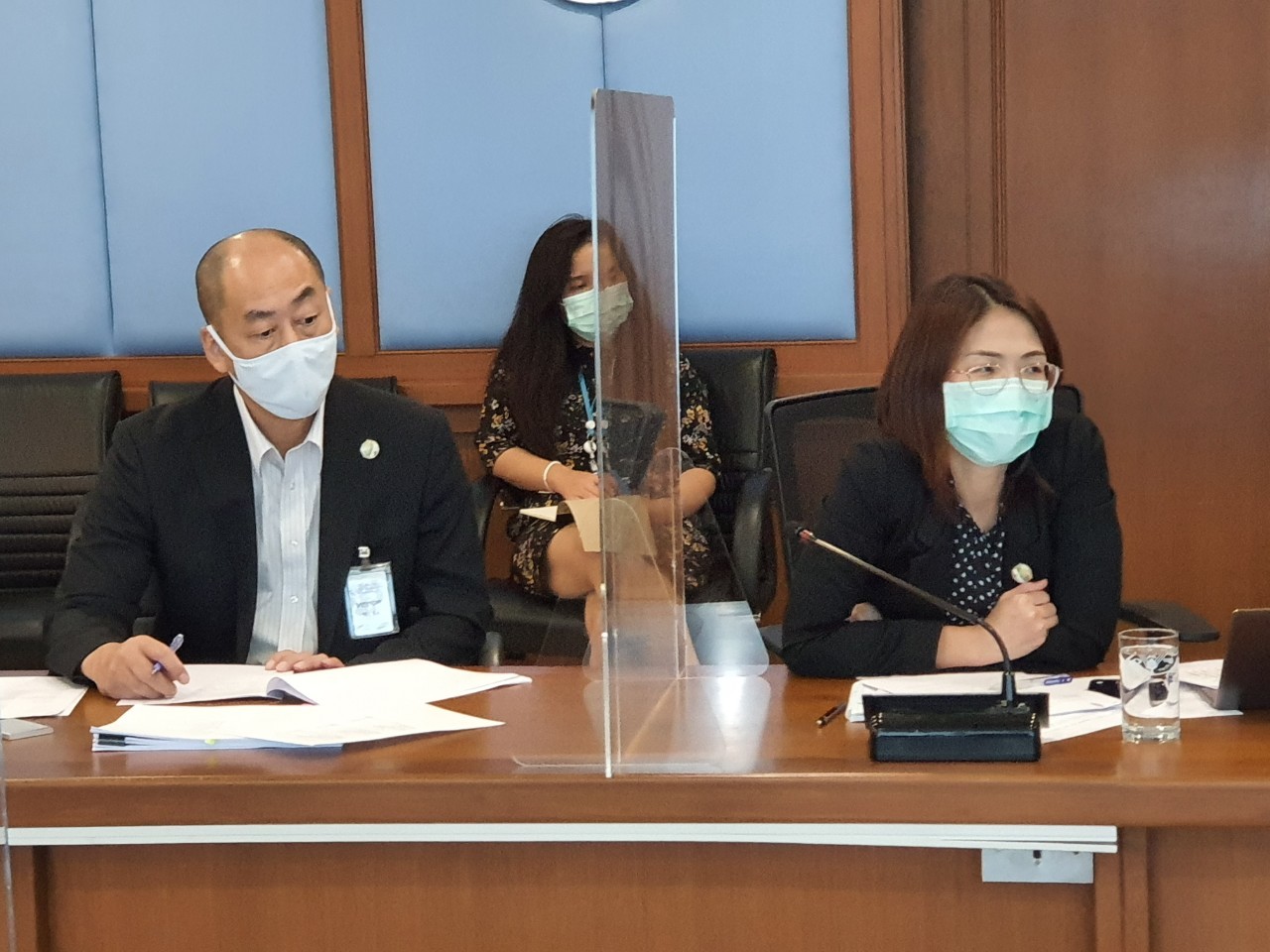
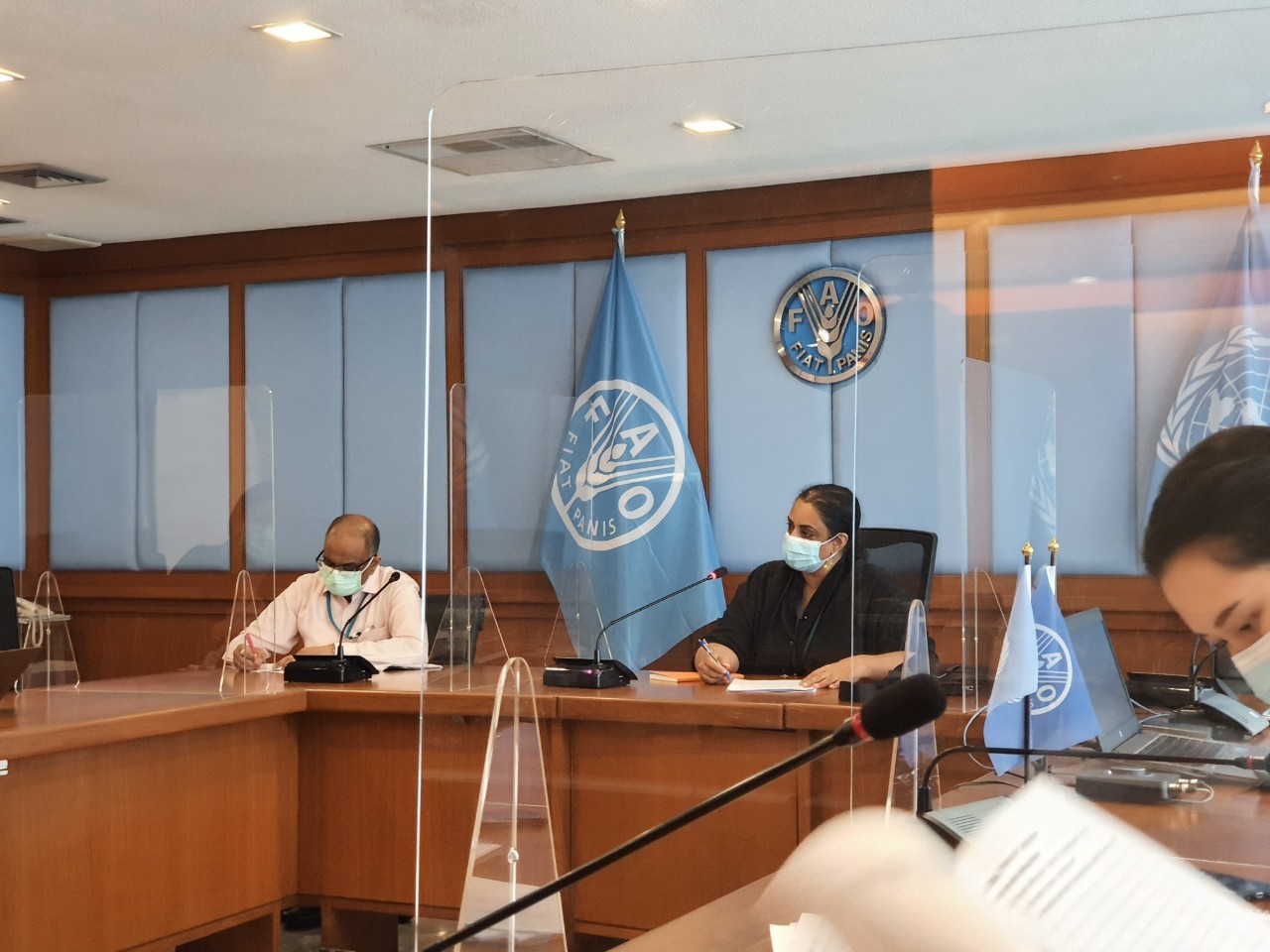
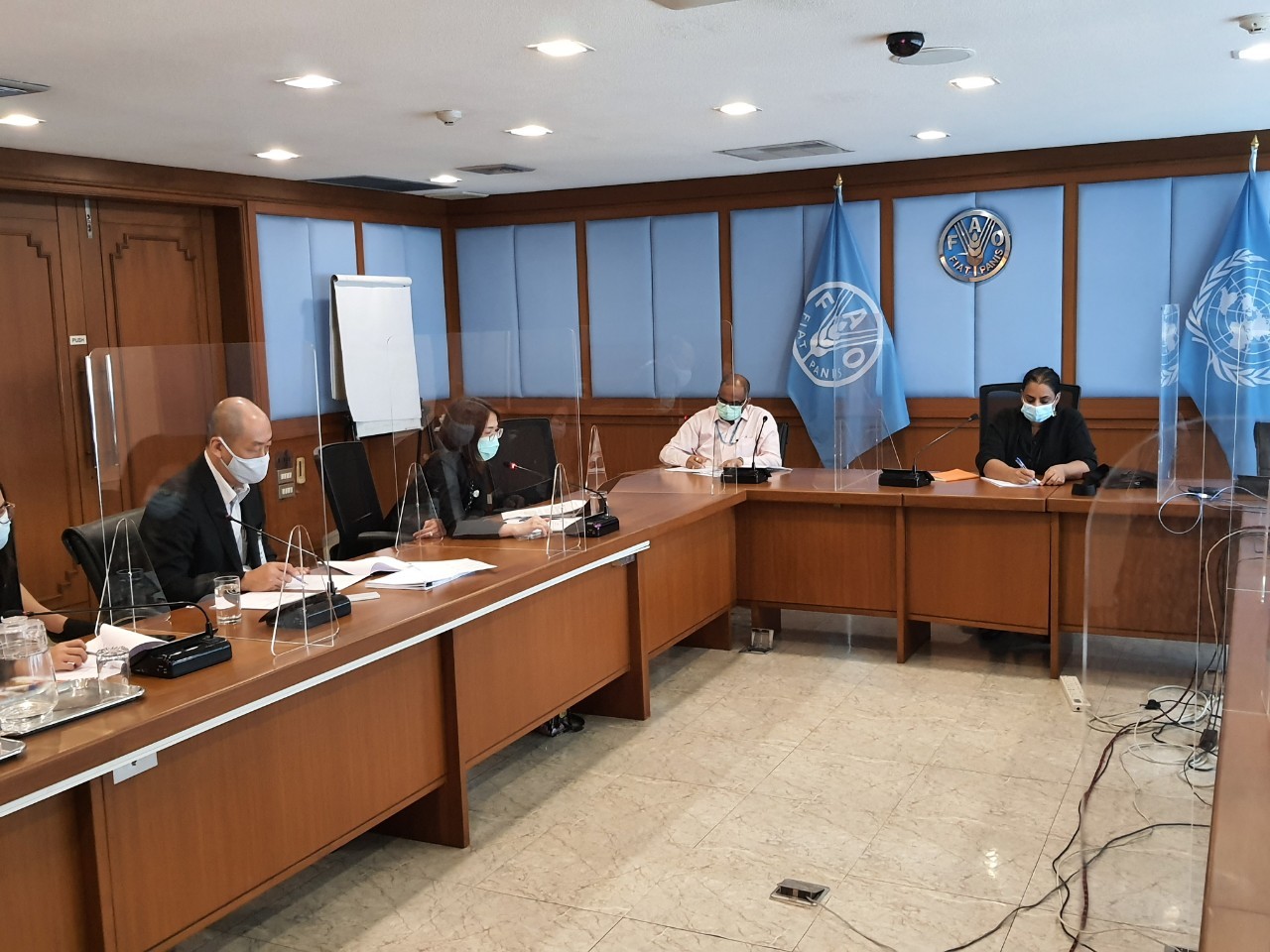
AFSIS Secretariat had an opportunity to consult with Food and Agriculture Organization of the United Nation, Regional Office for Asia and the Pacific (FAORAP) regarding a project for Supporting Agricultural Survey on Promoting Sustainable Agriculture in ASEAN Region (SAS-PSA) related to SDG indicator 2.4.1.
AFSIS Secretariat discussed with FAORAP about the progress of the SAS-PSA project implementation in Thailand and implementation plan of the SAS-PSA project related to SDG indicator 2.4.1 in Cambodia and Lao PDR. FAORAP informed that the Cambodian government collaborated with FAO and World Bank for implementing the Agricultural Integrated Survey (AGRIS) programme for the whole Cambodia and the questions related to the SDG indicator 2.4.1 were included in the AGRIS questionnaire survey. Thus, AFSIS Secretariat has to seek the other roles/activities for implementing the SAS-PSA project in Cambodia. While Lao PDR is now doing national agricultural census. FAORAP suggested that AFSIS Secretariat should wait for the sampling frame from agricultural census to identify agricultural household for the pilot survey of the SAS-PSA project.
Moreover, the FAORAP appreciated to the questionnaire of the SAS-PSA project related to SDG indicator 2.4.1 that is based on the FAO Survey Module with additional questions related to COVID-19 situation. Lastly, AFSIS Secretariat also consulted in the issue of the calculation of sub-indicator 10 (Food Insecurity Experience Scale: FIES) for SDG indicator 2.4.1 that FAORAP will conduct the methodological training and demonstrate how to calculate FIES afterwards.
The Meeting also noted the strong collaboration between FAORAP, AFSIS Secretariat and Thai Government to strengthen food security information in ASEAN region and develop capacity building in ASEAN member countries.

The AFSIS Secretariat participated in the 10th International Conference on Agricultural Statistics (ICAS X), held from 8 to 10 July 2026 at the ICE Krakow Congress Centre in Krakow, Poland. Jointly organized by Statistics Poland, Eurostat, the United States Department of Agriculture (USDA), the World Bank Group, and the Food and Agriculture Organization of the United Nations (FAO).
.JPG)
On 24–25 June 2026, AFSIS Secretariat participated in the 46th Meeting of the ASEAN Food Security Reserve Board (AFSRB) via a virtual conference. The Meeting was jointly organized by the AFSRB Secretariat and the Department of Agriculture (DOA), Ministry of Agriculture, Livestock and Irrigation (MOALI) of the Republic of the Union of Myanmar, and was hosted in Nay Pyi Taw, Myanmar.

On 17–18 June 2026, the 24th AFSIS Focal Point Meeting was successfully convened via video conference, hosted by the Philippine Statistics Authority (PSA) in collaboration with the ASEAN Food Security Information System (AFSIS) Secretariat.
.jpg)
The ASEAN Food Security Information System (AFSIS) Secretariat, in collaboration with the Ministry of Agriculture, Forestry and Fisheries (MAFF) Japan, Japan Aerospace Exploration Agency (JAXA), Remote Sensing Technology Center of Japan (RESTEC), and Geo-Informatics and Space Technology Development Agency (GISTDA), conducted the 2nd Hands-on Training Courses for Agricultural Statisticians, the Final Workshop, and the 2nd Seminar for Executive Officials under the JAIF Project entitled “Improvement of Rice Paddy Area Statistics and Damage Assessment using Earth Observation Satellites for ASEAN” in Sriracha, Chonburi Province, and Bangkok, Thailand.

