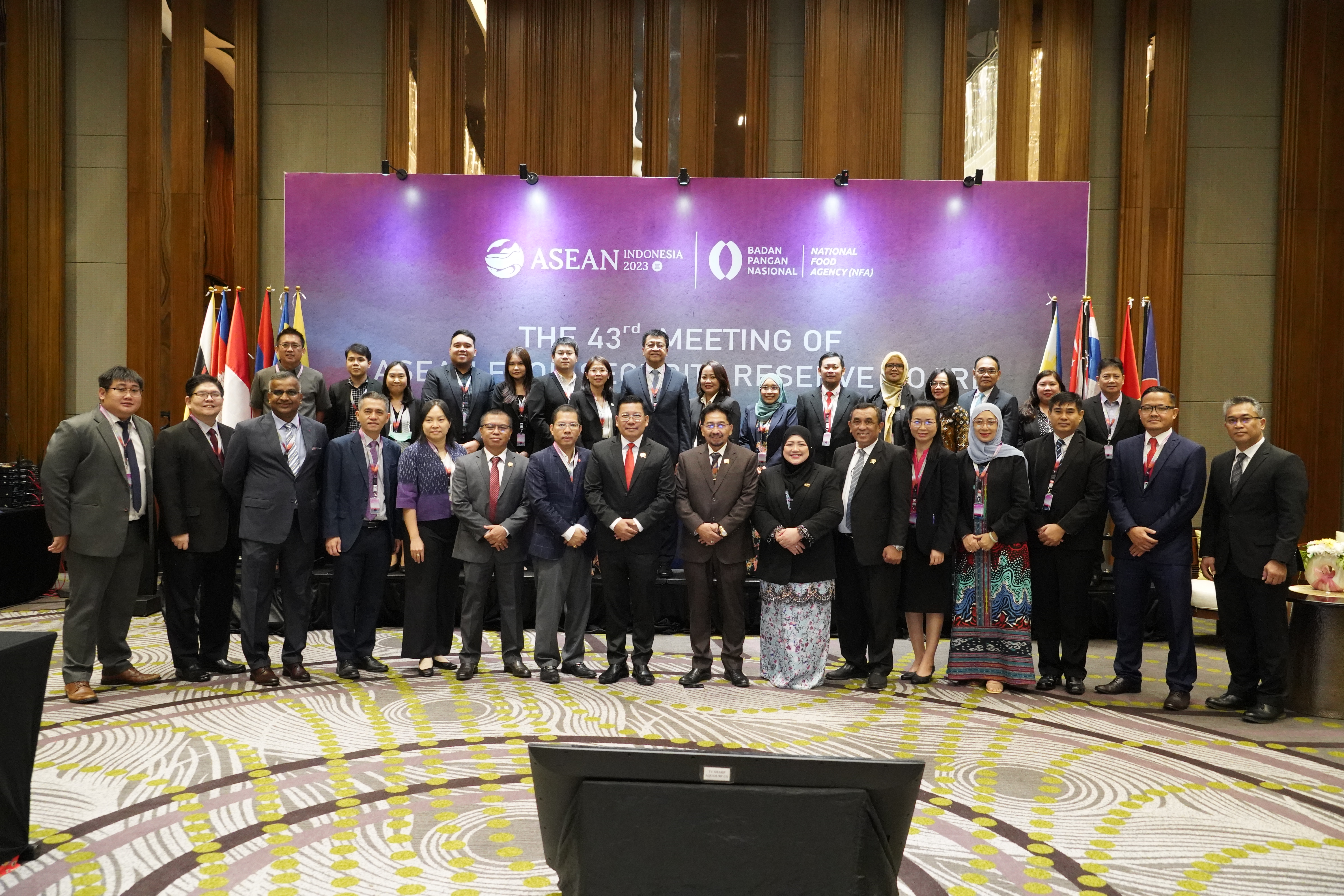
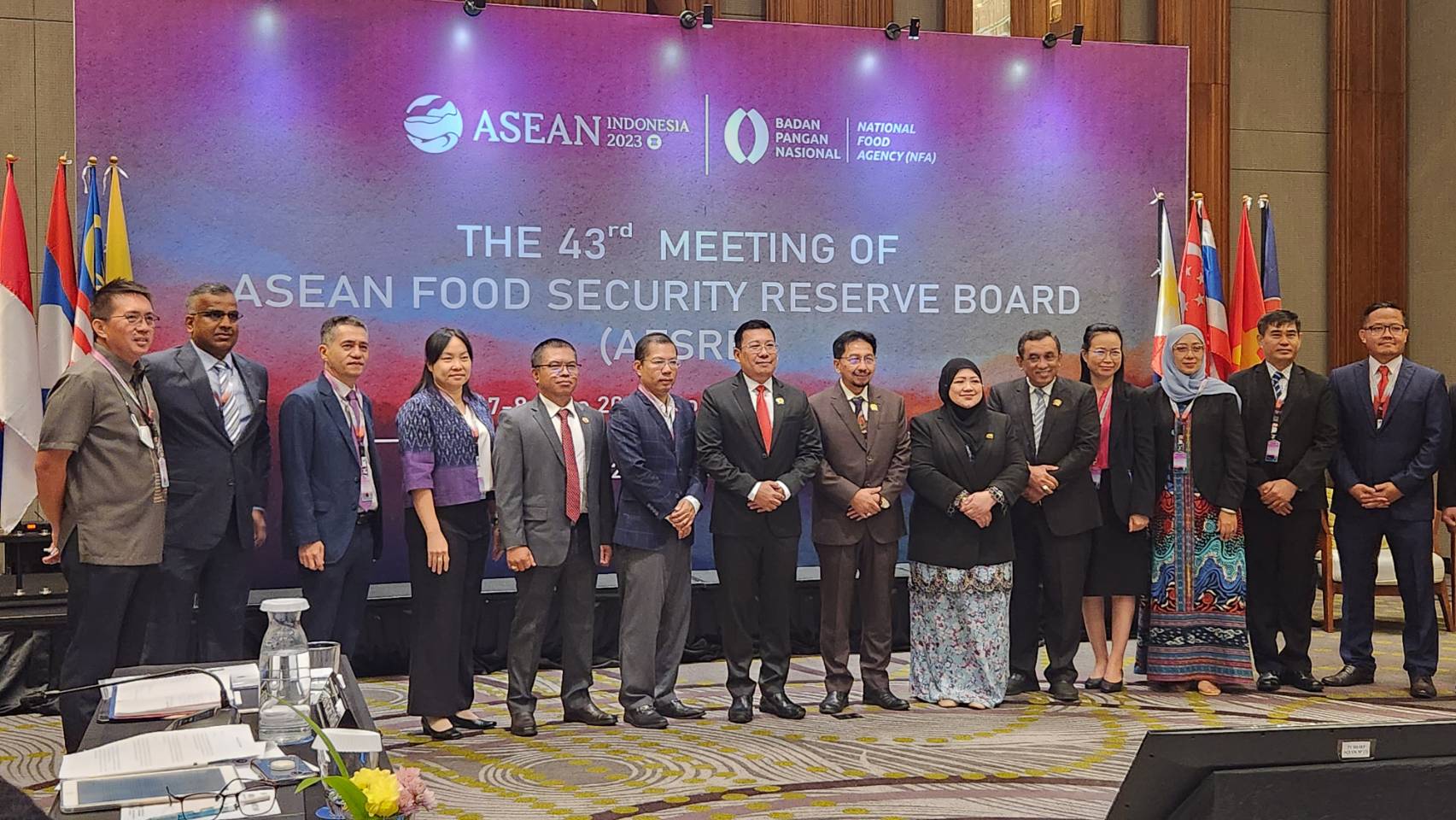
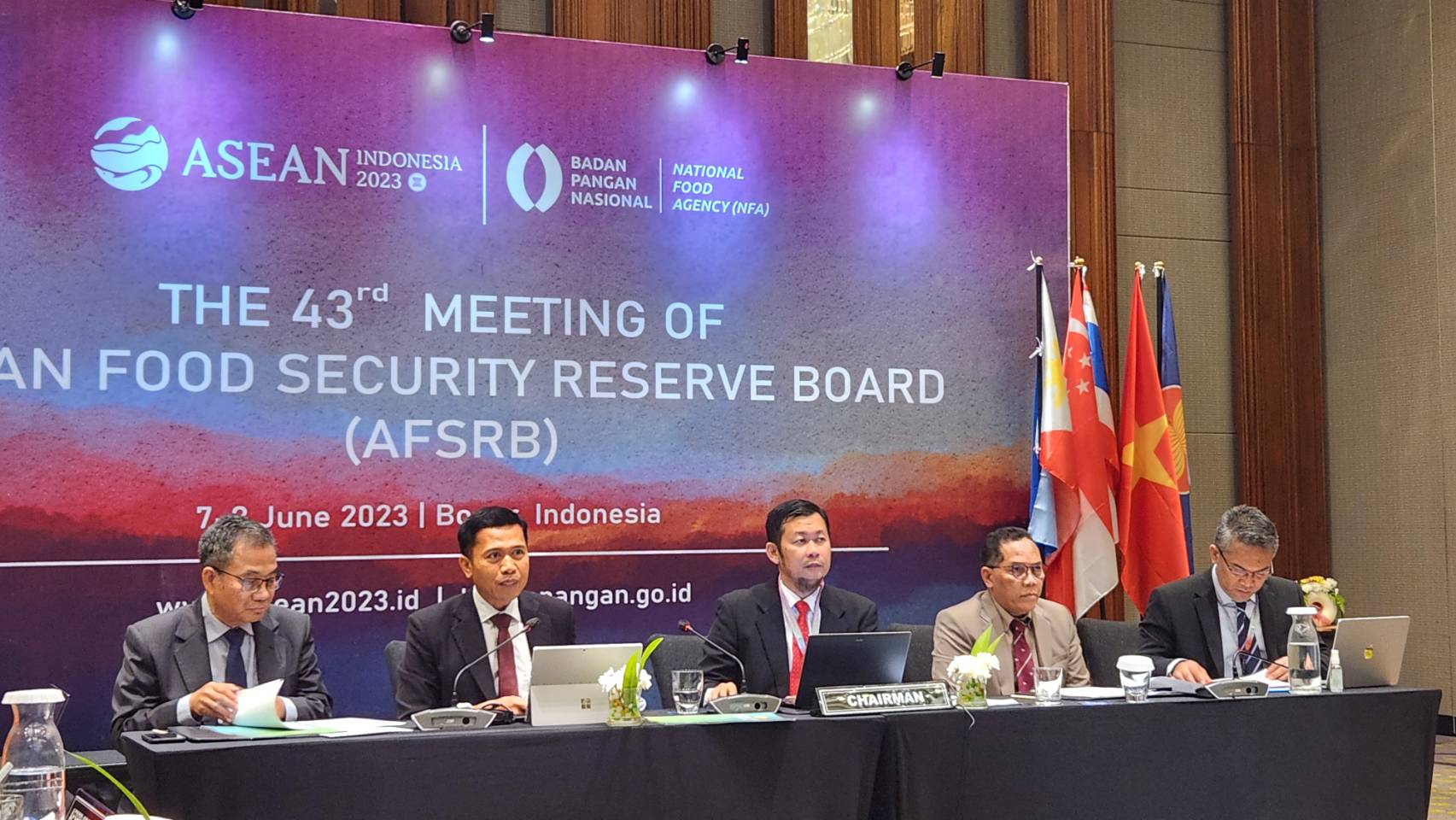
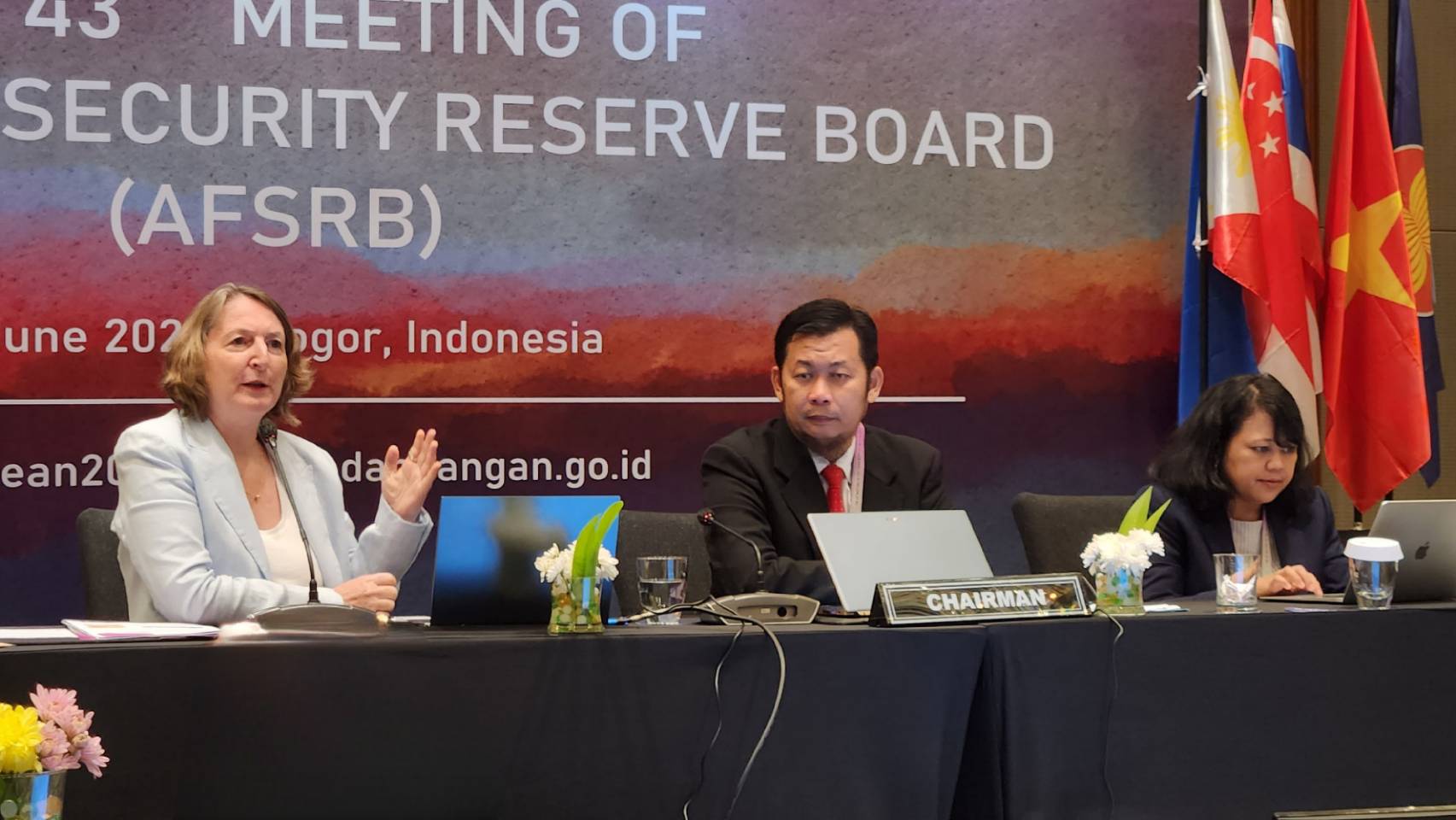
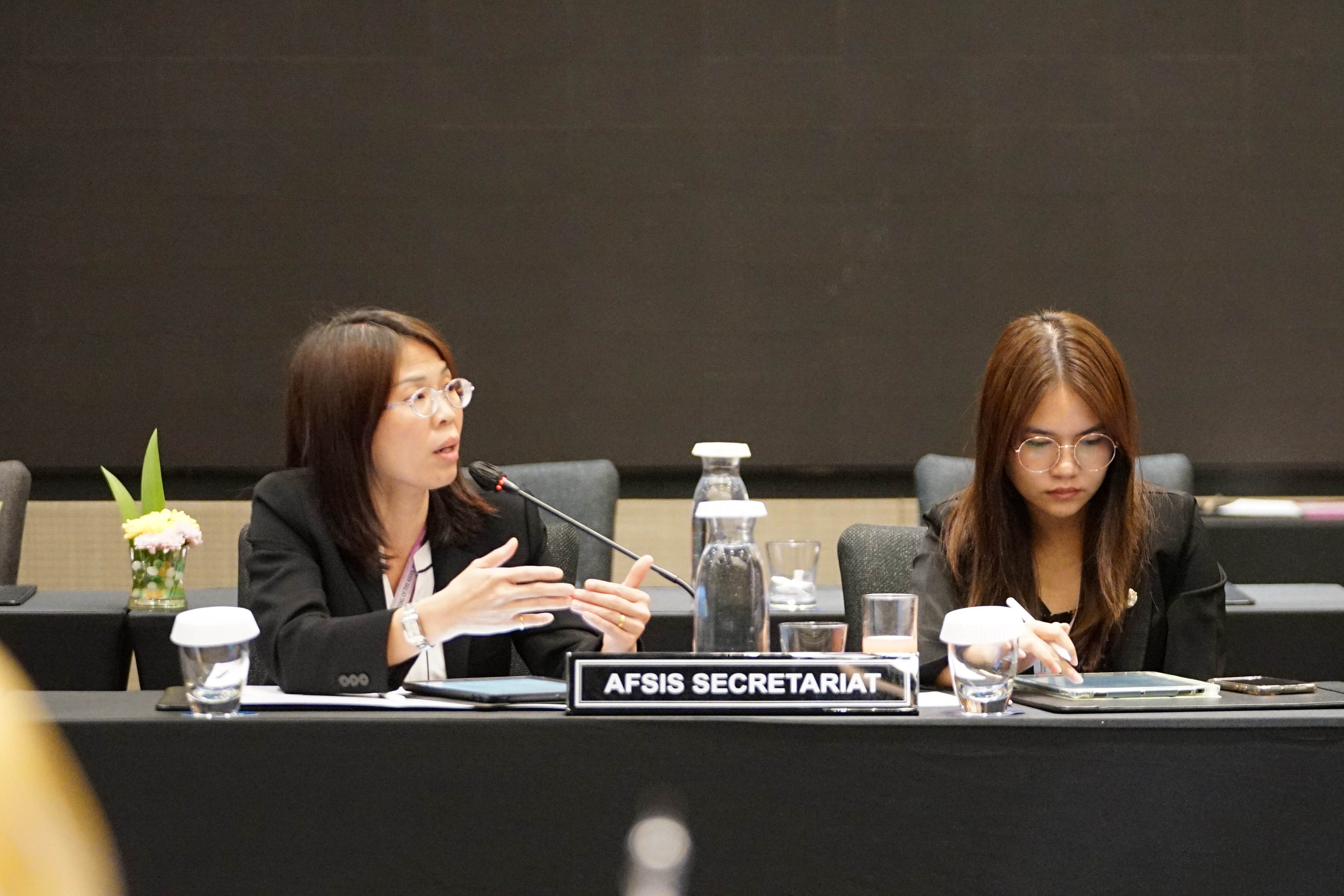
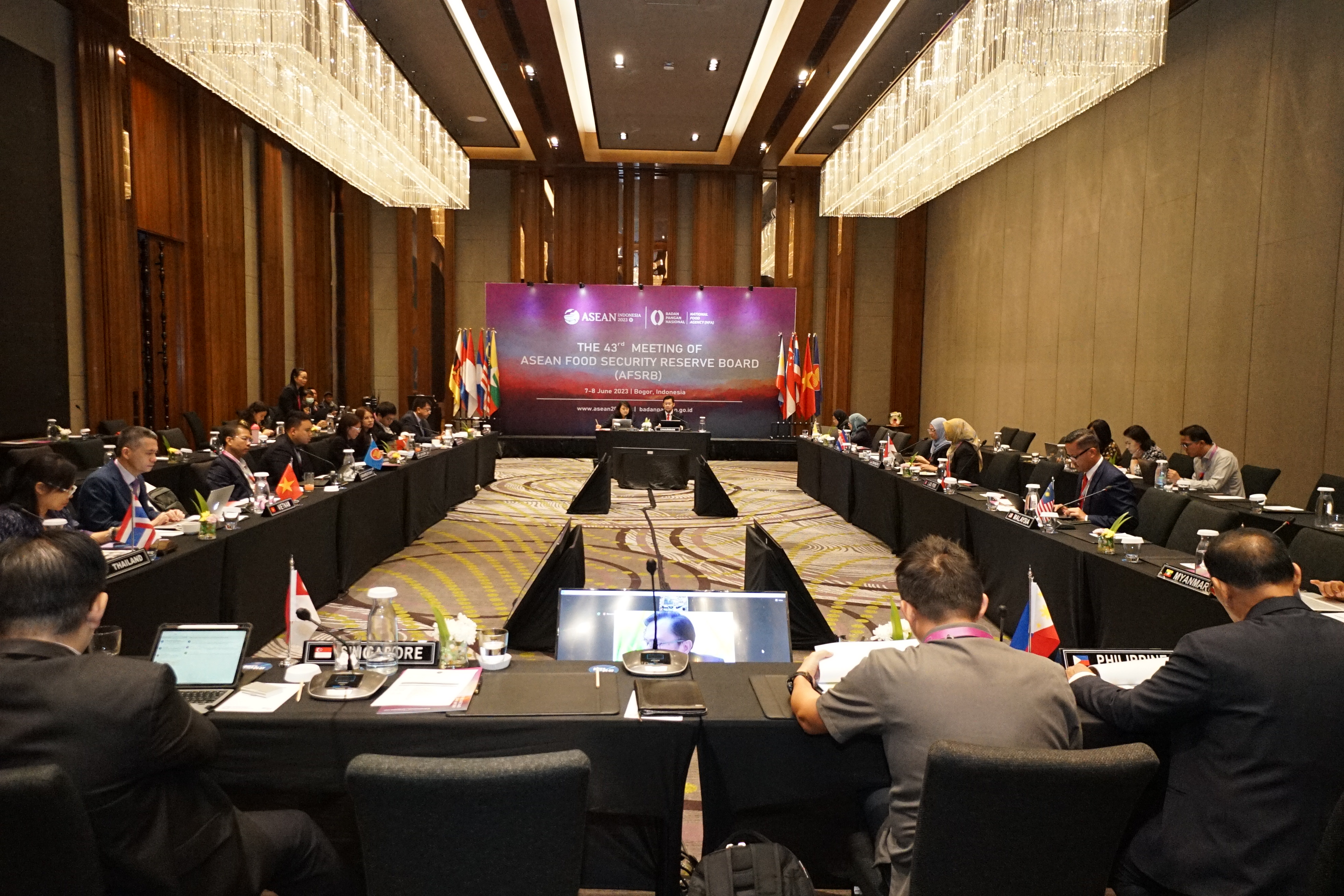
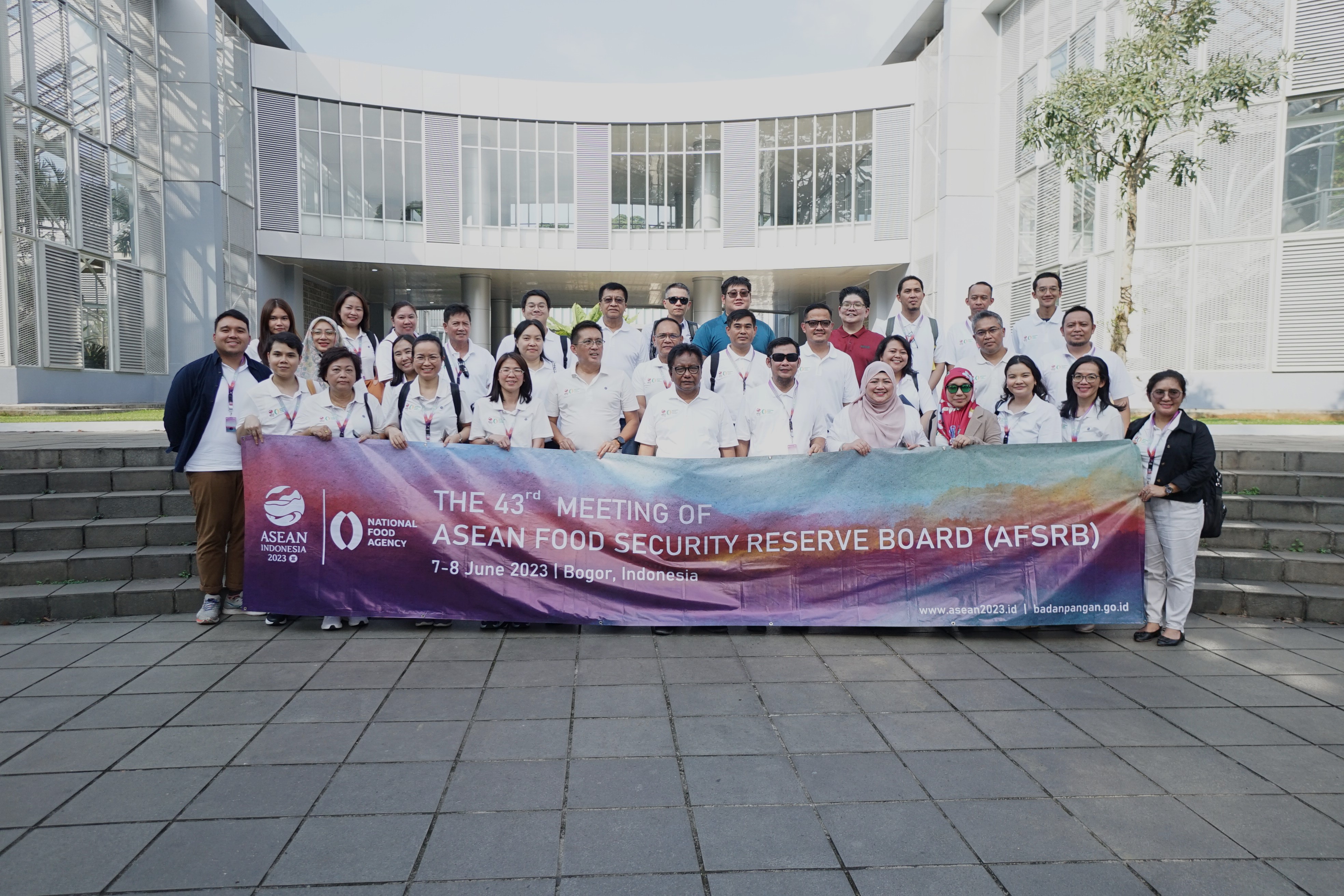
On 7-8 June 2023, the 43rd Meeting of the ASEAN Food Security Reserve Board (AFSRB) hosted by Indonesia was conducted as a physical meeting in Bogor, West Java, Indonesia.
Delegates of ASEAN Member States namely; Brunei Darussalam, Cambodia, Indonesia, Malaysia, Myanmar, Philippines, Singapore, Thailand, and Vietnam attended the meeting. Representatives from AFSRB Secretariat, ASEAN Secretariat, APTERR Secretariat, and AFSIS Secretariat, which were Dr. Waraporn Saelee, AFSIS Manager, and Ms. Worada Wongsud, Secretary to Japanese Expert, were also in attendance.
The purpose of the meeting is to facilitate the sharing of information, evaluation, and forecast of food security data within ASEAN and globally for the period of 2022-2023. This includes gathering statistics on the production, consumption, trade, and food reserves of primary crops such as rice, sugar, maize, and soybean among the ASEAN Member States. Especially, the AFSRB Meeting this year will discuss and endorse the ASEAN Leaders' Declaration on Strengthening Food Security and Nutrition in Response to Crises.
During the meeting, Dr. Waraporn presented the progress report of AFSIS in 2022-2023, including the challenges in the process of a core report of AFSIS were reported for discussion among member countries. In addition, the implementation plan for the sustainability of AFSIS in the future was also presented for further cooperation and suggestion as it would greatly contribute to the achievement of the ASEAN Leaders' Declaration on Strengthening Food Security and Nutrition in Response to Crises in order to strengthen food security in the region through the systematic collection, analysis, and dissemination of food security related information.
The meeting successfully ended with the endorsement of the ASEAN Leaders’ Declaration from a great collaboration of all participants. The date and venue of the 44th Meeting of AFSRB will be announced later.


The AFSIS Secretariat participated in the 10th International Conference on Agricultural Statistics (ICAS X), held from 8 to 10 July 2026 at the ICE Krakow Congress Centre in Krakow, Poland. Jointly organized by Statistics Poland, Eurostat, the United States Department of Agriculture (USDA), the World Bank Group, and the Food and Agriculture Organization of the United Nations (FAO).
.JPG)
On 24–25 June 2026, AFSIS Secretariat participated in the 46th Meeting of the ASEAN Food Security Reserve Board (AFSRB) via a virtual conference. The Meeting was jointly organized by the AFSRB Secretariat and the Department of Agriculture (DOA), Ministry of Agriculture, Livestock and Irrigation (MOALI) of the Republic of the Union of Myanmar, and was hosted in Nay Pyi Taw, Myanmar.

On 17–18 June 2026, the 24th AFSIS Focal Point Meeting was successfully convened via video conference, hosted by the Philippine Statistics Authority (PSA) in collaboration with the ASEAN Food Security Information System (AFSIS) Secretariat.
.jpg)
The ASEAN Food Security Information System (AFSIS) Secretariat, in collaboration with the Ministry of Agriculture, Forestry and Fisheries (MAFF) Japan, Japan Aerospace Exploration Agency (JAXA), Remote Sensing Technology Center of Japan (RESTEC), and Geo-Informatics and Space Technology Development Agency (GISTDA), conducted the 2nd Hands-on Training Courses for Agricultural Statisticians, the Final Workshop, and the 2nd Seminar for Executive Officials under the JAIF Project entitled “Improvement of Rice Paddy Area Statistics and Damage Assessment using Earth Observation Satellites for ASEAN” in Sriracha, Chonburi Province, and Bangkok, Thailand.

