.png)
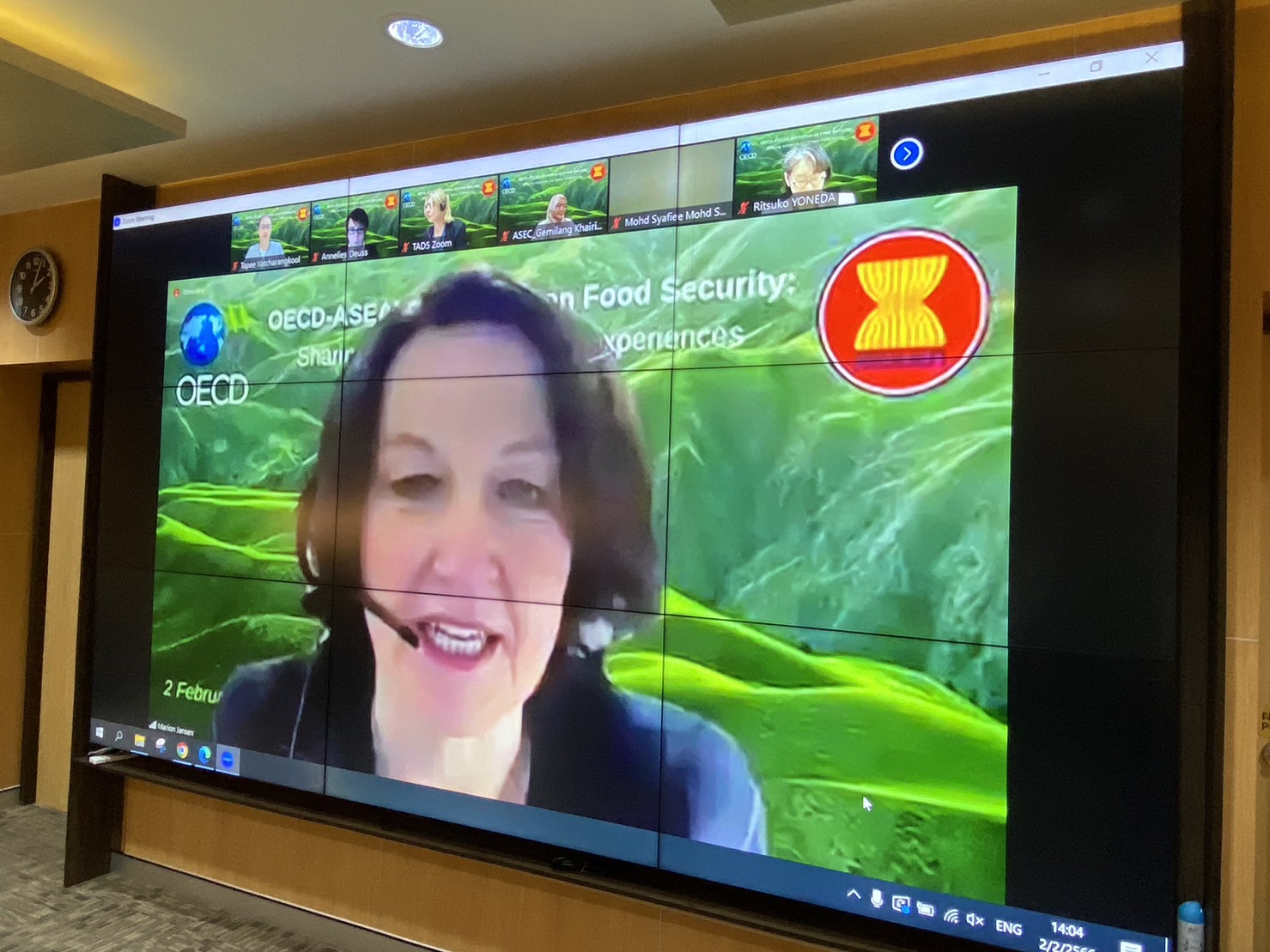
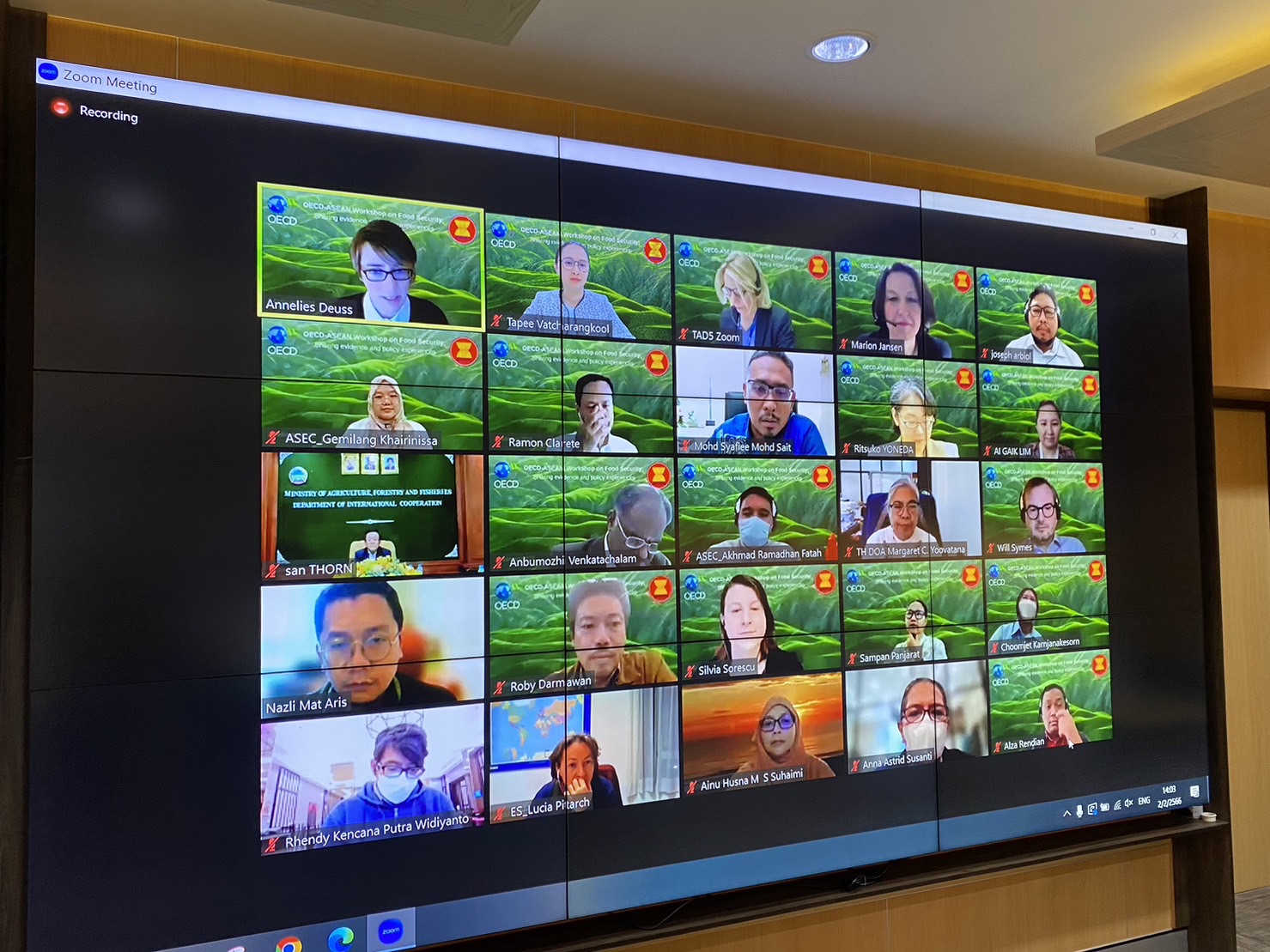
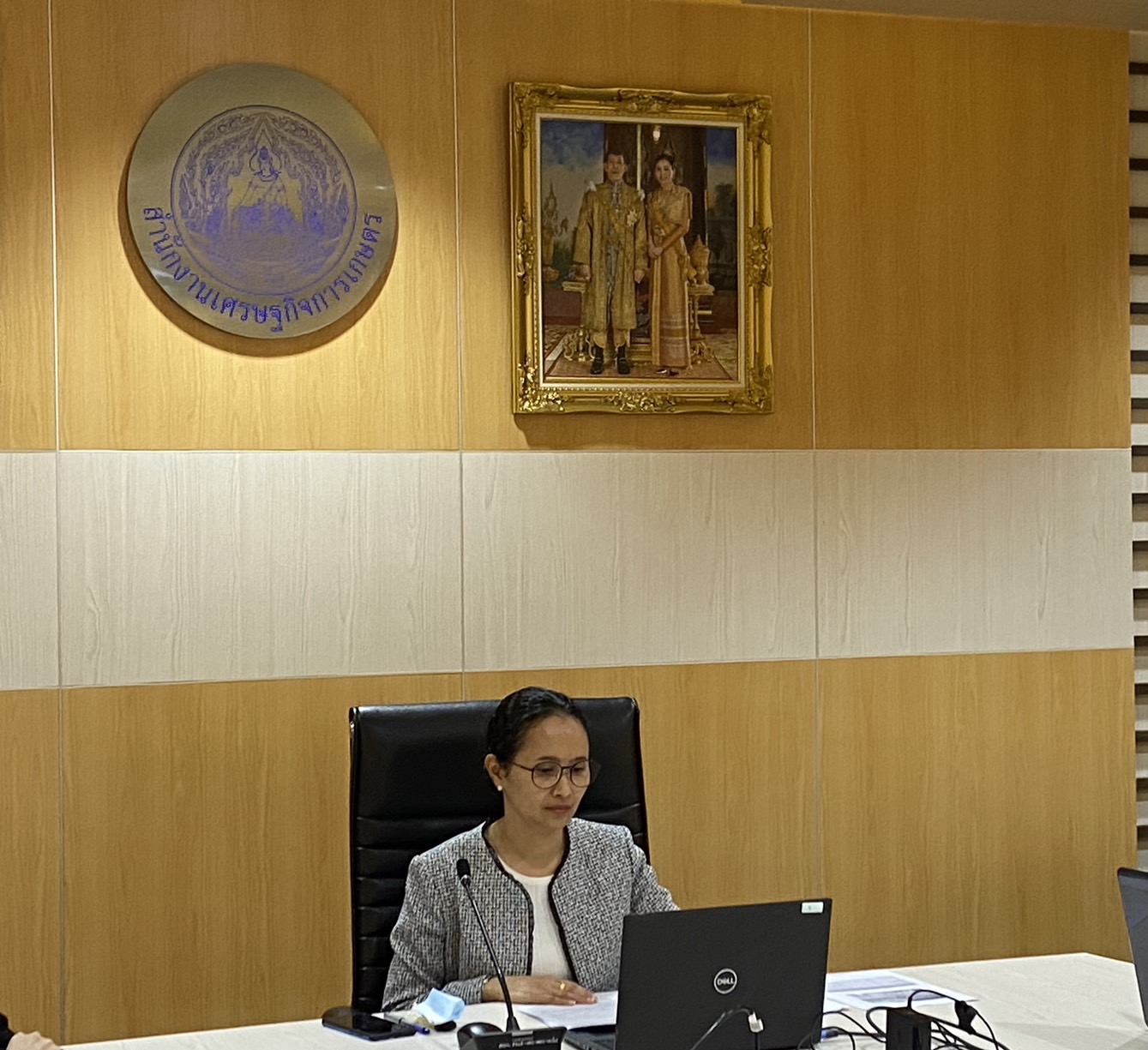
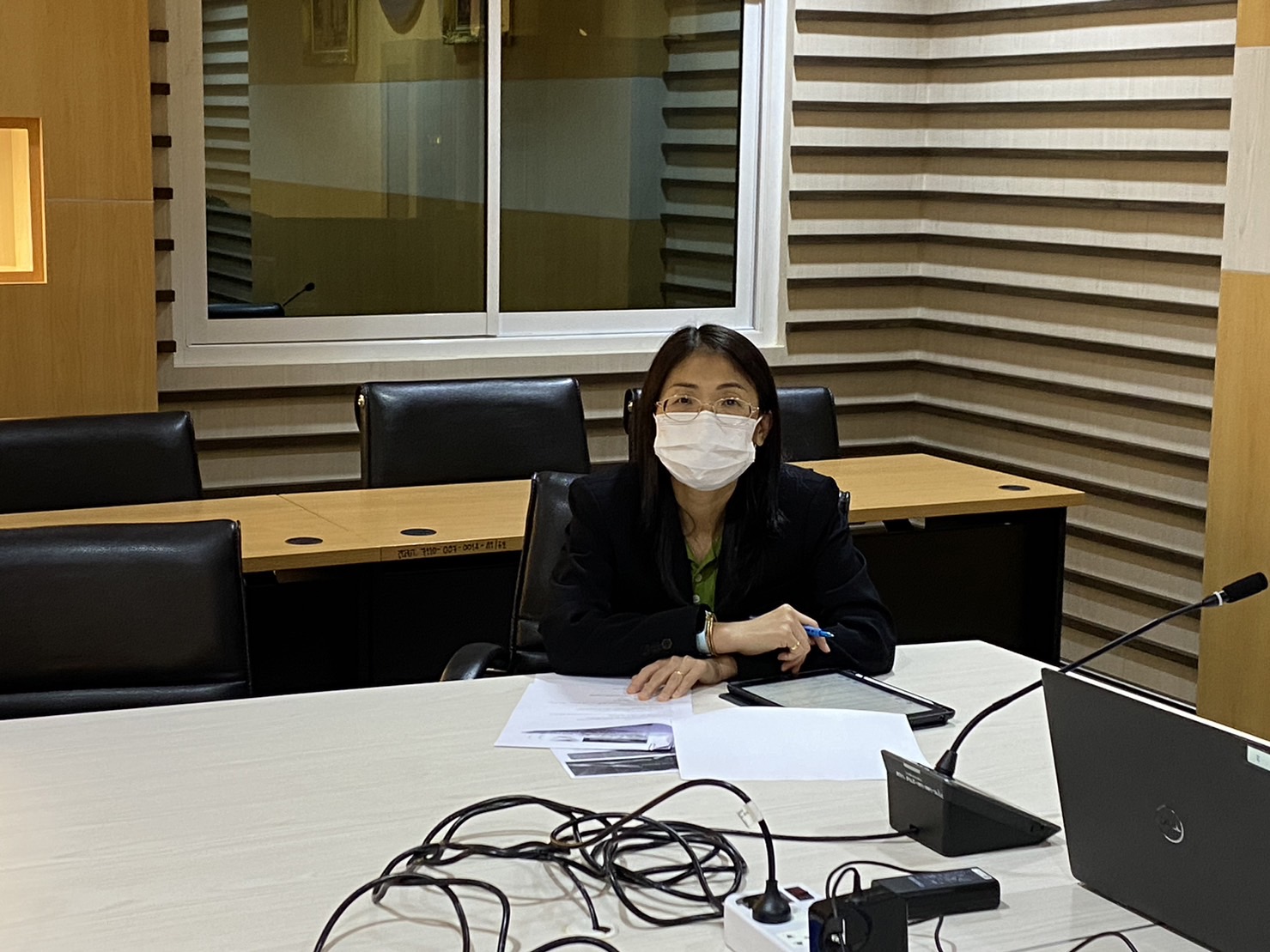
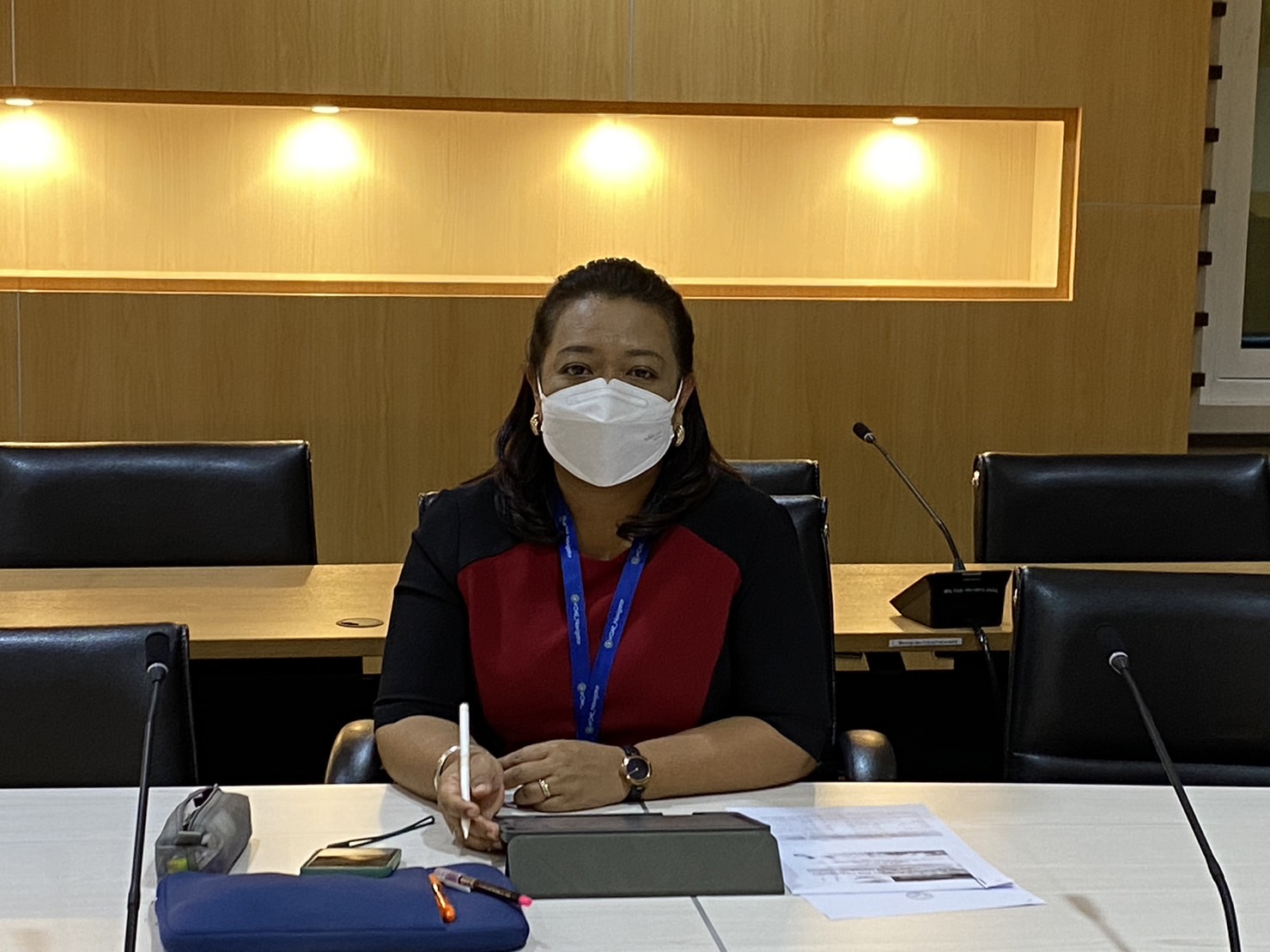
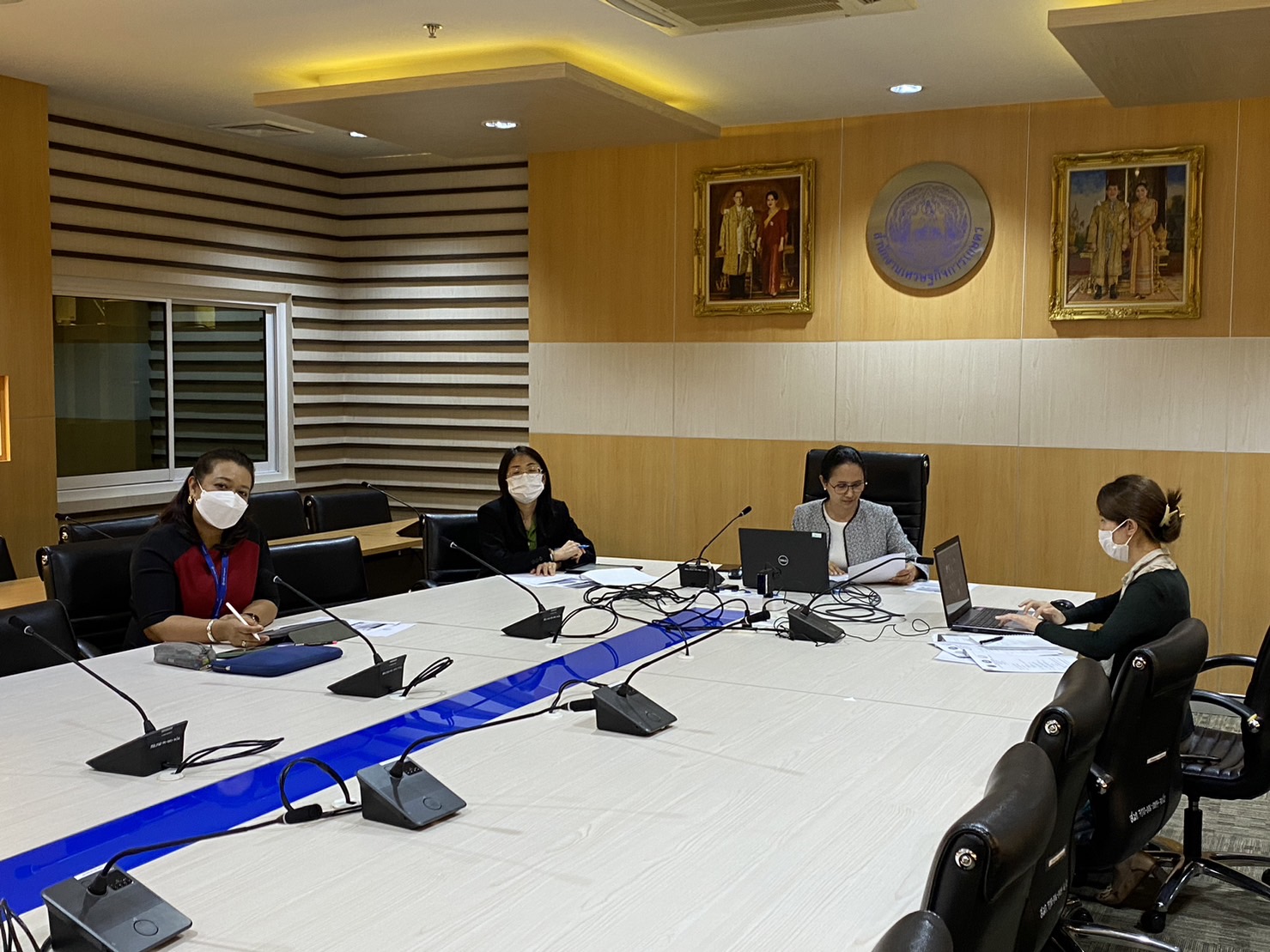
On 2 February 2023, the Organization for Economic Co-operation and Development (OECD) in collaboration with the ASEAN Secretariat conducted the virtual workshop entitled “OECD-ASEAN Workshop on Food Security: Sharing Evidence and Policy Experiences” which is a part of a wider project between OECD and ASEAN.
The objective of the workshop was to discuss priorities and key challenges related to food security in the ASEAN region; encourage cooperation in data collection, policy analysis, and reporting activities done and planned for the ASEAN region; and develop a network that can sustain a long-term policy dialogue between the OECD and the ASEAN region.
At this event, the 2 representatives of AFSIS member countries, Mr. Roby Darmawan,Director of the Center for Agricultural Data and Information System, Ministry of Agriculture, Republic of Indonesia, and Ms. Tapee Vatcharangkool, Expert on Agricultural Economic Policy, Office of Agricultural Economics, Ministry of Agriculture and Cooperatives, Thailand, attended as the speakers in session 1: Trade and domestic policy monitoring, and session 2: Agricultural markets and outlook, respectively. In addition, 3 representatives of the AFSIS Secretariat which were Dr. Waraporn Saelee, AFSIS Manager, Dr. Sumanya Ngandee, Deputy AFSIS Manager, and Ms. Prodpran Lomthong, Project Coordinator also attended the workshop.
The event integrated the discussions of agriculture, fisheries, and food trade policies, including the session that invited all participants to shareopinions and experienceson these issues with regard to food security in their countries.
The workshop ended successfully with the accomplished objective of sharing the information to strengthen the food security information in ASEAN and developing the network between OECD and ASEAN region to further collaboration in the future.
.png)
.png)
.png)
.png)
.png)

The AFSIS Secretariat participated in the 10th International Conference on Agricultural Statistics (ICAS X), held from 8 to 10 July 2026 at the ICE Krakow Congress Centre in Krakow, Poland. Jointly organized by Statistics Poland, Eurostat, the United States Department of Agriculture (USDA), the World Bank Group, and the Food and Agriculture Organization of the United Nations (FAO).
.JPG)
On 24–25 June 2026, AFSIS Secretariat participated in the 46th Meeting of the ASEAN Food Security Reserve Board (AFSRB) via a virtual conference. The Meeting was jointly organized by the AFSRB Secretariat and the Department of Agriculture (DOA), Ministry of Agriculture, Livestock and Irrigation (MOALI) of the Republic of the Union of Myanmar, and was hosted in Nay Pyi Taw, Myanmar.

On 17–18 June 2026, the 24th AFSIS Focal Point Meeting was successfully convened via video conference, hosted by the Philippine Statistics Authority (PSA) in collaboration with the ASEAN Food Security Information System (AFSIS) Secretariat.
.jpg)
The ASEAN Food Security Information System (AFSIS) Secretariat, in collaboration with the Ministry of Agriculture, Forestry and Fisheries (MAFF) Japan, Japan Aerospace Exploration Agency (JAXA), Remote Sensing Technology Center of Japan (RESTEC), and Geo-Informatics and Space Technology Development Agency (GISTDA), conducted the 2nd Hands-on Training Courses for Agricultural Statisticians, the Final Workshop, and the 2nd Seminar for Executive Officials under the JAIF Project entitled “Improvement of Rice Paddy Area Statistics and Damage Assessment using Earth Observation Satellites for ASEAN” in Sriracha, Chonburi Province, and Bangkok, Thailand.

