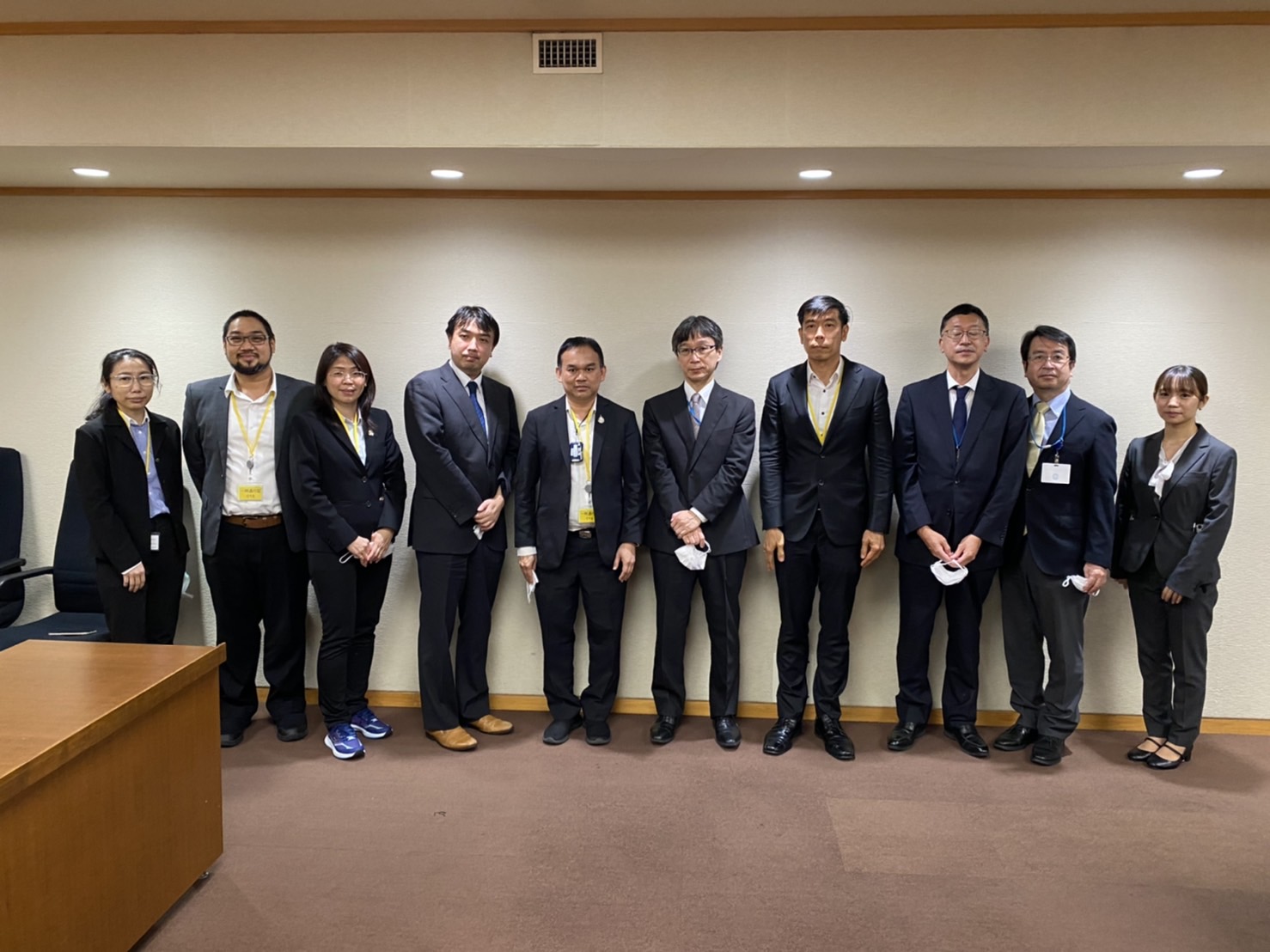
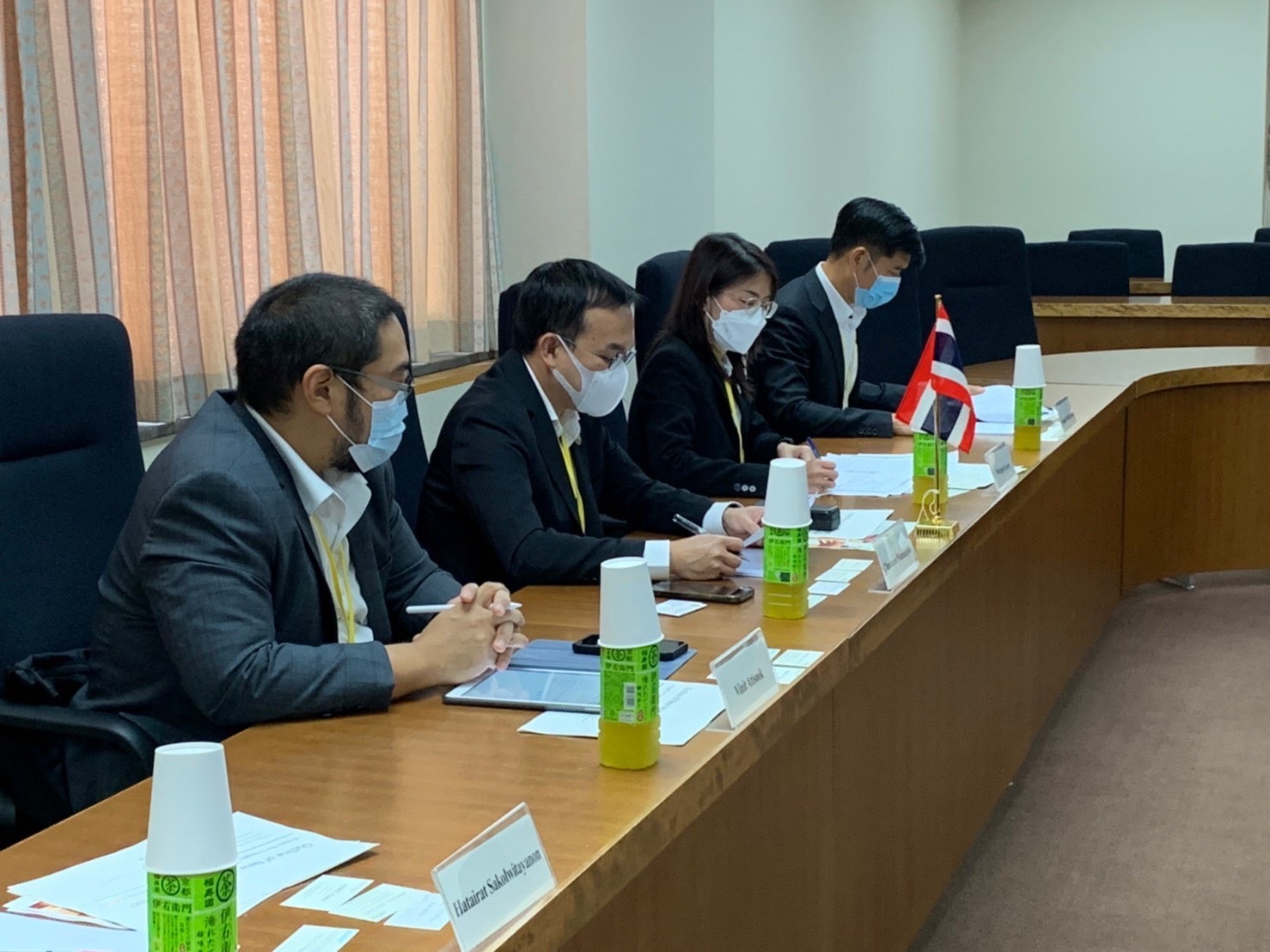
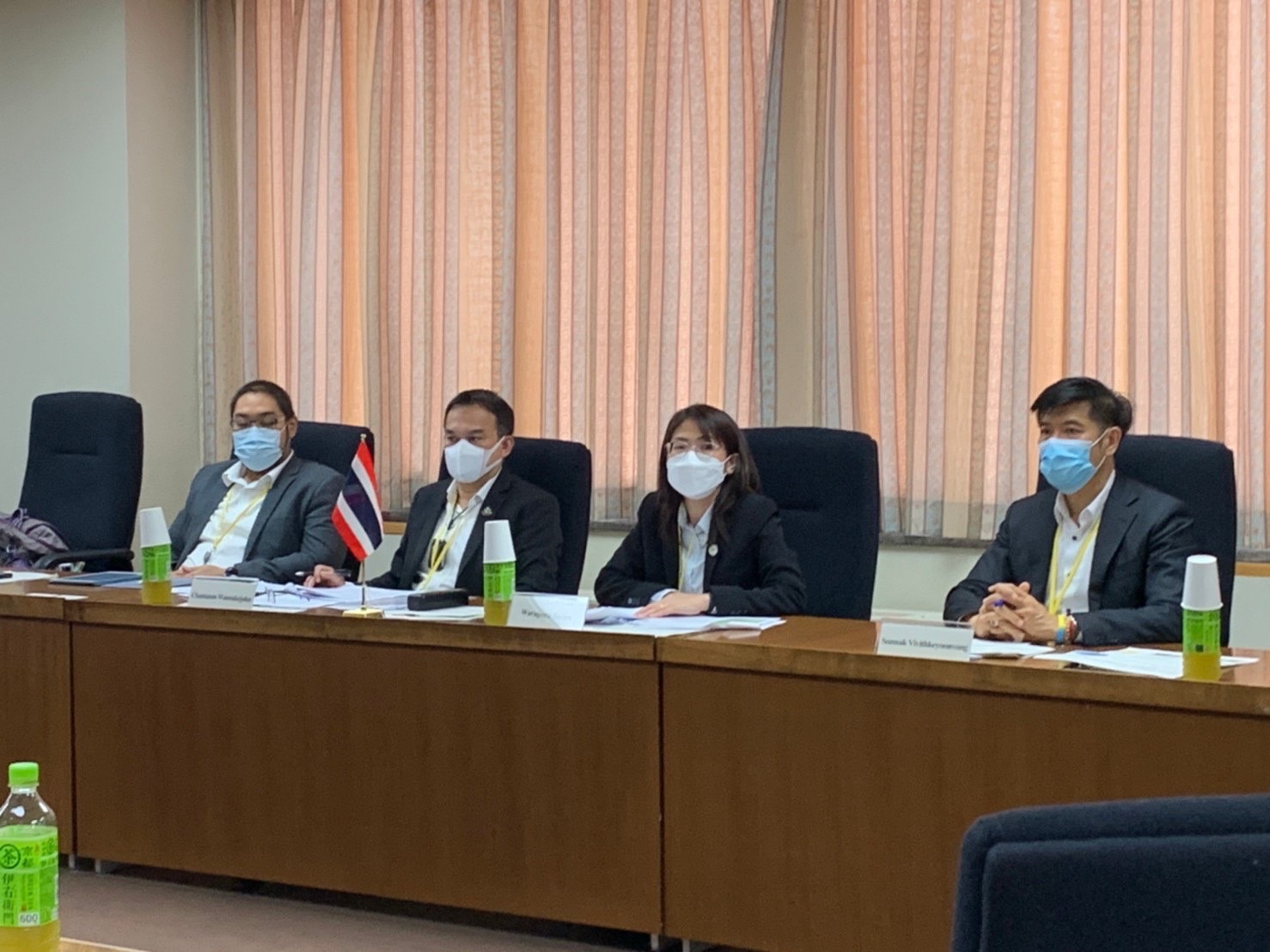
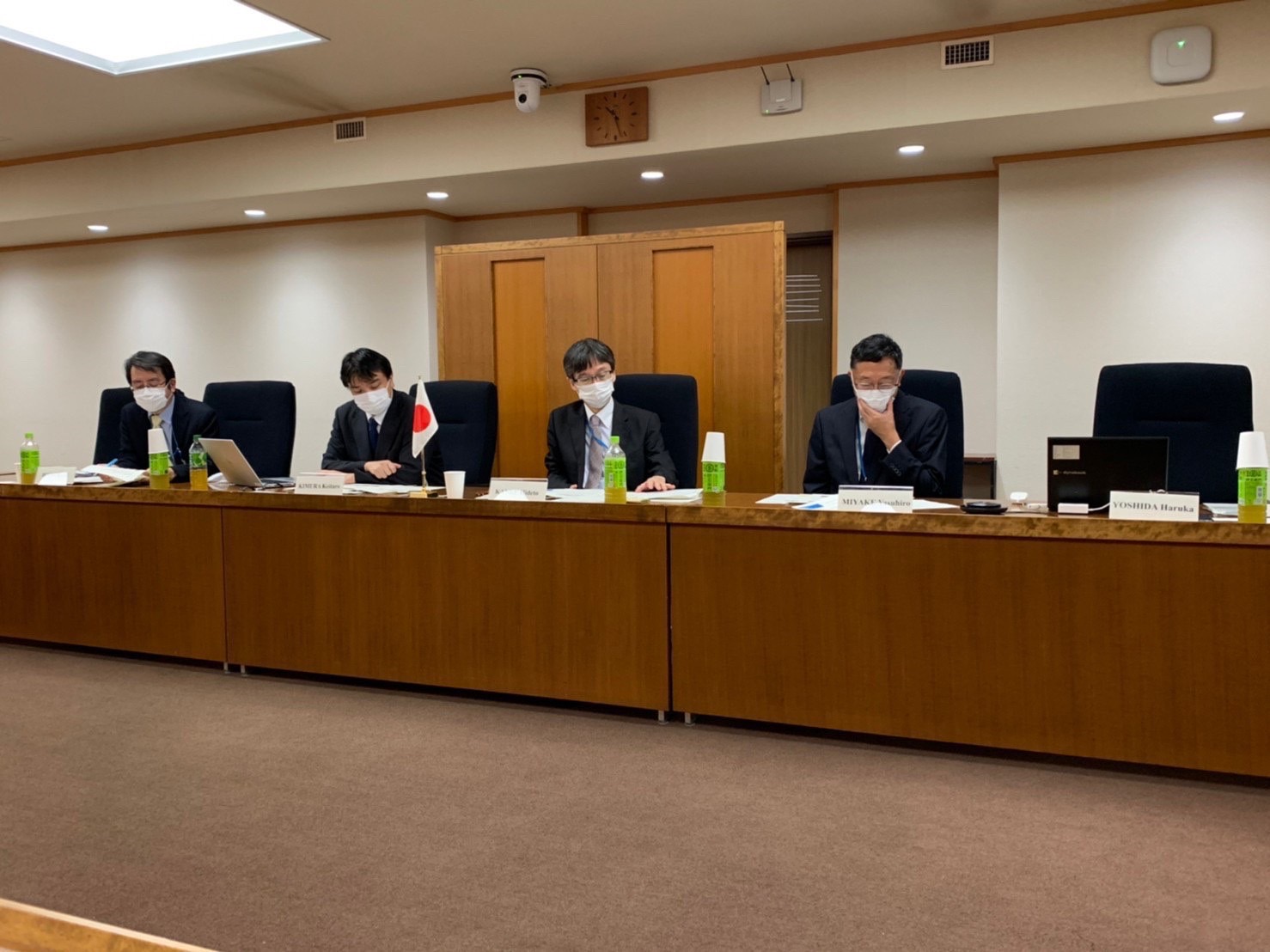
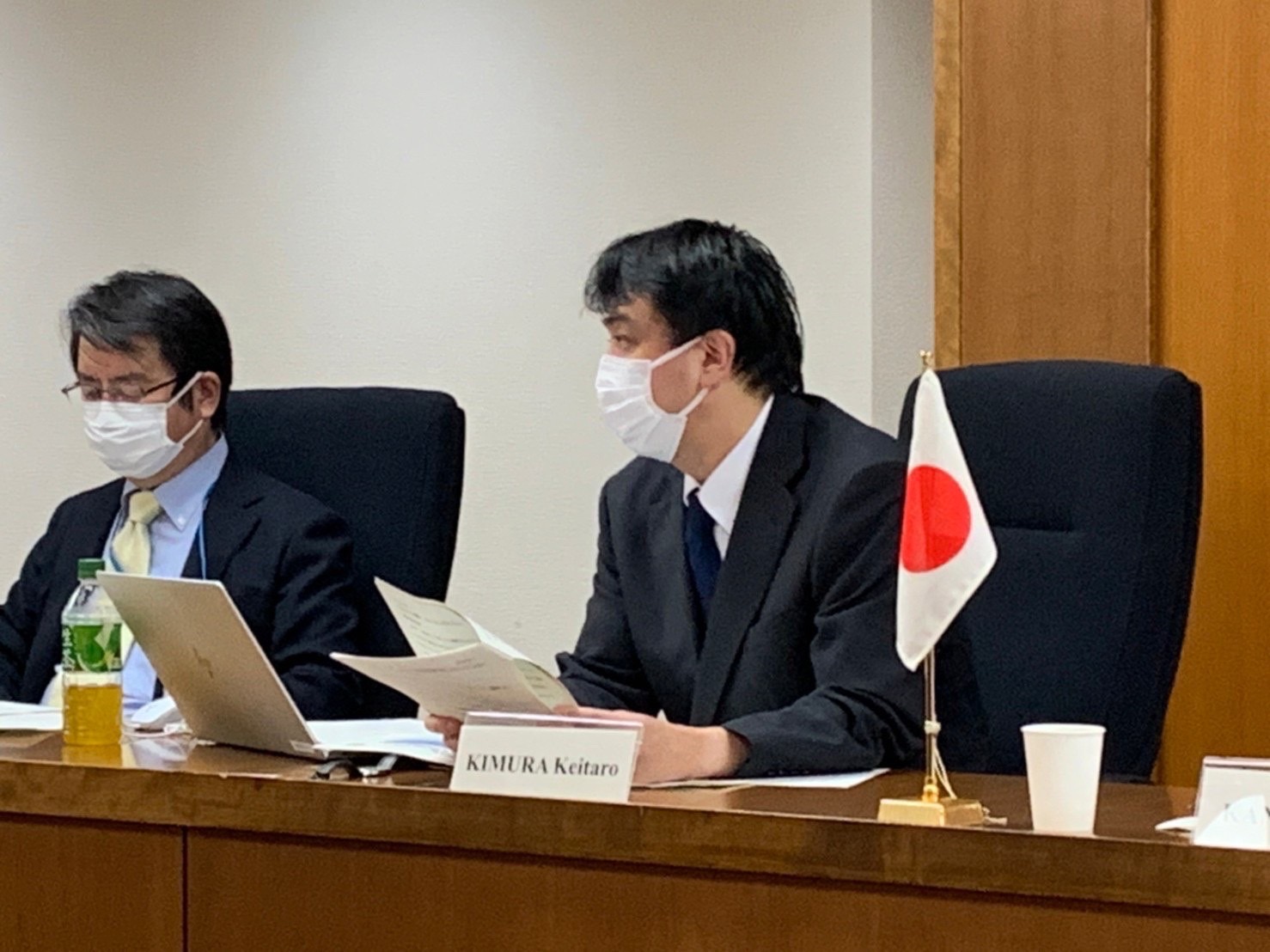
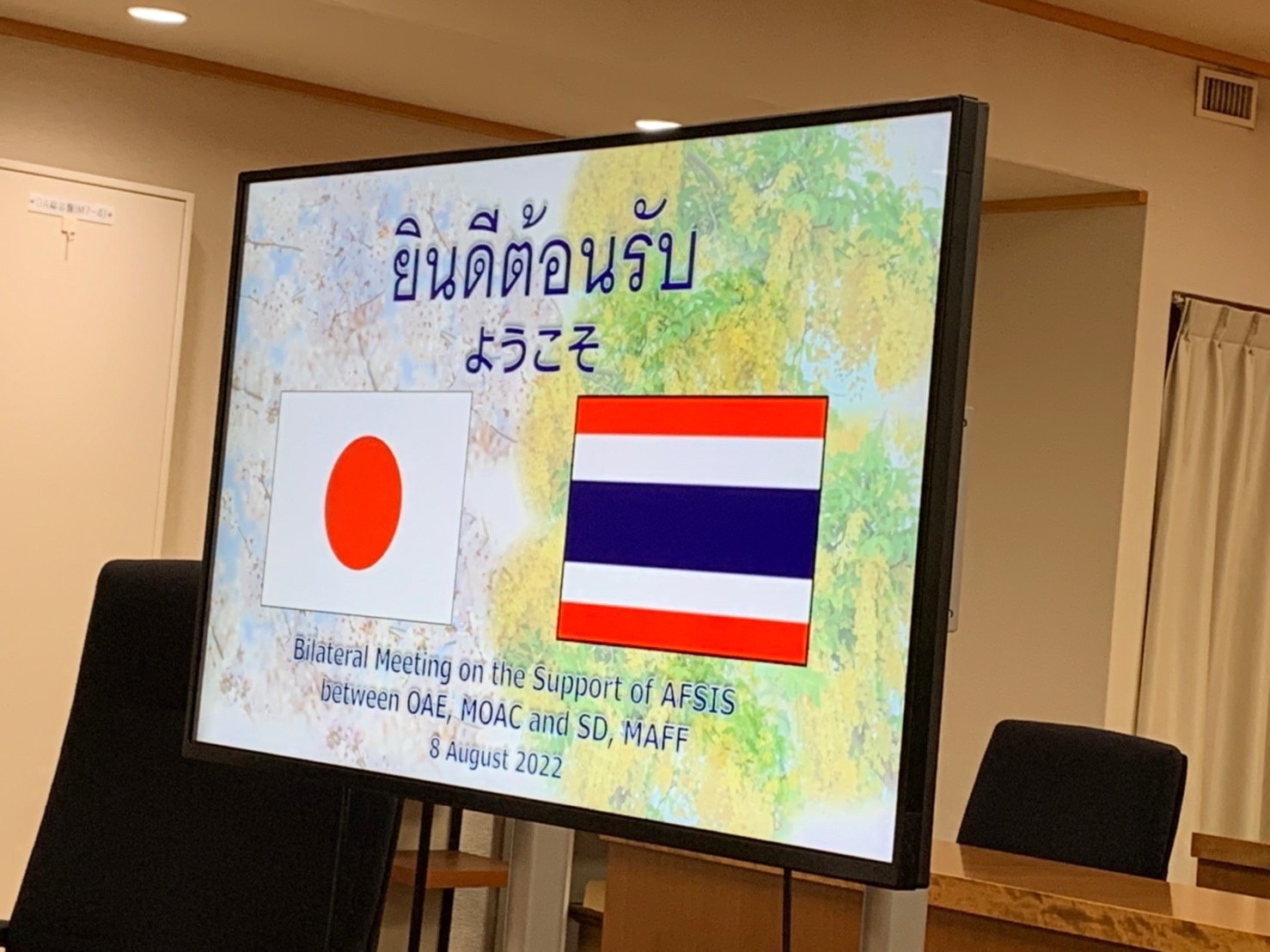
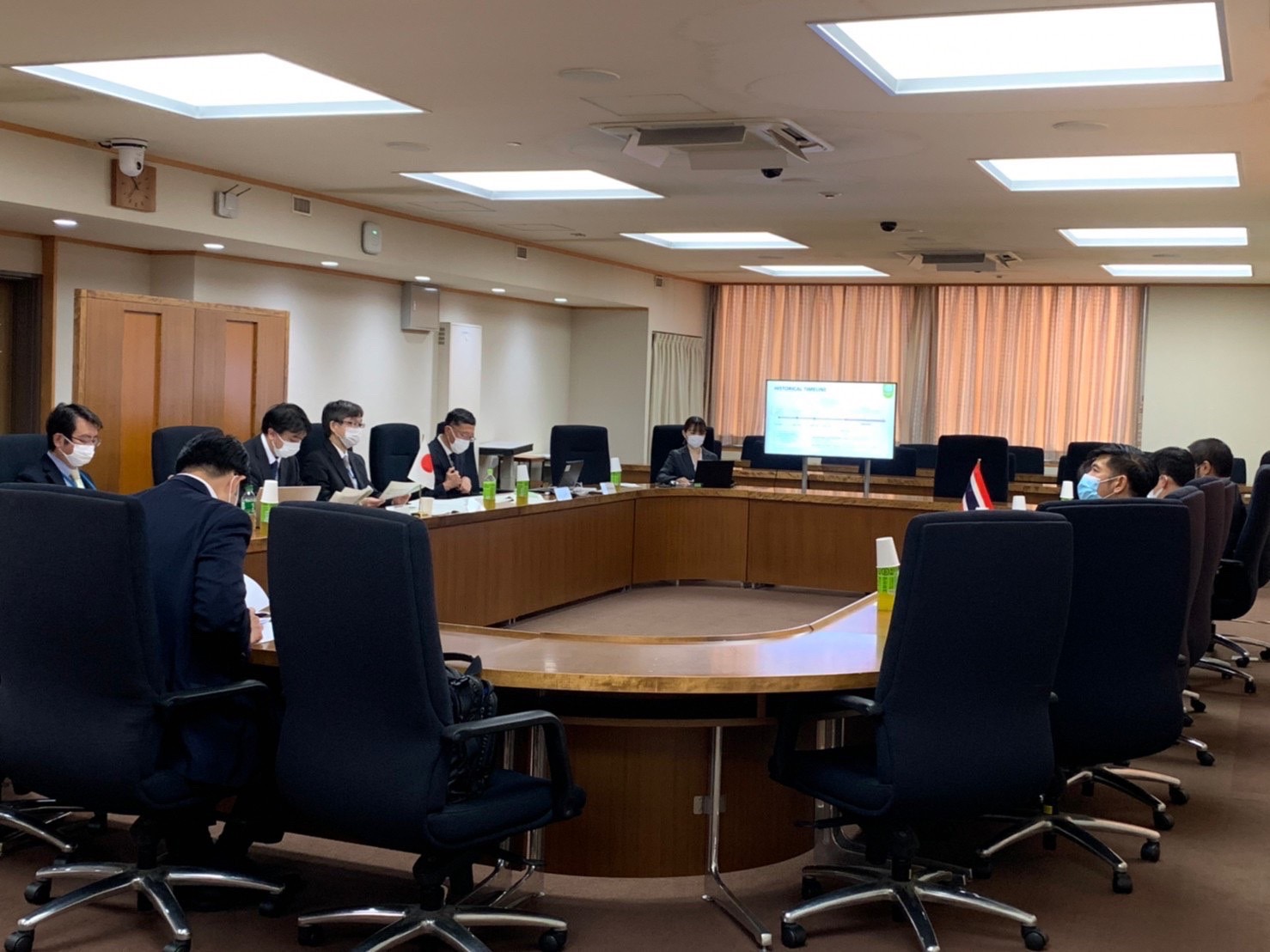
On 8 August 2022, Mr. Chantanon Wannakejohn, Secretary-General of the Office of Agricultural Economics (OAE), Ministry of Agricultural and Cooperative (MOAC) of Thailand had attended the Bilateral Meeting in Tokyo, Japan with Mr. KANKE Hideto, Director General, Statistics Department (SD), Minister's Secretariat, the Ministry of Agriculture, Forestry and Fisheries (MAFF) of Japan to discuss the effective and smooth implementation of AFSIS in the future.
The representative of Thailand are Mr. Vinit Atisook, Deputy Secretary General of OAE, Dr. Waraporn Saelee, AFSIS Manager, Mr. Somsak Vivithkeyoonvong, Minister Counsellor (Agricultural), and Mr. Sakon Wanasethi, Counsellor (Agricultural) as an interpreter in a meeting. Moreover, Mr. KIMURA Keitaro, Director of Statistics Planning Division, MAFF, Mr. Hosaka Masahiro, AFSIS Focal Point of Japan, and the Statistical Planning Division staff, MAFF, had attended this meeting as well.
The objective of this significant meeting is to exchange candid opinions in both Thailand and Japan for the future medium-long term framework of AFSIS and to form a common understanding of the general direction to be taken for solving the issue on the sustainability of AFSIS as a mechanism for food security in the ASEAN region.
During the meeting, Dr. Waraporn Saelee presented the current status of AFSIS, including the history and financial situation. In addition, the summary results of the proposed options for the future operational structure of AFSIS along with the discussion made in the 20th AFSIS Focal Point Meeting in June were presented in this meeting for further discussion.
The meeting was successfully ended with great collaboration from both sides to confirm their utmost attempt in order to support the continuity and progression of the AFSIS outcomes in the future.

The AFSIS Secretariat participated in the 10th International Conference on Agricultural Statistics (ICAS X), held from 8 to 10 July 2026 at the ICE Krakow Congress Centre in Krakow, Poland. Jointly organized by Statistics Poland, Eurostat, the United States Department of Agriculture (USDA), the World Bank Group, and the Food and Agriculture Organization of the United Nations (FAO).
.JPG)
On 24–25 June 2026, AFSIS Secretariat participated in the 46th Meeting of the ASEAN Food Security Reserve Board (AFSRB) via a virtual conference. The Meeting was jointly organized by the AFSRB Secretariat and the Department of Agriculture (DOA), Ministry of Agriculture, Livestock and Irrigation (MOALI) of the Republic of the Union of Myanmar, and was hosted in Nay Pyi Taw, Myanmar.

On 17–18 June 2026, the 24th AFSIS Focal Point Meeting was successfully convened via video conference, hosted by the Philippine Statistics Authority (PSA) in collaboration with the ASEAN Food Security Information System (AFSIS) Secretariat.
.jpg)
The ASEAN Food Security Information System (AFSIS) Secretariat, in collaboration with the Ministry of Agriculture, Forestry and Fisheries (MAFF) Japan, Japan Aerospace Exploration Agency (JAXA), Remote Sensing Technology Center of Japan (RESTEC), and Geo-Informatics and Space Technology Development Agency (GISTDA), conducted the 2nd Hands-on Training Courses for Agricultural Statisticians, the Final Workshop, and the 2nd Seminar for Executive Officials under the JAIF Project entitled “Improvement of Rice Paddy Area Statistics and Damage Assessment using Earth Observation Satellites for ASEAN” in Sriracha, Chonburi Province, and Bangkok, Thailand.

