Background
ASEAN Food Security Information System (AFSIS)
AFSIS was established in 2002 following growing concerns over regional food security, endorsed by the ASEAN Ministers of Agriculture and Forestry plus China, Japan, and the Republic of Korea (AMAF+3). The project aims to strengthen regional food security through the systematic collection, analysis, and dissemination of food security–related information. Initially implemented in two five-year phases (2003–2007 and 2008–2012) with financial support from the Ministry of Agriculture, Forestry and Fisheries of Japan and contributions from Thailand, AFSIS later evolved in response to rising undernourishment and food price volatility. Since 2017, AFSIS has continued as a project led by Thailand with support from the Plus Three countries under the AMAF+3 framework.
Establishment and Objective
AFSIS’s Implementation Timeline
“The AFSIS Project, located in OAE Thailand with support from ASEAN and +3 Countries, aims to strengthen food security in the region through the systematic collection, analysis and dissemination of food security related information.”

-
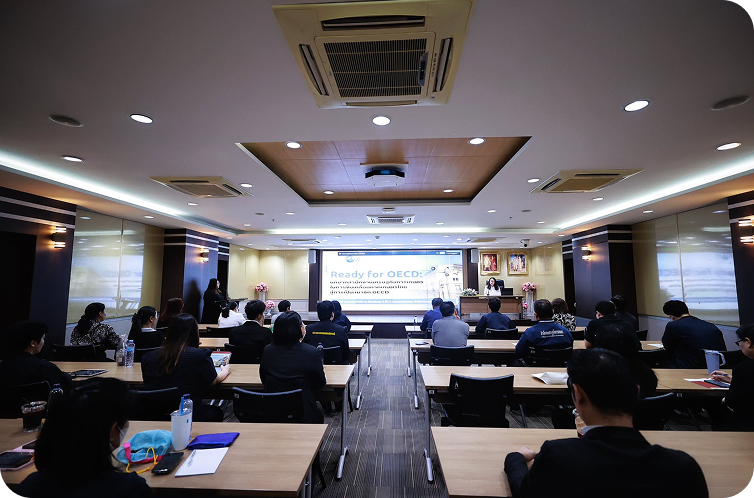
2023–2025Continues the Establishment of Sustainable of AFSIS
to find the consensus of each AMS and Plus three Countries

-
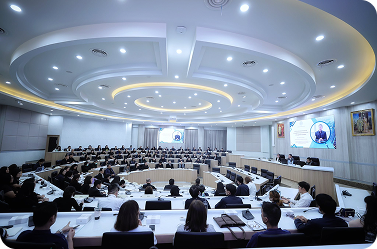
2018–2022Resume Establishment of Sustainable of AFSIS
- Request/gathered all for opinions from AMS
- Draft the Concept Note of AFSIS New Framework
- Bilateral Meeting
- Endorsed concept note
- Propose concept note to SSOM-AMAF and SSOM-AMAF+3

-
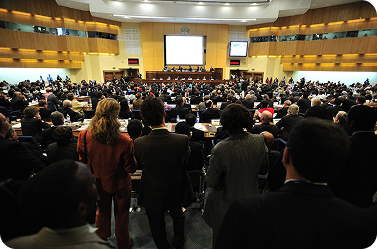
2016–201738th SSOM AMAF / 16th SSOM AMAF+3 Periodagreed that AFSIS will be maintained as "PROJECT" led by Thailand with support from Plus Three Countries39th AMAF / 17th AMAF+3noted that AFSIS will be continued as "PROJECT" led by Thailand with support from Plus Three Countries

-
2013–2015Establishment Period
to be "Permanent Mechanism" (Funding / Structure / Merging with APTERR etc.)


-
2008–2012AFSIS Project, 2nd Phase


-
2003–2007AFSIS Project, 1st Phase


-
Oct 20022nd AMAF+3 approved AFSIS Project


Project Components
Project Components
To achieve the objective in strengthening regional food security, the implementation of AFSIS contains 2 main components, which are:

To fulfill those 2 components, AFSIS with support from Plus Three Countries has implemented such as workshop, training and reports as follows:
a) Workshops and Trainings such as Workshop on China-ASEAN Information Management and IT Application of Food Safety Production, SAKURA, Capacity Building Workshops on ASEAN+3 Rice Trade Forecast Model for ASEAN+3 officials
b) Reports such as ACO, EWI, RGO
c) Supporting Projects from MAFF of Japan such as ALIS, F-Model, ISFAS, SAS-PSA and SAFER
d) Supporting Projects from Republic of Korea such as Real-Time AFSIS project, IT-based ASEAN+3 Food Security Cooperation and Support for Capacity Building
Expected Outputs
Expected Outcomes of AFSIS Implementation
The outputs from the implementation of AFSIS can be expected as follows:
01
Member States will be capable of providing accurate, reliable and timely information required for the construction of regional food security information at the same standard.
02
AFSIS will be able to provide complete information needed for planning and implementation of food security policy in the region.
03
The development of early warning information and commodity outlook will facilitate the management of food security policies and programs. These activities will help to assess food security situations in the region and identify the areas where food insecurity is likely to occur as well as the degree of seriousness.
04
The responsible agencies to be better aware of the problem in food security, so that affected people will receive better responses and support to release their difficulties.
Project Administration
How AFSIS Ensures Effective Coordination and Decision-Making

AFSIS is governed through the annual Focal Point Meeting (FPM), which oversees work plThe Focal Point Meeting (FPM) which consists of representatives from Focal Point Agencies in every Member States in body responsible for managing and assisting in carrying out the activities of AFSIS. The annual FPM is the decision-making mechanism of the AFSIS to discuss, review and decide on the following matters:ans, implementation progress, and key decisions across Member States.
- Work plans of AFSIS
- Implementation of AFSIS activities at the regional and national levels
- Other important matters relevant to the implementation of AFSIS
AFSIS Focal points

Brunei Darussalam Darussalam
Ms. Hajah Nurhidayat Binti Dato Paduka Haji Ismail
Senior Agriculture Officer
Department of Agriculture and Agrifood
Ministry of Primary Resources and Tourism
nurhidayat.ismail@agriculture.gov.bn

Cambodia
Mr. KIMTHOURN HOK
Director
Department Planning and Statistics (DPS)
Ministry of Agriculture Forestry and Fisheries
kimthourn@gmail.com

Indonesia
Mrs.Intan Rahayu
Center for Agricultural Data and Information System Ministry of Agriculture, Republic of Indonesia
intanrahayu@pertanian.go.id

Lao PDR
Mr.Phonesavanh Vanmixay
Director
Center for Agriculture Statistic
Ministry of Agriculture and Forestry of Lao
phonesavanhv@yahoo.com

Malaysia
Mr. Shahril Faizal Bin Abdul Jani
Undersecretary
Policy and Strategic Planning Division
Ministry of Agriculture and Food Security
faizal@kpkm.gov.my
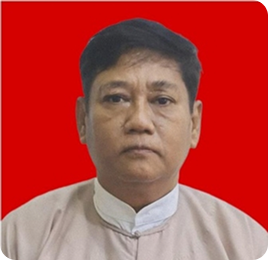
Myanmar
Mr. Zaw Min Aung
Director Statistics Division Settlement and Land Records
DepartmentMinistry of Agriculture,
Livestock and Irrigation
slrdstatisticsslrd@gmail.com

Philippines
Dr. Divina Gracia L .del Prado
Assistant National Statistician
Economic Sector Statistics Service
Philippine Statistics Authority (PSA)
g.delprado@psa.gov.ph

Singapore
Ms. Tai Li-Lian
Deputy Director
International Relations Division
Singapore Food Agency
tai_li-lian@sfa.gov.sg

Thailand
Mr.Krit Iemthanon
Director
Center for Agricultural Information of Agricultural Economics
Ministry of Agriculture and Cooperatives
krit33@hotmail.com

Vietnam
Dr. Nguyen Hoang Dan
Deputy Director
Center for Digital Transformation and Statistics
Ministry of Agriculture and Rural Development
dannh@mard.gov.vn

China
Dr. Yang Yong
Director Ecological Agriculture Information Services
Division Agricultural Information Institute
Chinese Academy of Agricultural Sciences (CAAS)
wheatblue@163.com

Japan
Mr. HOSAKA Masahiro
Deputy Director Statistics Planning
Division Statistics Department
Ministry of Agriculture, Forestry and Fisheries (MAFF)
masahiro_hosaka870@maff.go.jp

Republic of Korea
Dr. JUNG Soyoung
Director International Agricultural
Cooperation Division Korea Agency of Education, Promotion and Information Service in Food
Agriculture, Forestry and Fisheries (EPIS)
nurhidayat.ismail@agriculture.gov.bn
AFSIS Secretariat

Dr. Sumanya Ngandee, PhD
AFSIS Manager

Mr. Yasuhiro MIYAKE
Japanese Expert

Mr. Charapon Chantorn
Deputy AFSIS Manager

Mr.Shoji Kimura
International Consultant

Mr.Patchapol Petchrung
Project Coordinator

Ms. Worada Wongsud
Secretary to the Japanese Expert

Ms. Chotika Tongrungrot
Administrative and Finance Officer

Mr. Prachaya Chamarat
Agricultural Statistical Reporting Officer