
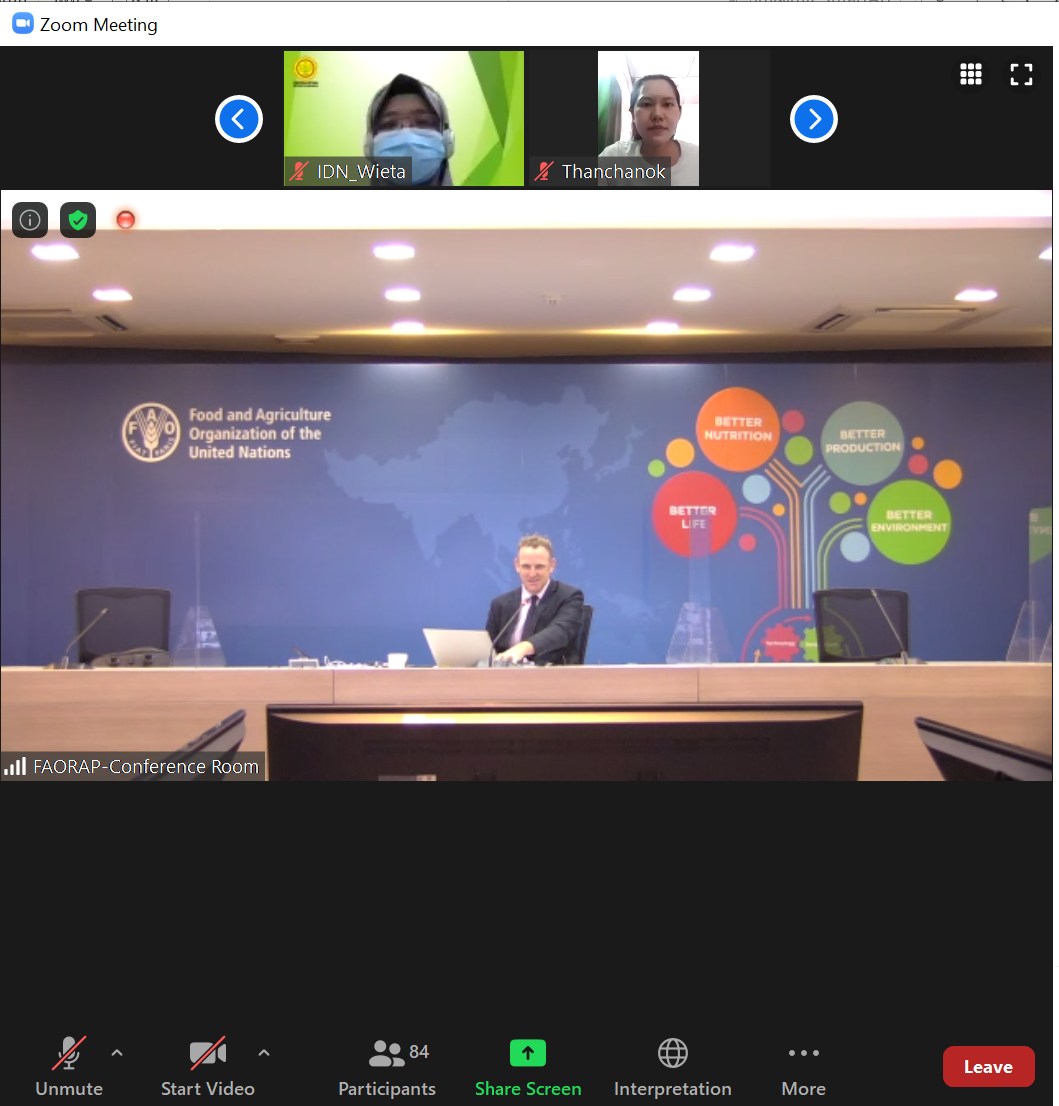
The ASEAN Food Security Information System (AFSIS) had attended the Multi-stakeholder virtual consultation on the FAO Regional Strategy on Food Loss and Waste Reduction in Asia and the Pacific conducted by FAO Regional Office for Asia and the Pacific on 1-2 June 2021.
This meeting was attended by 92 participants from various organization and countries over the world, including 2 participants from AFSIS Secretariat led by Ms. Thanchanok Pongputhinan, Assistant AFSIS Manager along with Ms. Poufai Khukhuntin, Project Coordinator Staff.
The objective of the meeting is to share the existing knowledge on Food Loss and Waste (FLW) from the FLW draft Strategy and to learn other countries experiences and move steadily forward to FLW reduction.
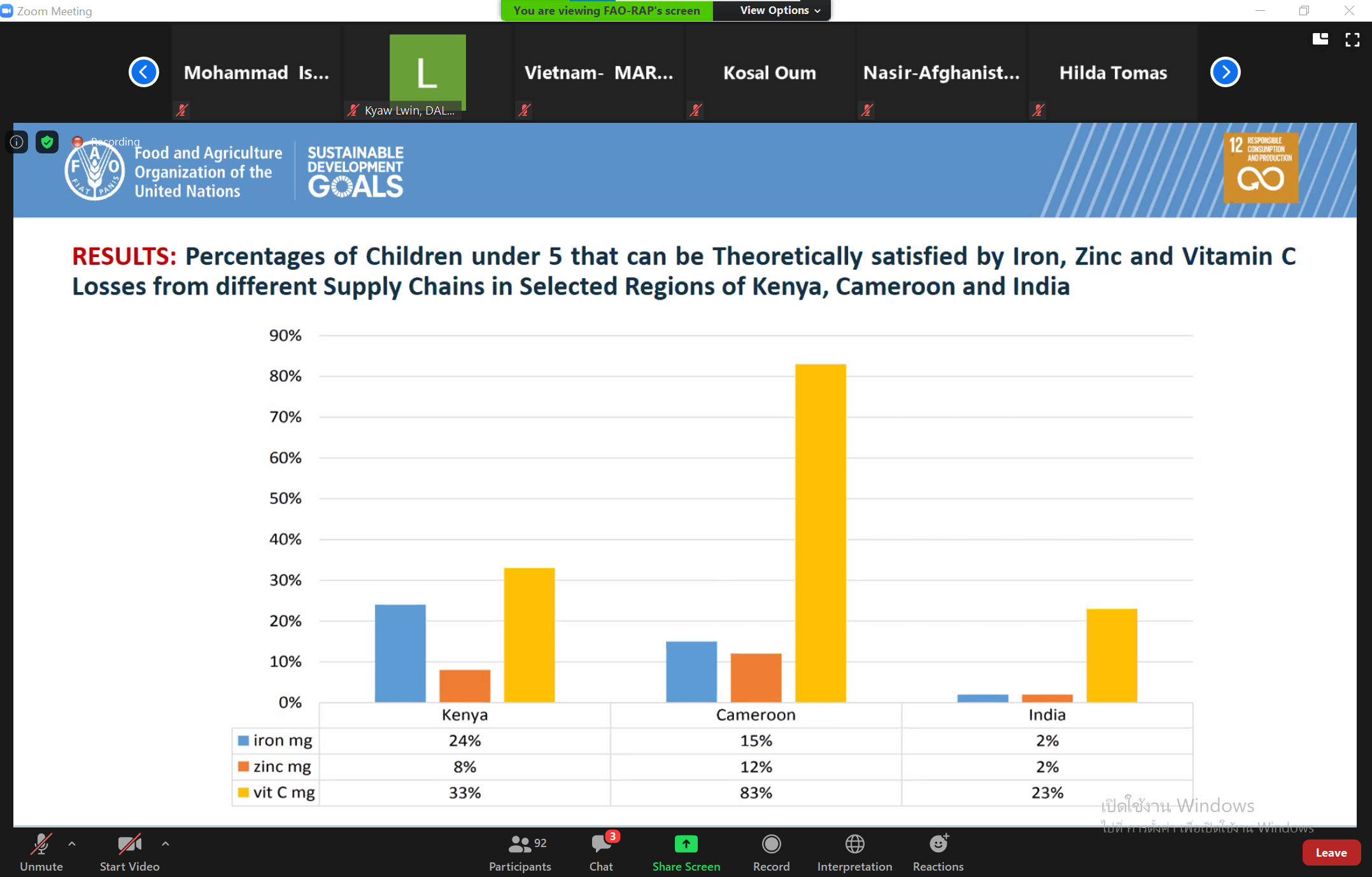
The meeting discussed the overview of food losses and waste, Asia-Pacific Food Loss and Waste Reduction (FLW) Strategy on this matter, and also emphasized on the food loss and waste reduction during the climate change and the COVID-19 outbreak.
The meeting also highlighted the vision, goal, and objective toward this matter, as well as opened the enthusiastic discussion on the roadmap on reducing food losses and waste according to SDG 12.3
This noteworthy meeting was fruitful and accomplished its objective in discussing and empowering the Food Loss and Waste Reduction concepts to all participants.

On 29 July 2026, the APEC Policy Partnership on Food Security (PPFS) successfully convened the APEC PPFS Webinar on Strategic Cooperation for Strengthening Food System Resilience via a virtual platform. The webinar was organized by the Ministry of Agriculture, Food and Rural Affairs (MAFRA) of the Republic of Korea as a self-funded PPFS project to promote strategic cooperation and knowledge exchange on strengthening food system resilience across APEC member economies.

The AFSIS Secretariat participated in the 10th International Conference on Agricultural Statistics (ICAS X), held from 8 to 10 July 2026 at the ICE Krakow Congress Centre in Krakow, Poland. Jointly organized by Statistics Poland, Eurostat, the United States Department of Agriculture (USDA), the World Bank Group, and the Food and Agriculture Organization of the United Nations (FAO).
.JPG)
On 24–25 June 2026, AFSIS Secretariat participated in the 46th Meeting of the ASEAN Food Security Reserve Board (AFSRB) via a virtual conference. The Meeting was jointly organized by the AFSRB Secretariat and the Department of Agriculture (DOA), Ministry of Agriculture, Livestock and Irrigation (MOALI) of the Republic of the Union of Myanmar, and was hosted in Nay Pyi Taw, Myanmar.

On 17–18 June 2026, the 24th AFSIS Focal Point Meeting was successfully convened via video conference, hosted by the Philippine Statistics Authority (PSA) in collaboration with the ASEAN Food Security Information System (AFSIS) Secretariat.

