
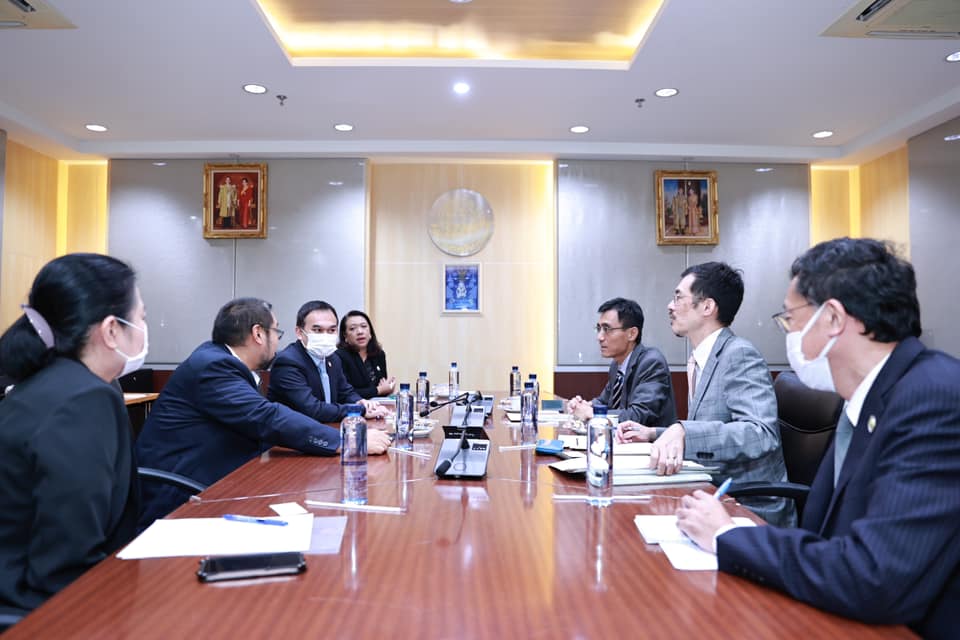
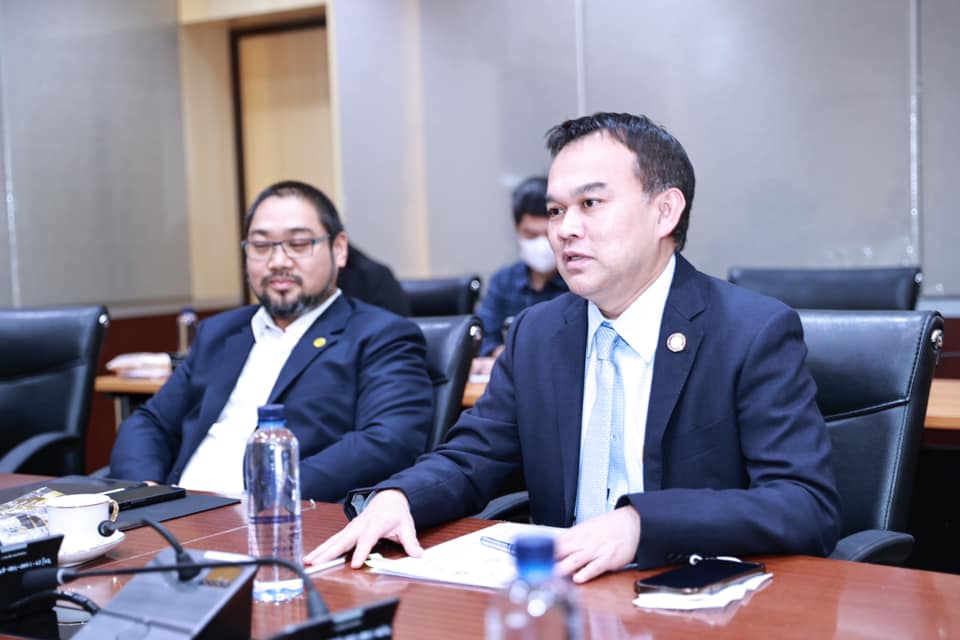
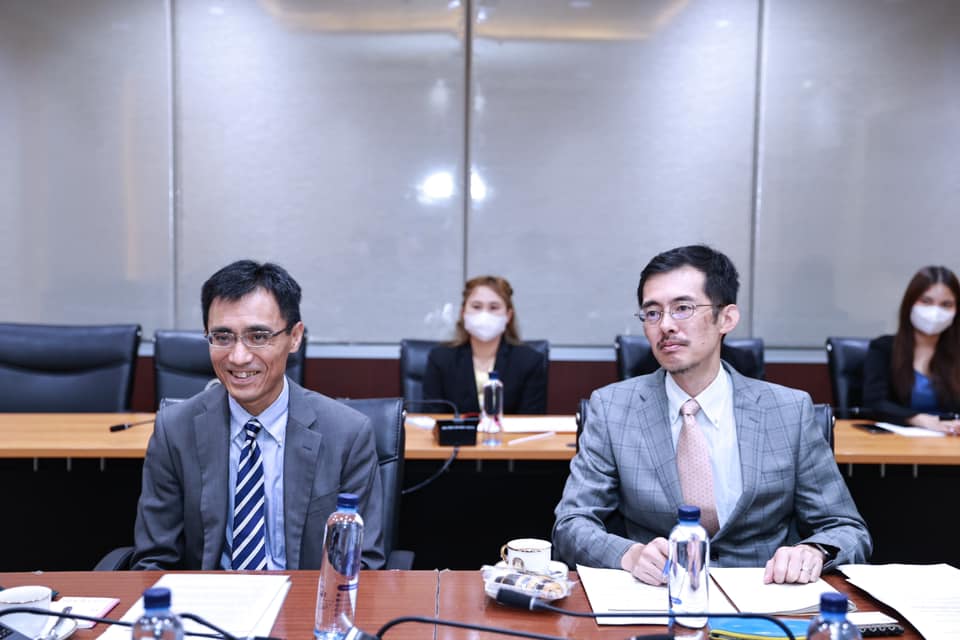
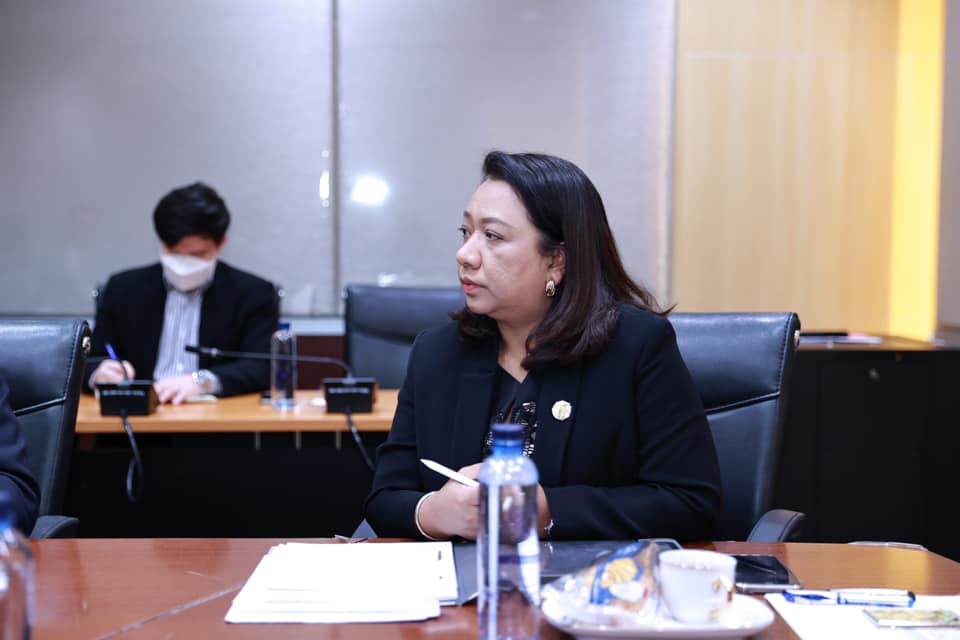
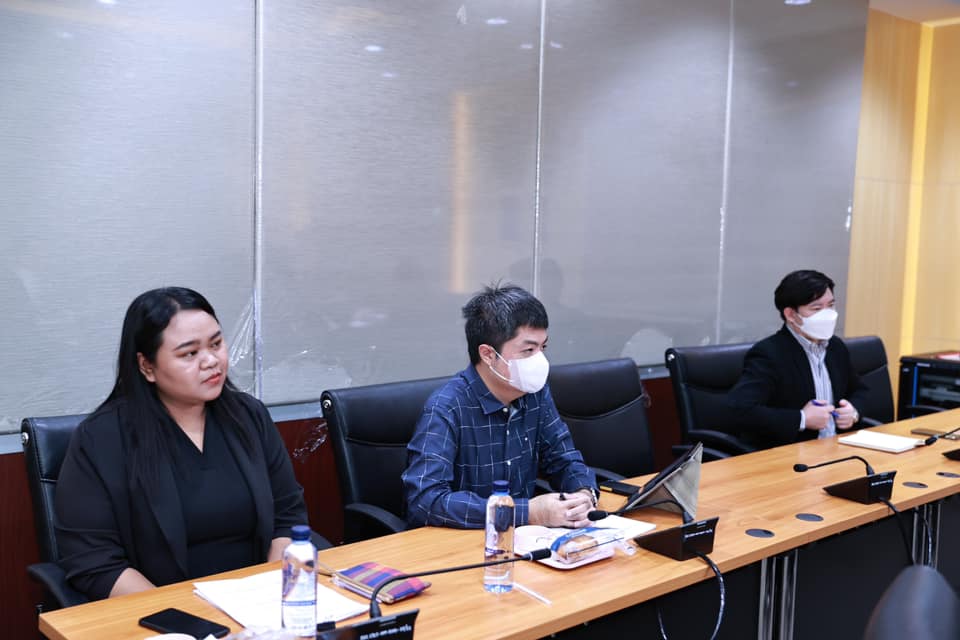
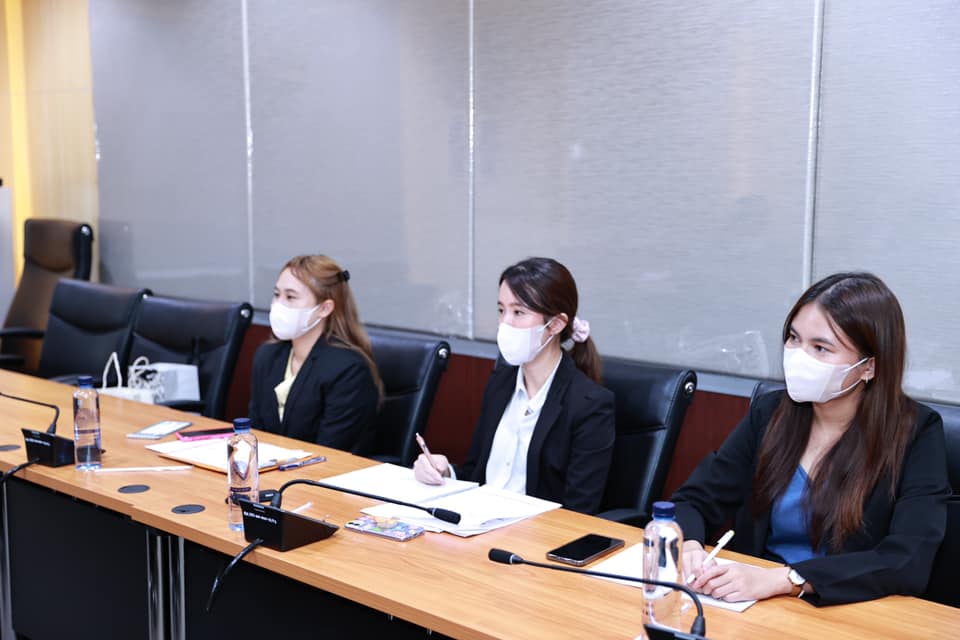
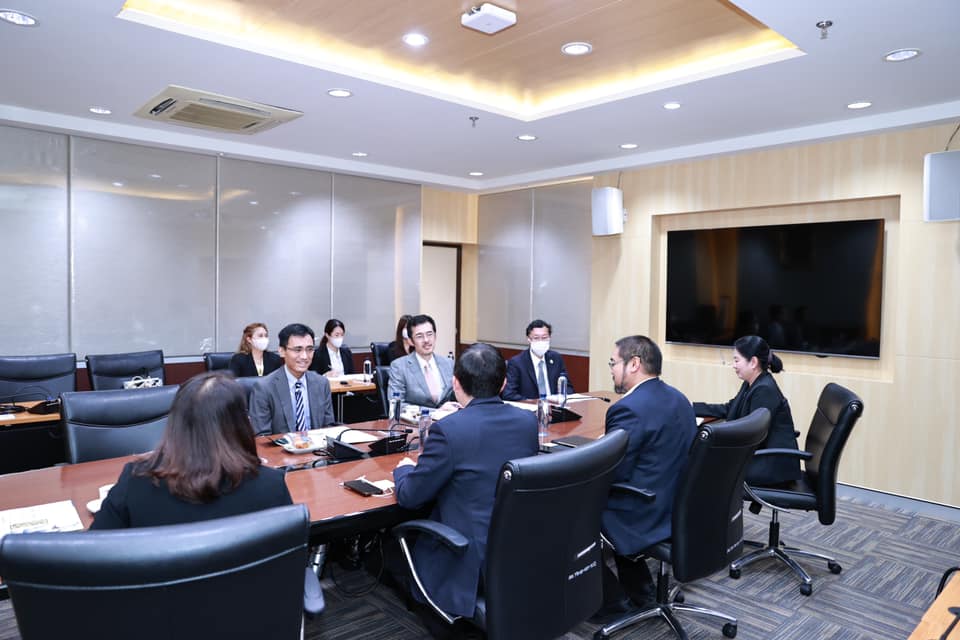
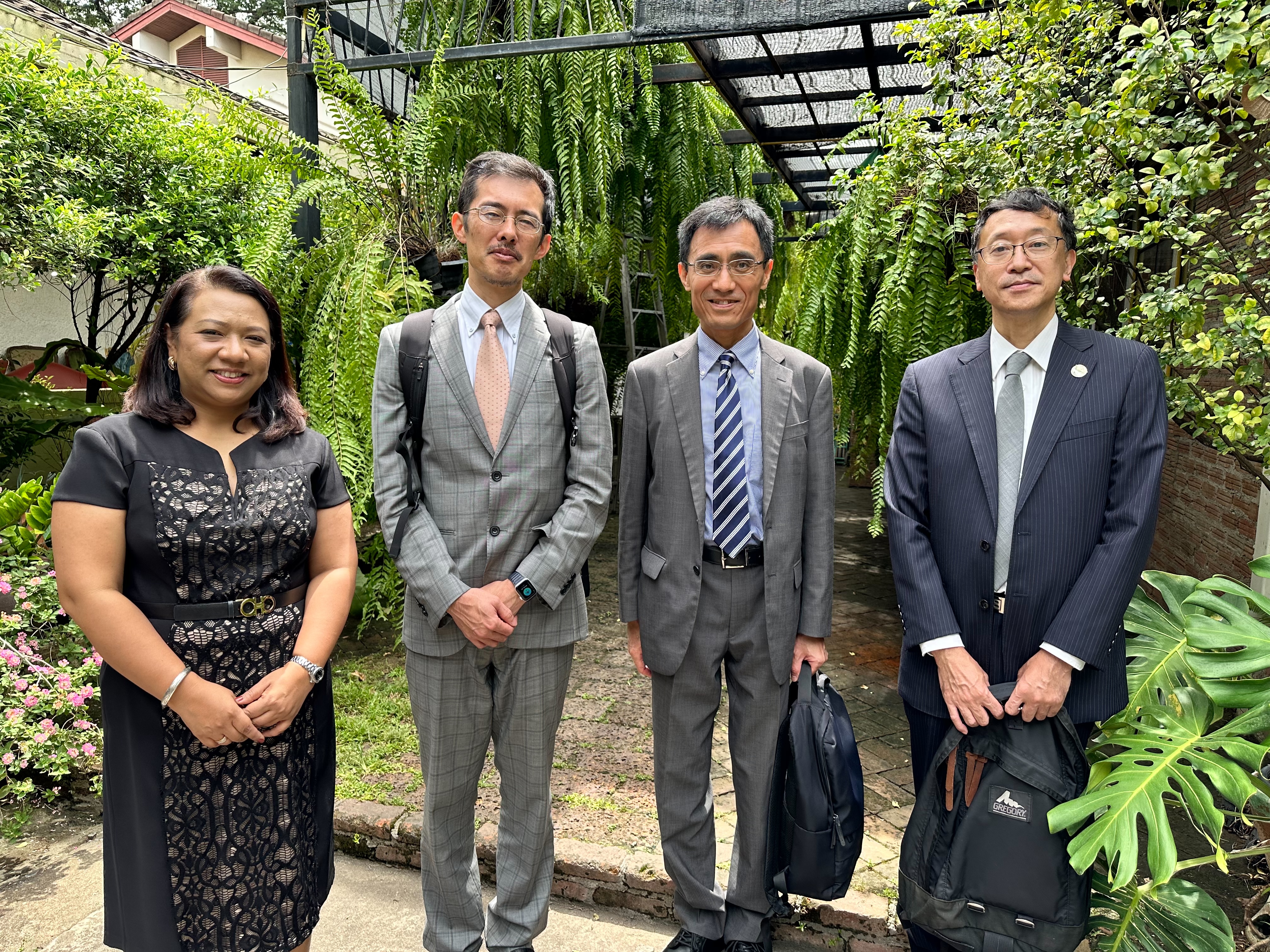
On 21 July 2023, Mr. Hideya Yamada Director General of the Statistics Department, and Mr. Masahiro Hosaka, Deputy Director of the Statistics Planning Division, Ministry of Agriculture, Forestry and Fisheries (MAFF), Japan visited the Office of Agricultural Economics (OAE) to attend the bilateral meeting with Mr. Chantanon Wannakejohn, Secretary-General of the OAE, Ministry of Agricultural and Cooperative (MOAC) of Thailand, to discuss the effective and smooth implementation of AFSIS in the long term.
The representatives of OAE are Mr. Vinit Atisook, Deputy Secretary General of OAE, Ms. Anyada Penpon, Senior Statistician, Mr. Anon Boonyawattana, Statistician Practitioner Level, Ms. Natnaphat Subtaweepollert, Plan and Policy Analyst, and also AFSIS Secretariat attended the meeting.
The objectives of this significant meeting are to exchange candid opinions on the details of the AFSIS new framework and to form a common understanding of the general direction to be taken, and issues to be addressed.
Furthermore, the Meeting discussed the detail of Japan’s joint research project on developing an estimated method of rice production by using satellite imaging data to promote the interaction of agricultural statisticians among AFSIS member countries.
The meeting successfully ended with great collaboration from both sides to confirm their utmost effort in order to support the continuity and progression of the AFSIS outcomes in the future.

On 29 July 2026, the APEC Policy Partnership on Food Security (PPFS) successfully convened the APEC PPFS Webinar on Strategic Cooperation for Strengthening Food System Resilience via a virtual platform. The webinar was organized by the Ministry of Agriculture, Food and Rural Affairs (MAFRA) of the Republic of Korea as a self-funded PPFS project to promote strategic cooperation and knowledge exchange on strengthening food system resilience across APEC member economies.

The AFSIS Secretariat participated in the 10th International Conference on Agricultural Statistics (ICAS X), held from 8 to 10 July 2026 at the ICE Krakow Congress Centre in Krakow, Poland. Jointly organized by Statistics Poland, Eurostat, the United States Department of Agriculture (USDA), the World Bank Group, and the Food and Agriculture Organization of the United Nations (FAO).
.JPG)
On 24–25 June 2026, AFSIS Secretariat participated in the 46th Meeting of the ASEAN Food Security Reserve Board (AFSRB) via a virtual conference. The Meeting was jointly organized by the AFSRB Secretariat and the Department of Agriculture (DOA), Ministry of Agriculture, Livestock and Irrigation (MOALI) of the Republic of the Union of Myanmar, and was hosted in Nay Pyi Taw, Myanmar.

On 17–18 June 2026, the 24th AFSIS Focal Point Meeting was successfully convened via video conference, hosted by the Philippine Statistics Authority (PSA) in collaboration with the ASEAN Food Security Information System (AFSIS) Secretariat.

