
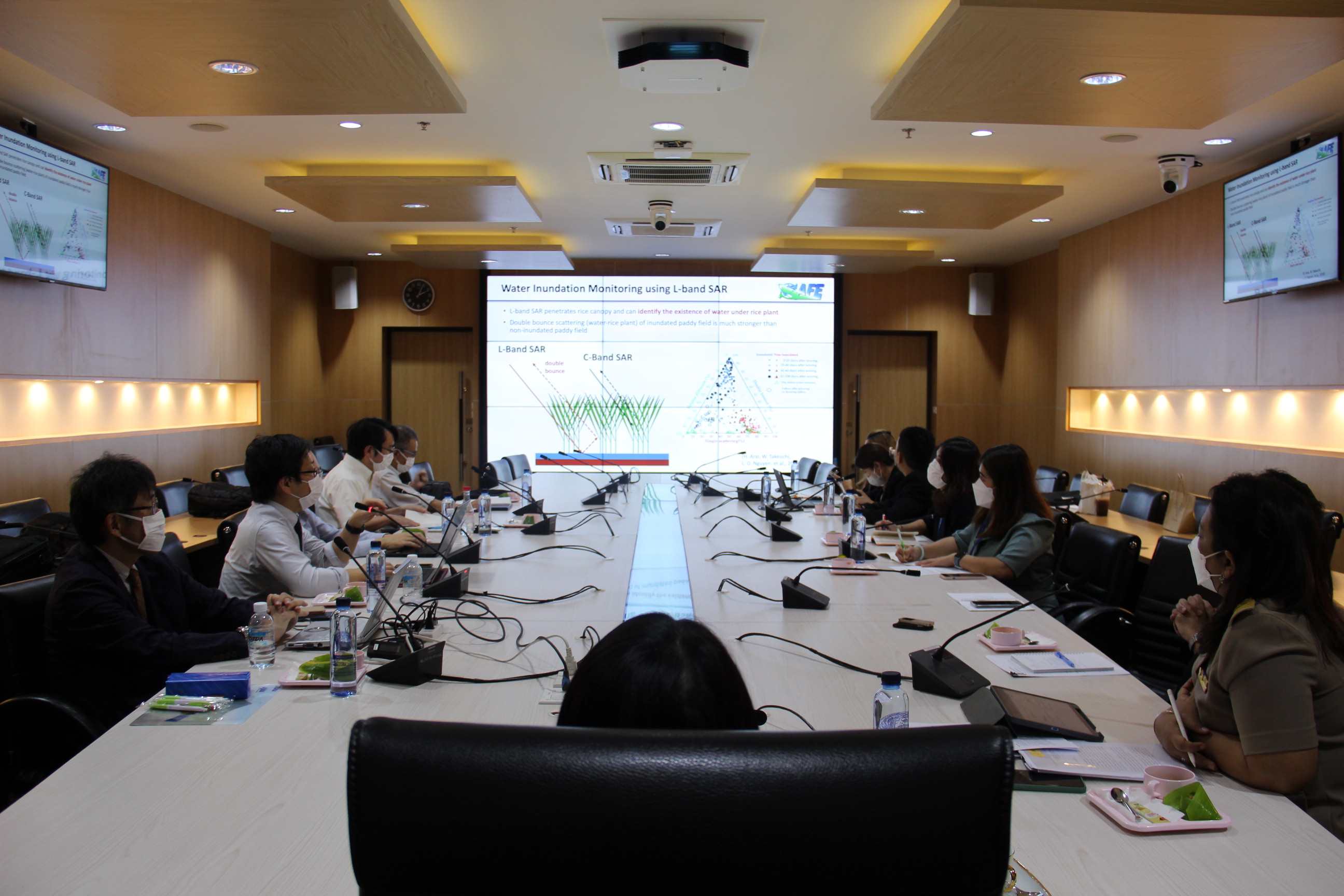
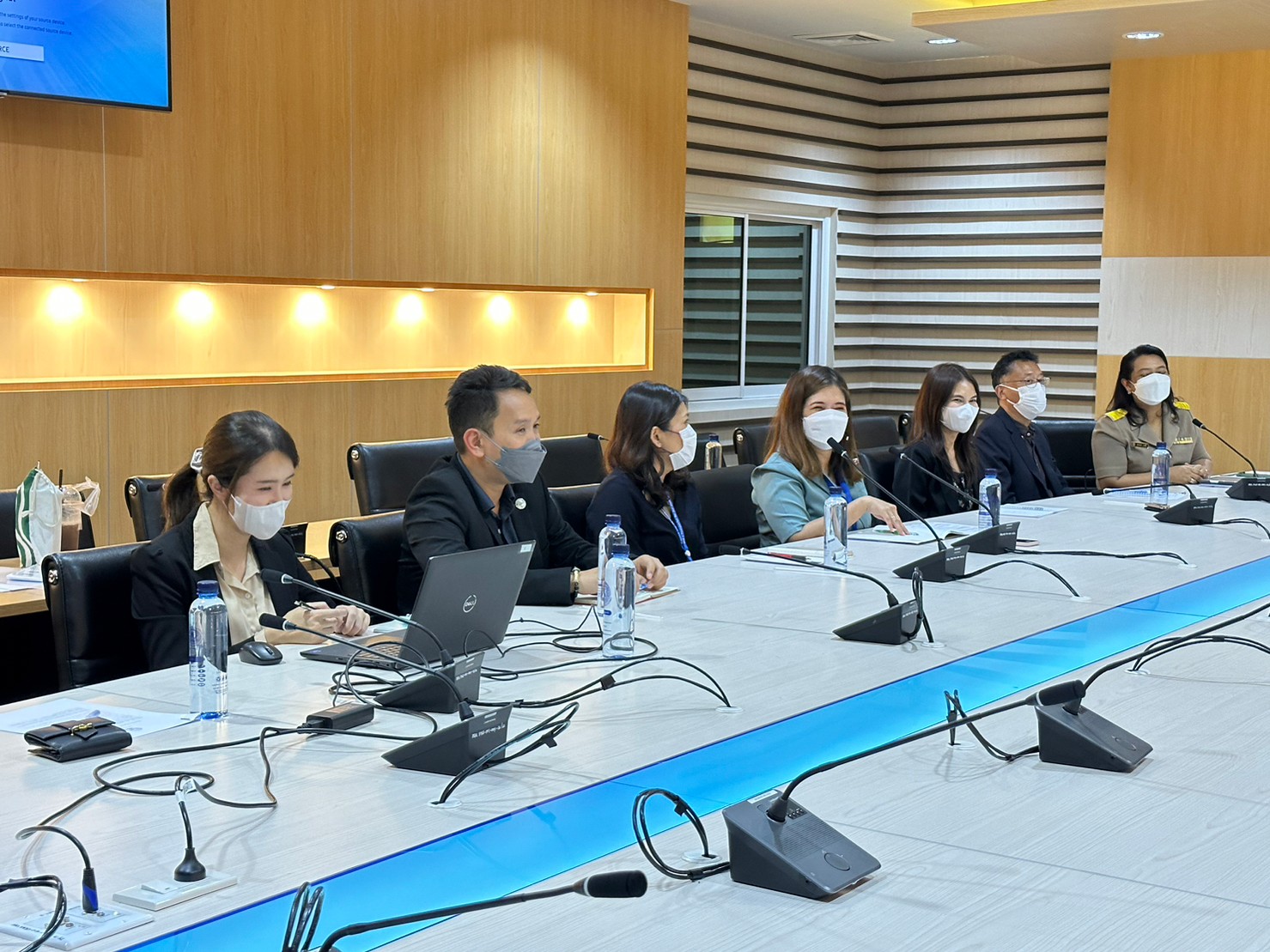
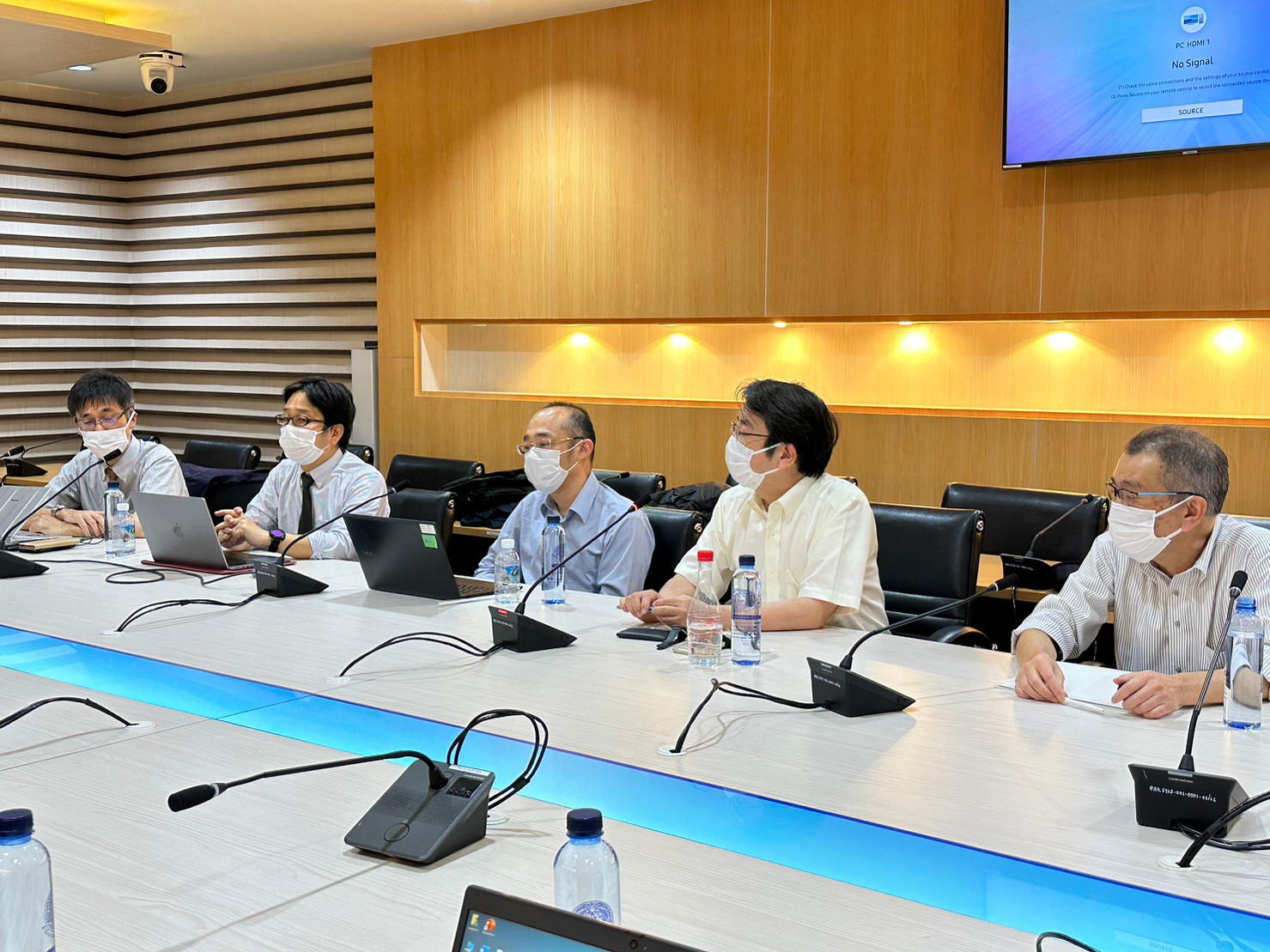
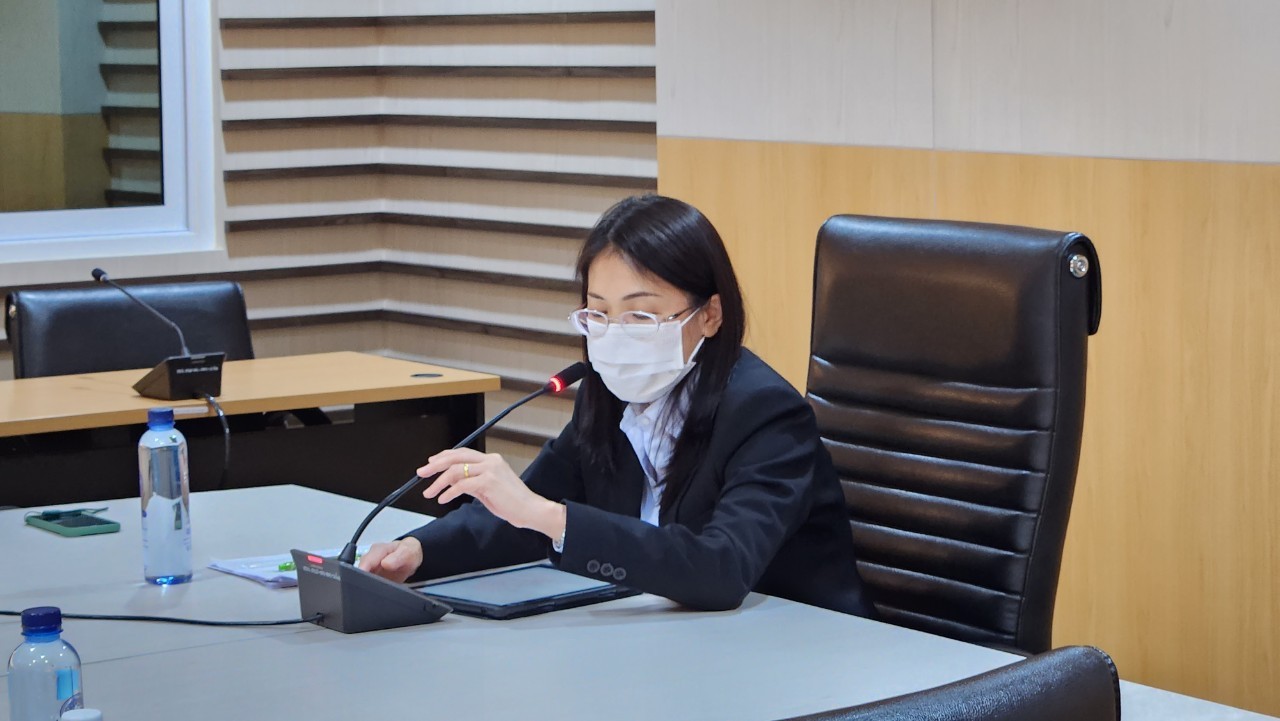
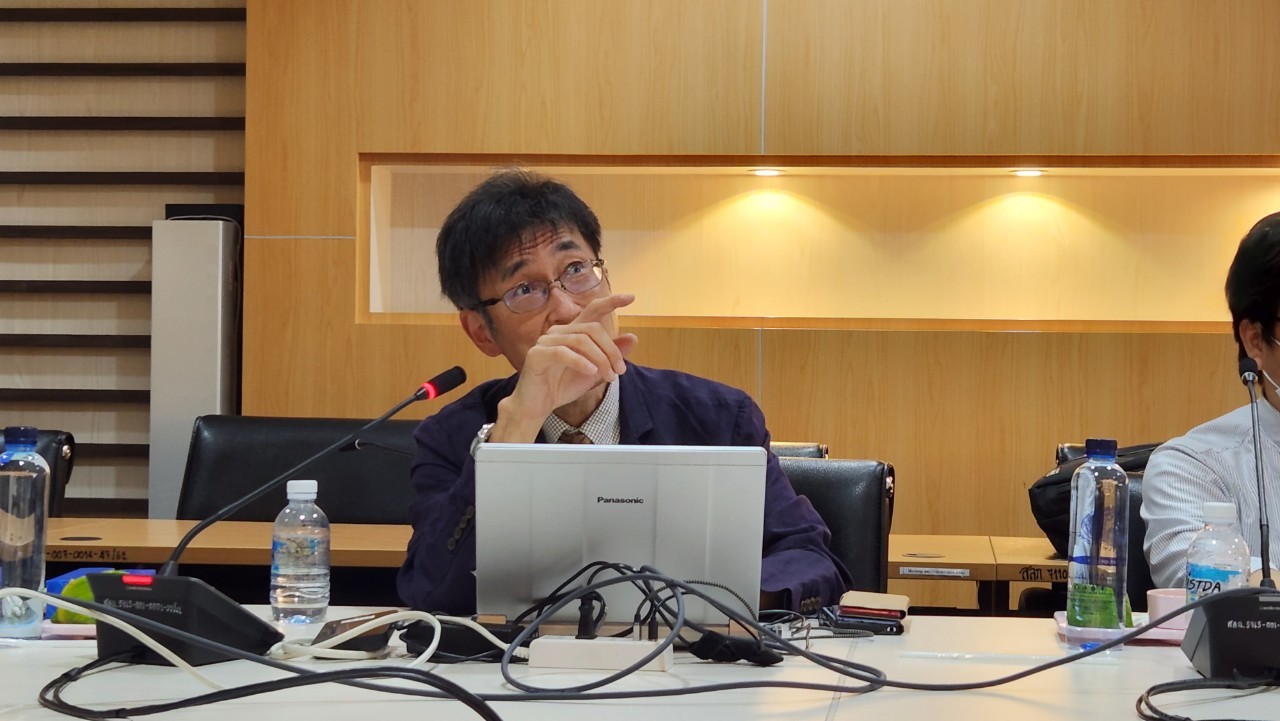
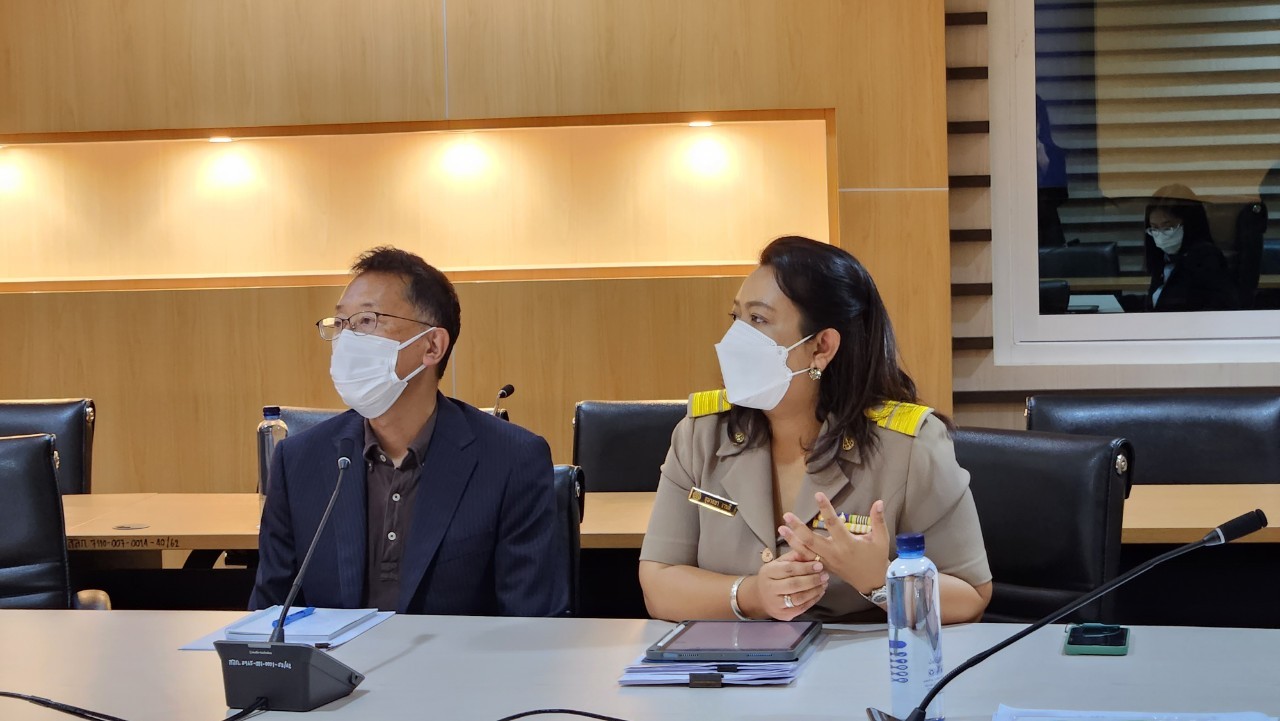
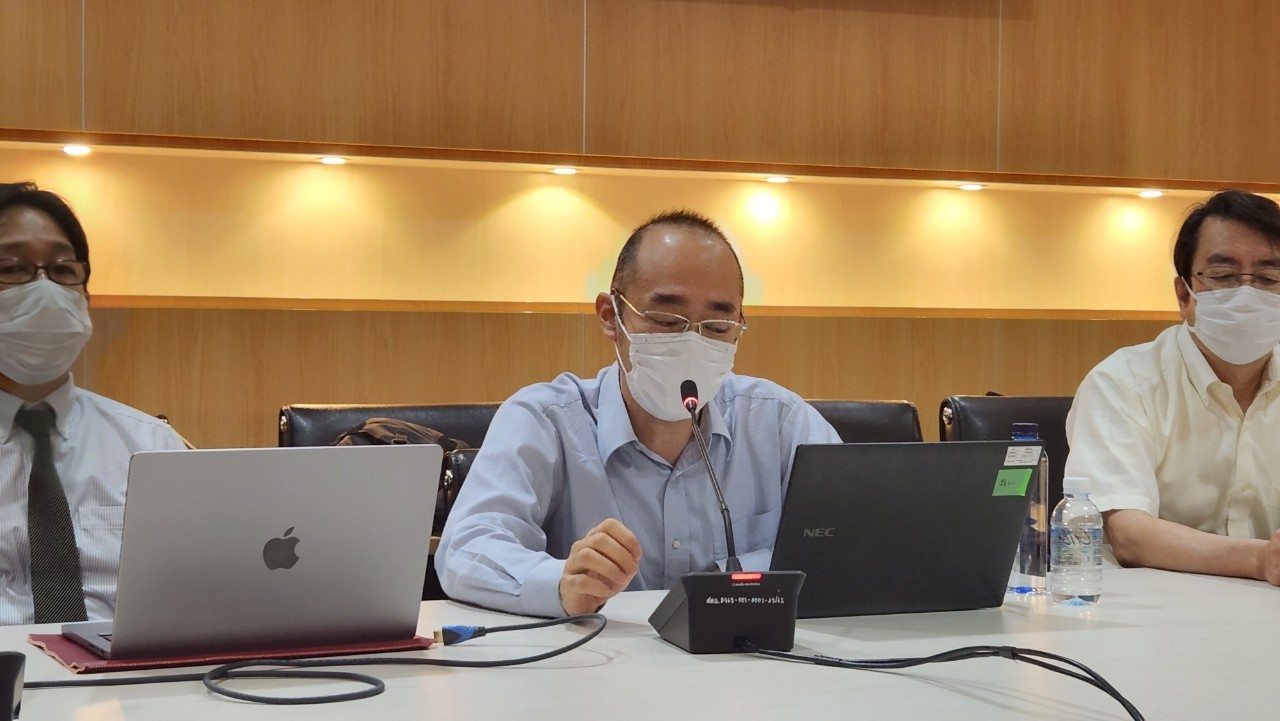
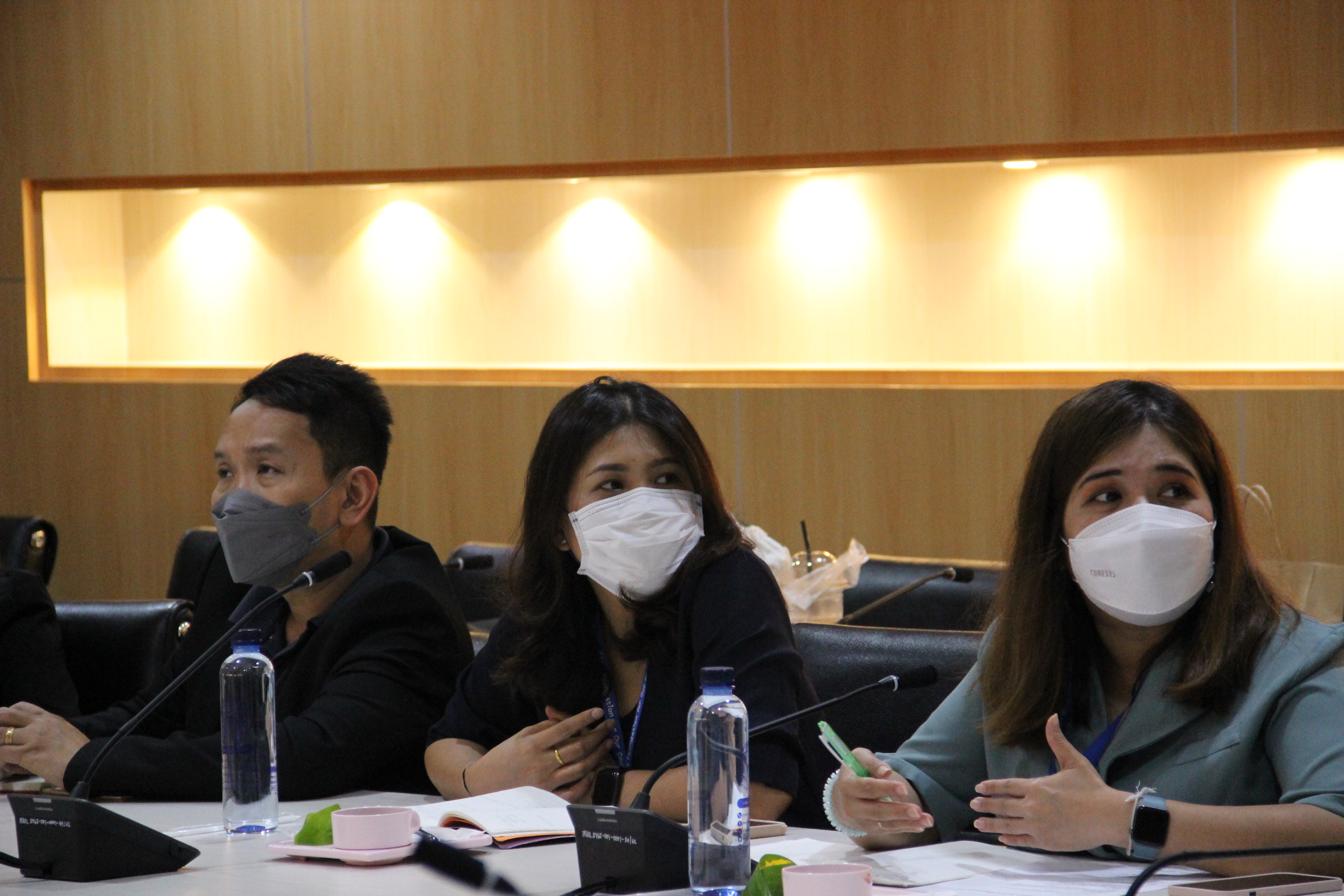
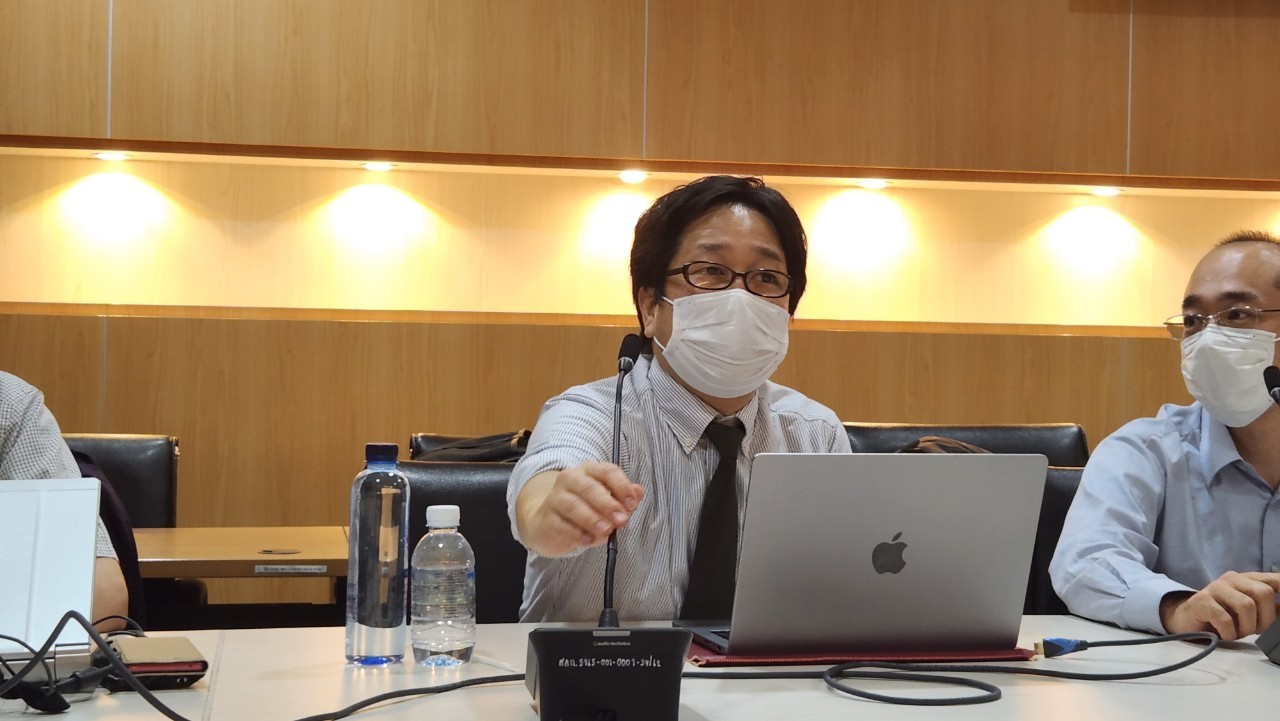
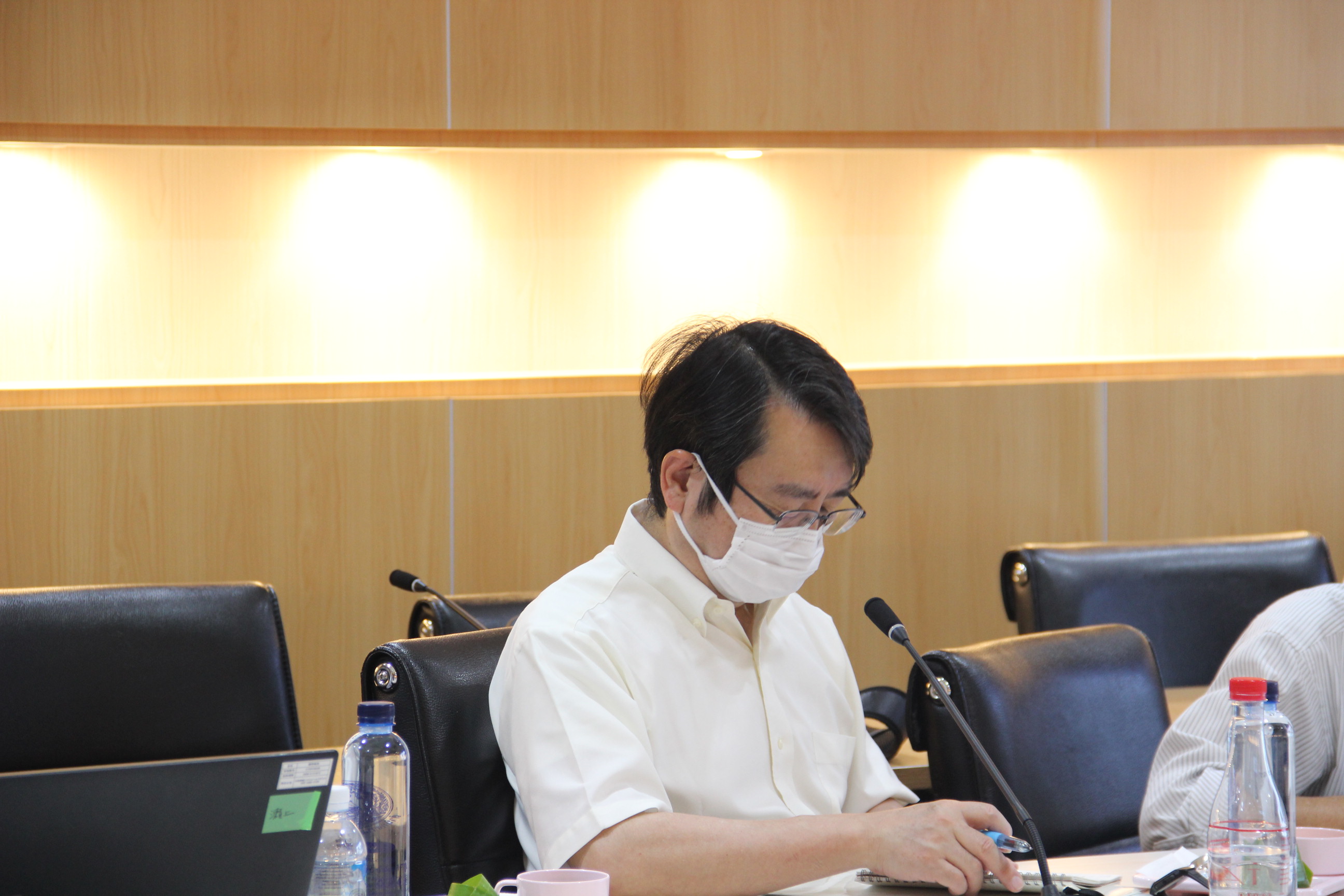
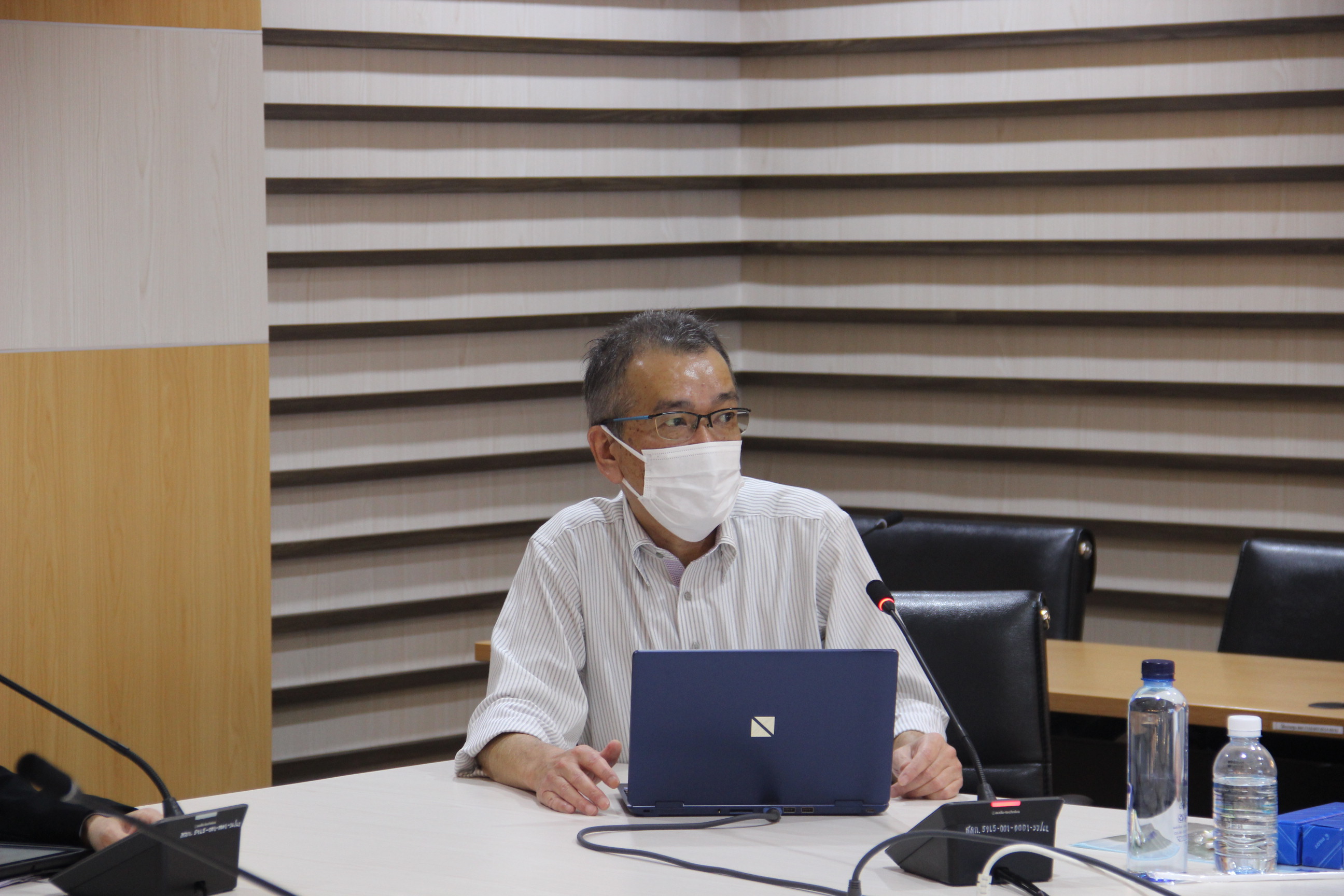
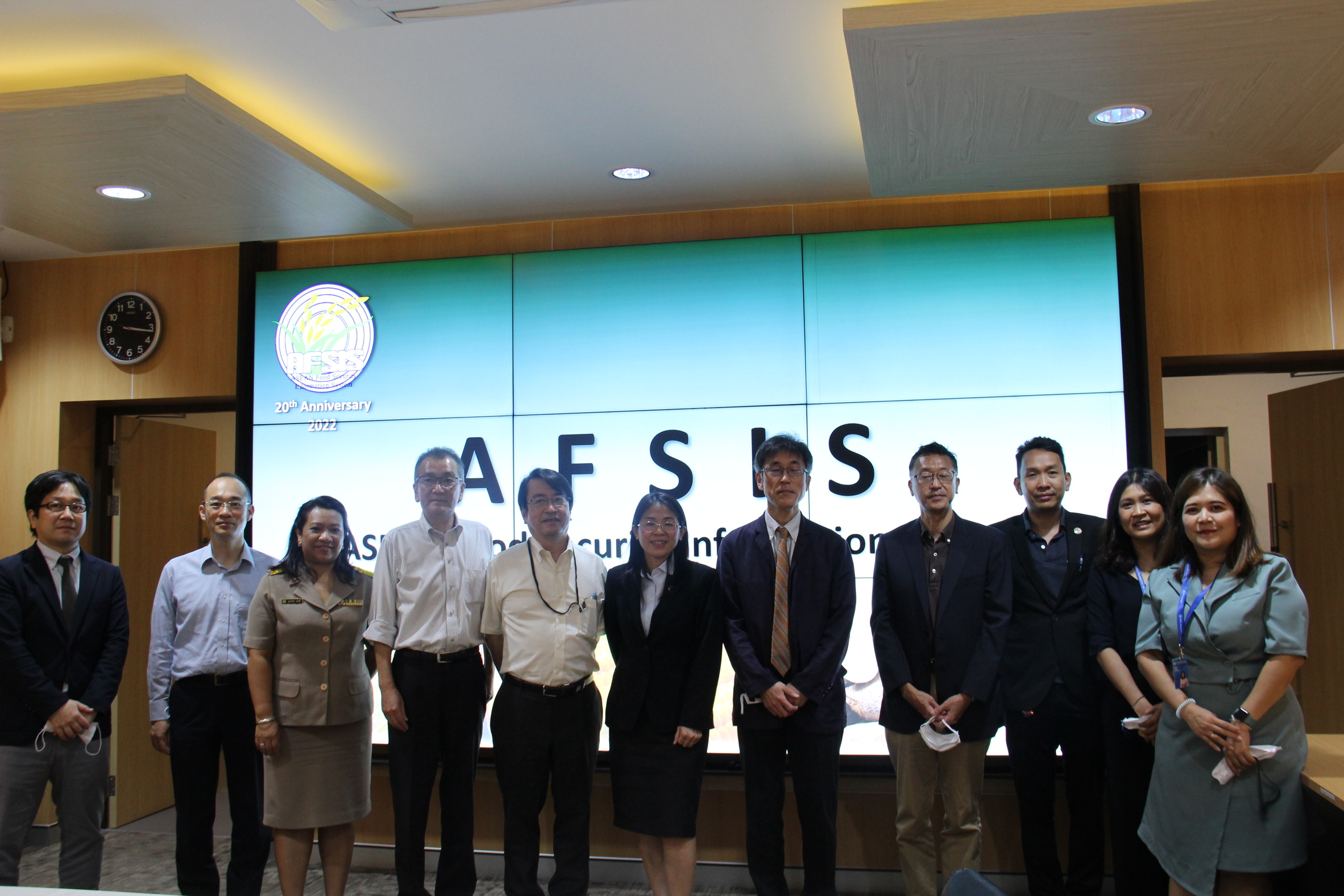
On 13 February 2023, AFSIS Secretariat held a meeting with the Japan Aerospace Exploration Agency (JAXA) under the Space Applications for Environment (SAFE) community with support from JAXA and MAFF of Japan in meeting room 1, Innovation building, Office of Agricultural Economics, Bangkok.
The participants were 3 representatives from JAXA: Dr. Shinichi Sobue, Dr. Kei Oyoshi, and Mr. Go Segami, 1 representative from MAFF, Mr. Ryuki Ikeda, 1 representative from SEAA Research LLC, Mr. Shoji Kimura, and the AFSIS Secretariat.
The objective of the meeting was to introduce SAFE projects and cooperation in SAFE activities i.e., the SAFE Rice monitoring (INAHOR) using ALOS-2satellite and Artificial Intelligence (AI) and Machine Learning (ML) with training data collection for rice mapping, a New SAFE project regarding methane emission from paddy rice (CH4Rice), and the relationship between SAFE Rice monitoring (INAHOR) project and FAO project.
In addition, there was a discussion session where the participants discussed the potential collaboration between AFSIS Secretariat and JAXA for enhancing the food security information in the ASEAN Region by using satellite technology in the future.

On 29 July 2026, the APEC Policy Partnership on Food Security (PPFS) successfully convened the APEC PPFS Webinar on Strategic Cooperation for Strengthening Food System Resilience via a virtual platform. The webinar was organized by the Ministry of Agriculture, Food and Rural Affairs (MAFRA) of the Republic of Korea as a self-funded PPFS project to promote strategic cooperation and knowledge exchange on strengthening food system resilience across APEC member economies.

The AFSIS Secretariat participated in the 10th International Conference on Agricultural Statistics (ICAS X), held from 8 to 10 July 2026 at the ICE Krakow Congress Centre in Krakow, Poland. Jointly organized by Statistics Poland, Eurostat, the United States Department of Agriculture (USDA), the World Bank Group, and the Food and Agriculture Organization of the United Nations (FAO).
.JPG)
On 24–25 June 2026, AFSIS Secretariat participated in the 46th Meeting of the ASEAN Food Security Reserve Board (AFSRB) via a virtual conference. The Meeting was jointly organized by the AFSRB Secretariat and the Department of Agriculture (DOA), Ministry of Agriculture, Livestock and Irrigation (MOALI) of the Republic of the Union of Myanmar, and was hosted in Nay Pyi Taw, Myanmar.

On 17–18 June 2026, the 24th AFSIS Focal Point Meeting was successfully convened via video conference, hosted by the Philippine Statistics Authority (PSA) in collaboration with the ASEAN Food Security Information System (AFSIS) Secretariat.

